
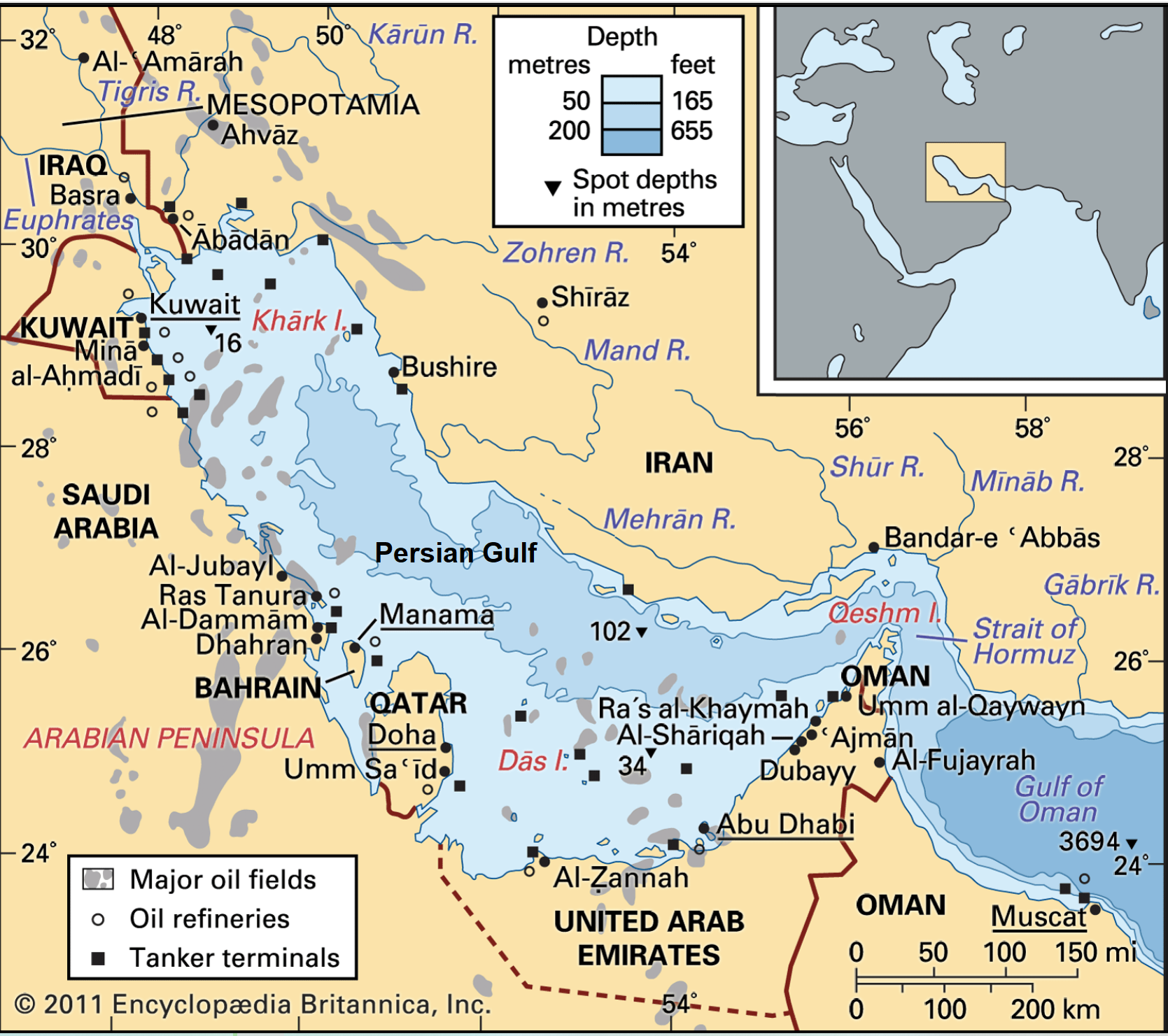
Persian Gulf nations or “Gulf region”? Learn the correct terminology for maps, shipping documents, media, and maritime operations—clear, accurate, and neutral.
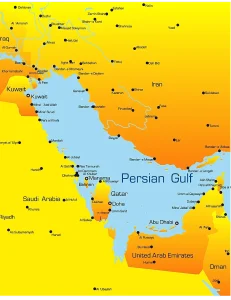
A ship’s chart does not care about politics—but people do. In the maritime world, geography is supposed to be the stable part of the conversation: the coastline stays where it is, the strait remains the same chokepoint, and the Gulf remains the Gulf. Yet few sea areas demonstrate how naming can become operationally sensitive as clearly as the Persian Gulf.
If you have ever seen the same water body labeled differently across news outlets, social media, navigation apps, or even commercial briefings, you have met the terminology problem directly. A student writing an assignment, a ship manager preparing a voyage risk note, or a chartering team drafting a clause may pause and ask: Should we say “Persian Gulf,” “Gulf region,” “Gulf states,” or something else? The answer depends on what you mean—and on whether you are aiming for internationally standardized geographical terminology or a broader regional descriptor.
This article provides a practical, maritime-focused guide to correct terminology. It explains what the Persian Gulf is, what “Gulf region” usually means, why different naming conventions appear, and how maritime professionals can communicate clearly without unnecessary controversy—especially in safety-critical documents.
Why This Topic Matters for Maritime Operations
In maritime operations, names are not decorative. They are embedded in charts, voyage instructions, incident reporting, insurance wording, port documents, sanctions compliance workflows, and port state control narratives. When terminology is inconsistent, it can create confusion in communications and documentation—especially for multinational crews and multinational stakeholders. For internationally neutral terminology, many organisations rely on established institutional usage and standardized geographic naming practices.
The Core Definitions: What Each Term Actually Means
Persian Gulf: a specific, internationally standardized sea area
“Persian Gulf” refers to the specific body of water between the Iranian coast to the north and the Arabian Peninsula to the south, connected to the Gulf of Oman through the Strait of Hormuz. In many international reference systems, it is treated as a defined sea area.
For shipping, the practical takeaway is that “Persian Gulf” is the clearest and most internationally legible name for the water body itself, especially in formal documentation intended to be read across jurisdictions.
Gulf region: a broader political–economic and cultural region
“Gulf region” is not a precise hydrographic term. It is a regional descriptor used in politics, economics, security studies, energy markets, and sometimes corporate communications. In practice, “Gulf region” often refers to countries surrounding or closely linked to the Persian Gulf in economic and security terms, including logistics corridors connected to Gulf ports and the institutional footprint of regional blocs.
Because it is not strictly bounded by coastlines, “Gulf region” can change meaning depending on the speaker. A logistics report might include Oman (because of Hormuz and the Gulf of Oman adjacency). An energy report might include Iraq due to Basra exports. A security briefing might include broader West Asian dynamics.
In other words, “Gulf region” is a useful umbrella term, but it is not the best choice when the subject is a specific sea area on a chart or in an incident report.
Persian Gulf nations: typically the littoral states
When people say “Persian Gulf nations”, they typically mean the littoral states—the countries with coastlines on the Persian Gulf. In most educational and mapping contexts, this includes:
Iran, Iraq, Kuwait, Saudi Arabia, Bahrain, Qatar, the United Arab Emirates, and Oman (via the Musandam Peninsula).
This phrase is generally clear if the writer specifies that they mean “coastal/littoral states.” Where it becomes operationally valuable is in training materials, port intelligence products, and policy writing where the focus is jurisdictional geography rather than politics. It tells the reader, “These are the states directly connected to the sea area.”
Gulf states: common, but ambiguous
“Gulf states” sounds clear, but it is often ambiguous. In many contexts it is used as shorthand for the GCC member states (Bahrain, Kuwait, Oman, Qatar, Saudi Arabia, UAE). However, outside that institutional context, “Gulf states” can also be used more loosely to mean “countries on the Persian Gulf,” which would add Iran and Iraq.
This ambiguity is why many professional writers prefer either “GCC states” (if they mean GCC members), or “Persian Gulf littoral states” (if they mean coastline states).
Naming Disputes and Why They Show Up in Maritime Contexts
Why alternative labels exist
Some regional actors and some media sources use alternative labels such as “Arabian Gulf” or simply “the Gulf.” The existence of alternative labels is a real part of public discourse and local usage.
The key point for maritime professionals is that local usage and international standard usage can diverge. The challenge in maritime operations is not to “win” a naming debate, but to avoid ambiguity in safety-critical and compliance-critical communication.
Institutional usage as the operational “neutral standard”
For internationally neutral communications—especially educational, scientific, or regulatory-aligned content—many organisations anchor terminology to stable institutional usage and recognized geographical standards. This supports consistent documentation across multinational stakeholders.
A modern reality: maps and platforms sometimes localize names
Digital mapping platforms may display different labels depending on locale and national settings. In maritime training, this becomes a practical teaching point: do not assume a label on an app equals an international standard. Teach students and junior officers to rely on official charts, recognized nautical publications, and consistent company terminology when precision matters.
Practical Terminology Guidance for Maritime Writing
The simplest rule: match the term to the purpose
A useful mental model is to treat terminology like selecting the right tool:
-
If you are describing the water body as a sea area, use Persian Gulf.
-
If you are describing regional economics, politics, or markets, use Gulf region, but define your scope.
-
If you are describing coastal jurisdictions, use Persian Gulf littoral states or Persian Gulf nations, and list them.
-
If you mean GCC members, say GCC states (and optionally list them once).
This approach reduces misunderstandings without requiring the reader to share any political perspective.
How to write clearly for non-native English readers
Many readers in maritime education are non-native English speakers. They often interpret terms literally. “Gulf states” can be understood as “states on the Gulf,” so they may assume Iran and Iraq are included. “Gulf region” can be interpreted as “all countries around the Gulf,” which may vary widely in a learner’s mind.
The best practice is to write one clarifying sentence early, such as:
-
“In this article, ‘Persian Gulf nations’ refers to the coastal (littoral) states: Iran, Iraq, Kuwait, Saudi Arabia, Bahrain, Qatar, the UAE, and Oman (Musandam).”
-
“In this article, ‘Gulf states’ refers to GCC member states.”
That single line prevents repeated misunderstandings in long-form content.
The maritime document hierarchy: where naming precision is non-negotiable
Some maritime documents demand maximum clarity because they can become evidence:
Incident reports and near-miss reports, port state control correspondence, charter party clauses and voyage orders, insurance notifications, compliance memos (including sanctions and routing guidance), and safety management system procedures.
In these contexts, “Persian Gulf” is typically the safest choice for the sea area, because it is the most widely recognized standard term across international documentation environments.

Key Developments and Applications
Terminology in nautical publications and hydrographic practice
Hydrographic communities aim for consistent sea-area naming because standardization supports safety. When crews and organisations refer to a location, they should mean the same place. For maritime learners, the lesson is simple: standardized naming reduces errors, especially under time pressure.
Terminology in shipping markets and industry communications
In the commercial maritime sector, “Gulf region” is frequently used to describe market dynamics: tanker demand, LNG flows, bunker pricing, port congestion, and security advisory coverage. It is popular because it captures the economic ecosystem, not only the coastline.
However, professional communications benefit from stating what is included. For example, a market note might define “Gulf region” in the first paragraph based on the report’s purpose and the client’s needs.
Terminology in security reporting and risk advisories
Risk reporting often uses the broad umbrella “Gulf region” because threats can originate beyond the coastline and still affect sea lanes. In these documents, mixing “Gulf states” and “Persian Gulf nations” without definitions can create confusion, especially for crews preparing for transit.
A consistent terminology policy inside a company—one that distinguishes the sea area from the broader region—is a practical risk-control measure.
Challenges and Practical Solutions
The main challenge is that terminology is not controlled by one authority across all contexts. International organizations may standardize a term, while local political usage differs, and commercial platforms may localize labels. This creates a multi-layer naming environment where the same place can appear under different names depending on who is speaking and which product you are using.
The practical solution is to adopt a simple writing and documentation policy:
Use Persian Gulf as the default for the sea area in formal documents. Use “Gulf region” only when discussing broader regional matters, and define your scope the first time. Avoid “Gulf states” unless you mean GCC states—and if you do, say “GCC states” instead, because it is structurally precise and easy for global readers to understand.
Case Studies and Real-World Applications
Case 1: Port documentation and operational messaging
A vessel is scheduled to call at multiple terminals across the Persian Gulf. The operations team circulates an email saying “Next month: Gulf ports itinerary.” For a multinational crew, “Gulf ports” can be unclear—especially if the company trades in multiple gulfs (for example the Gulf of Oman, Gulf of Aden, or Gulf of Suez in other contexts). Rewriting as “Persian Gulf ports itinerary” removes doubt and strengthens clarity.
Case 2: Training content for cadets and junior officers
A maritime academy uses mixed sources: one map says “Persian Gulf,” another says “Arabian Gulf,” and a third says only “The Gulf.” Students become uncertain about correct language and may repeat inconsistent terms in assessments and onboard communications. A practical teaching method is to explain that standardized usage supports consistency, then set a clear rule: use Persian Gulf for the sea area; use Gulf region for broader regional context; use GCC states if referring to the GCC.
Case 3: Digital platforms and the dual-label problem
A company analyst prepares a briefing using screenshots from a mapping platform that shows dual naming, and the deck team later notices a different label on their own device. The confusion is not trivial: it can distract watchkeepers and complicate communication during high-risk transits. The operational response is to anchor location naming to official nautical publications and consistent corporate language, while recognizing that consumer platforms may display different labels depending on locale.
Future Outlook and Maritime Trends
Terminology debates are likely to remain visible because the Persian Gulf is strategically important for energy trade, geopolitics, and maritime chokepoint risk. At the same time, maritime documentation is becoming more digital and more automated. That increases the likelihood of mixed naming inputs from different data sources—news feeds, mapping tools, AIS platforms, and internal dashboards.
For maritime organizations, the forward-looking best practice is not to chase every naming change in public discourse, but to define a stable internal standard aligned with internationally legible geographic terminology and consistent hydrographic practice.
FAQ
1) What is the correct name: Persian Gulf or Gulf region?
They are not interchangeable. Persian Gulf refers to the specific sea area. Gulf region is a broader descriptor for the surrounding political-economic region.
2) What does “Persian Gulf nations” mean?
It usually means the coastal (littoral) states bordering the Persian Gulf: Iran, Iraq, Kuwait, Saudi Arabia, Bahrain, Qatar, the UAE, and Oman (Musandam).
3) What does “Gulf states” usually mean?
In many contexts, “Gulf states” refers to the GCC member states. However, it can be ambiguous, so “GCC states” is usually clearer.
4) Who are the GCC member states?
Bahrain, Kuwait, Oman, Qatar, Saudi Arabia, and the United Arab Emirates.
5) Is “A.r.a.b.i.a.n Gulf” a standard international term?
Alternative labels exist in public discourse and regional usage, but many international and technical contexts use Persian Gulf as the standardized sea-area term.
6) Why do maps sometimes show different names for the same place?
Some platforms localize names by country or user locale, and disputed-name areas may display dual labels.
7) What should maritime professionals use in formal documents?
For clarity and international legibility, Persian Gulf is typically the safest choice for the sea area. Use “Gulf region” only when you mean the broader region and define your scope.
Conclusion and Take-away
If you want terminology that is geographically precise and internationally legible, use Persian Gulf for the sea area. If you are discussing economics, politics, or society across multiple countries connected to Gulf dynamics, “Gulf region” can be appropriate—but only if you define what you mean. If you mean GCC members, say GCC states. If you mean coastline states on the water body, say Persian Gulf littoral states and list them once.
This approach is not only more accurate; it is also more professional. It reduces confusion for non-native English readers, strengthens documentation consistency, and aligns maritime communications with the terminology discipline expected in safety-critical industries.
References
-
United Nations Secretariat. UN editorial guidance on geographical terminology: https://www.un.org
-
United Nations Terminology resources (UNTERM): https://unterm.un.org
-
U.S. Board on Geographic Names (BGN): https://geonames.nga.mil
-
International Hydrographic Organization (IHO) and sea-area naming context: https://iho.int
-
Gulf Cooperation Council (GCC) – Member States: https://www.gcc-sg.org