
12/26/2025
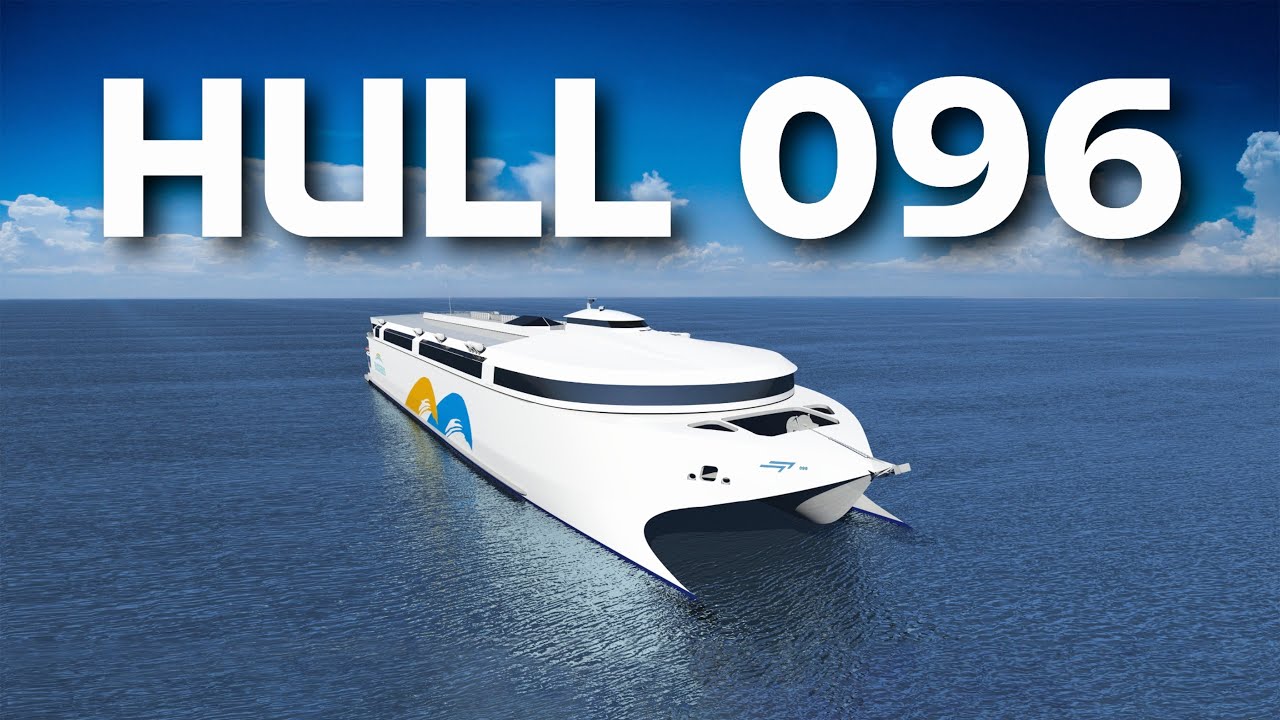
Hobart, Tasmania – In a landmark moment for maritime decarbonization, Incat Tasmania has successfully powered up the world’s largest battery-electric ship for the first time. The 130-meter vessel, known as Hull 096, achieved full propulsion on battery power alone during a milestone trial on December 14, marking a new era for large-scale, zero-emission marine transport.
Designed to carry over 2,100 passengers and 220 vehicles, this groundbreaking ferry is not only the largest battery-electric ship ever built—it is the largest electric vehicle of any kind currently in operation worldwide. The trial confirms the viability of 100% battery-electric propulsion for high-capacity vessels, a feat previously considered unattainable for maritime applications of this scale.
A New Benchmark in Marine Battery Technology
At the heart of Hull 096 is an energy storage system with an installed capacity exceeding 40 megawatt-hours (MWh)—roughly four times larger than any prior maritime battery installation. Weighing more than 250 metric tons, the system powers the vessel’s waterjets and propulsion machinery, which together form the largest battery-electric propulsion installation ever fitted to a ship.
“This is the first time a ship of this size, anywhere in the world, has been trialled under 100% battery-electric propulsion,” said Robert Clifford, Chairman of Incat Tasmania. “It’s a remarkable achievement by our workforce and a turning point for shipbuilding.”
The vessel’s design and construction took place entirely in Hobart, drawing on Tasmania’s longstanding expertise in aluminium shipbuilding and positioning the region as a global leader in sustainable vessel production.
Why This Trial Matters for the Global Maritime Industry
The successful trial of Hull 096 demonstrates several key advances with wide-ranging implications for shipping worldwide:
-
Scalability of Battery-Electric Propulsion: Proves that electric power can effectively replace conventional engines on large, high-utilization vessels such as passenger ferries.
-
Emission-Free Operations: Offers a tangible pathway for short-sea shipping and ferry operators to eliminate greenhouse gas emissions, particulate matter, and noise pollution.
-
Regulatory and Competitive Advantage: Aligns with tightening International Maritime Organization (IMO) emissions targets and growing Environmental, Social, and Governance (ESG) expectations from investors and consumers.
Classification societies such as DNV and Lloyd’s Register have been closely involved in establishing safety standards for large marine battery systems, ensuring that innovations like Incat’s meet rigorous marine engineering and safety protocols.
Designed for Real-World Operation
Hull 096 was built for a South American operator and is scheduled to depart Tasmania in the coming months for final commissioning and sea trials before entering active service. Its design focuses on high-frequency ferry operations, where its rapid charging capability and silent, vibration-free propulsion will provide both environmental and passenger-comfort benefits.
The vessel’s aluminium catamaran hull offers reduced weight and increased efficiency, further extending the range and performance enabled by its massive battery system.
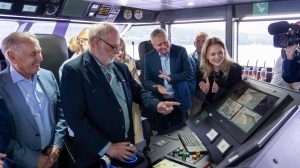
Image credit: Incat Tasmania
The Broader Shift Toward Electrified Maritime Transport
Incat’s achievement is part of a accelerating global trend toward marine electrification. From hybrid tugboats to all-electric coastal cargo vessels, shipbuilders and operators are increasingly adopting battery technology to meet sustainability goals and operational requirements.
Industry analysts from Clarksons Research note that the number of vessels incorporating battery storage has grown exponentially over the past five years, supported by advances in lithium-ion technology and improved port charging infrastructure.
Looking Ahead: What’s Next for Electric Shipping?
The trial of Hull 096 sets a new benchmark and paves the way for even larger and more capable zero-emission vessels. Incat is already at work on subsequent electrified hulls, signaling a long-term commitment to leading the transition toward sustainable shipbuilding.
For ferry operators, port authorities, and maritime regulators worldwide, this milestone underscores that large-scale electric propulsion is not a future concept—it is an operational reality.
FAQ
Q1: What is the name of the world’s largest battery-electric ship?
A: The vessel is known as Hull 096, built by Incat Tasmania in Hobart.
Q2: What is the battery capacity of the Incat electric ferry?
A: The ship is equipped with a battery system delivering over 40 MWh of installed capacity.
Q3: Can the ferry operate solely on battery power?
A: Yes. The trial confirmed the vessel can run on 100% battery-electric propulsion, with no auxiliary fossil-fuel engines required for normal operation.
Q4: What type of vessel is Hull 096?
A: It is a 130-meter passenger and vehicle ferry designed to carry 2,100 people and more than 220 cars.
Q5: Where will the electric ferry operate?
A: Following final trials, it will be delivered to a South American operator for commercial service.
Conclusion
The successful propulsion trial of Incat Tasmania’s Hull 096 marks a historic step forward in maritime sustainability. By proving that large-capacity vessels can operate entirely on battery power, this project challenges long-held assumptions about the limits of electric propulsion at sea. As the maritime industry navigates toward a low-carbon future, innovations like the world’s largest battery-electric ship illuminate a cleaner, quieter, and more efficient path forward.
For the latest updates on electric and hybrid marine technology, stay tuned to industry publications such as Electric & Hybrid Marine Technology International.
References & Further Reading:
-
Incat Tasmania Official Release
-
DNV – Maritime Battery Systems Guidelines
-
International Maritime Organization (IMO) – GHG Strategy
-
Clarksons Research – World Fleet Register
-
Electric & Hybrid Marine Technology International Magazine