
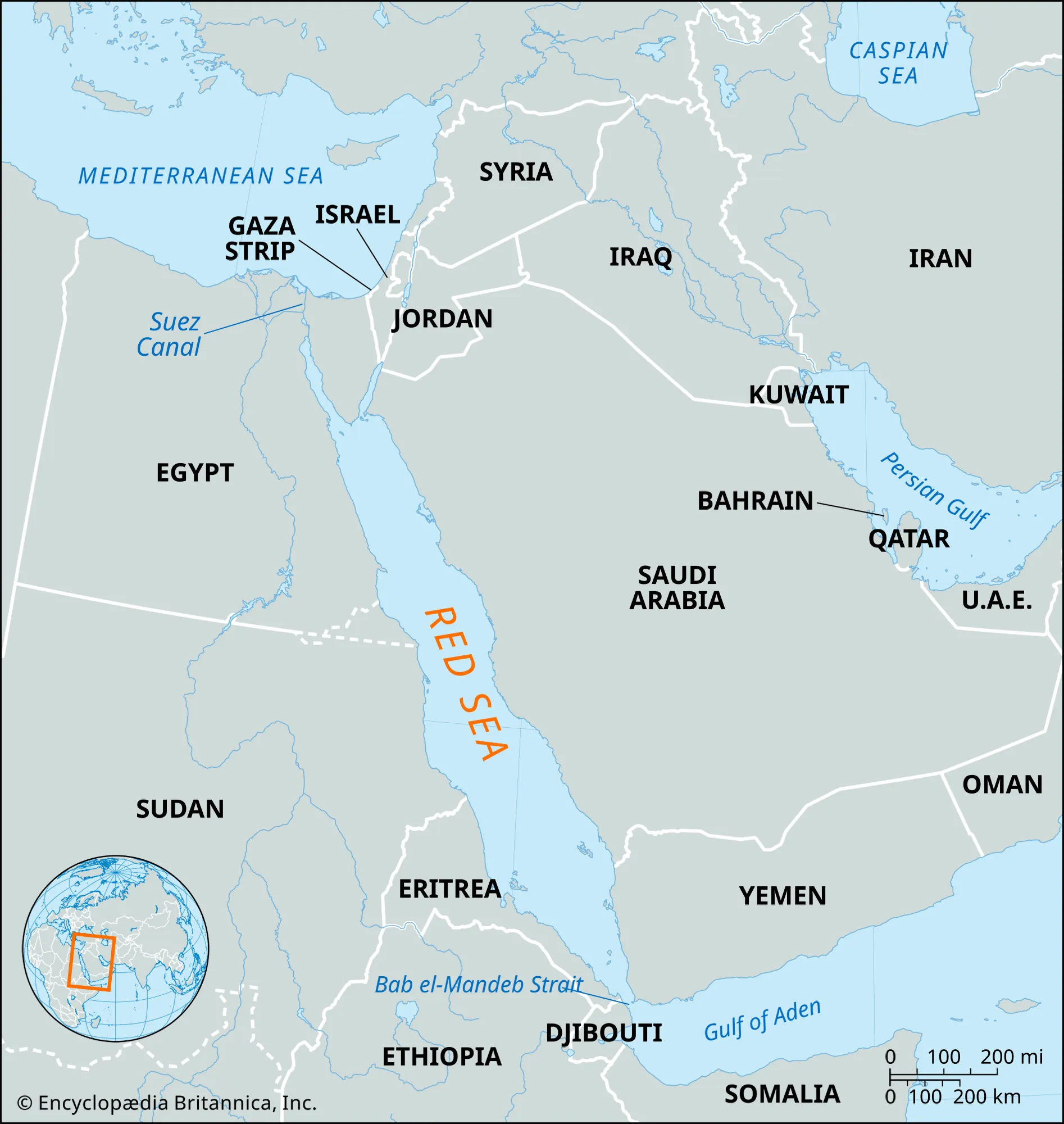
Since late 2023, the Red Sea shipping corridor has become a flashpoint of global trade disruption. Attacks by Yemen’s Houthi army, launched in solidarity with Palestinians in Gaza, have transformed one of the world’s busiest maritime highways into a high-risk zone. As of December 2025, the crisis remains a potent threat, directly impacting 10% of global seaborne trade that traditionally transits the Suez Canal. This article provides a comprehensive, SEO-optimized update on the Red Sea shipping attacks in 2025, analyzing major incidents, geopolitical shifts, economic impacts, and the uncertain road ahead for global supply chains.
Background: The Roots of the Crisis
The Red Sea crisis began on October 19, 2023, when the Iran-backed Houthi movement in Yemen launched missiles and drones at Israel, demanding an end to the war in Gaza. The campaign quickly expanded to target commercial shipping in the Bab-el-Mandeb Strait, the southern chokepoint to the Suez Canal. The Houthis declared any vessel with Israeli links—later expanding to include U.S. and UK-linked ships—a legitimate target. By early 2024, over 60 vessels had been attacked, prompting hundreds of ships to reroute around the Cape of Good Hope. In response, a U.S.-led coalition launched Operation Prosperity Guardian, and the EU initiated Operation Aspides to protect shipping.
2025 Update: Major Incidents and Escalations
The year 2025 has been marked by dramatic escalations, fragile ceasefires, and tragic losses.
The July 2025 Sinkings: A Watershed Moment
After a relative lull in attacks, the crisis erupted violently in July. On July 6-8, 2025, Houthi forces attacked and sank two commercial vessels in the southern Red Sea: the Liberian-flagged, Greek-operated bulk carriers Magic Seas and Eternity C. These were not simple missile strikes but complex, multi-wave assaults involving eight high-speed boats, unmanned surface vessels (USVs), and rocket-propelled grenades. The attack on the Eternity C resulted in the deaths of at least three Filipino seafarers, with several others reported missing. These sinkings shattered a half-year of calm and represented the first total losses of merchant ships since the crisis began.
The U.S.-Houthi Ceasefire and Its Violation
A major diplomatic development occurred on May 6, 2025, when a ceasefire deal brokered by Oman took hold between the United States and the Houthi movement. U.S. President Donald Trump announced the end of U.S. bombing in Yemen, stating the Houthis had agreed to stop interfering with key shipping lanes. However, the deal had a critical limitation: the Houthis explicitly stated it did not apply to Israel, reserving the right to continue attacks on Israeli-linked vessels. This loophole proved fatal. The July sinkings were a direct violation of the spirit of the ceasefire, demonstrating the Houthis’ continued capability and willingness to target commercial shipping.
Expanding the Battlefield: The Northern Red Sea Attack
Demonstrating increased reach, on August 31, 2025, the Houthis targeted a vessel off the coast of Yanbu, Saudi Arabia. This attack, the furthest north the Houthis have struck since the crisis began, signaled an expansion of the threat zone and heightened risks for shipping in areas previously considered safer.
Geopolitical Dynamics: The Gaza War and U.S. Policy
The Red Sea crisis is inextricably linked to broader Middle Eastern conflicts, primarily the war in Gaza.
-
The Gaza Ceasefire Driver: The Houthis have consistently stated their attacks are an act of solidarity with Palestinians, aimed at pressuring Israel to cease its military operations in Gaza. Periods of calm in the Red Sea have directly coincided with truces in Gaza, while escalations on land have triggered renewed maritime attacks.
-
The U.S. Military Campaign (Operation Rough Rider): In response to resumed Houthi attacks in March 2025, the Trump administration launched Operation Rough Rider, a large-scale campaign of air and naval strikes against Houthi targets in Yemen. Lasting from March 15 to May 6, the operation struck over 1,000 targets but failed to degrade the Houthis’ overall military capabilities or will to fight.
-
Iran’s Role: As the Houthis’ primary backer, Iran provides weapons, technology, and political support. Analysts believe Iran played a key role in persuading the Houthis to accept the May 2025 ceasefire with the U.S., likely to build momentum for separate nuclear negotiations.
Impact on Global Trade and Shipping
The security crisis has triggered a cascade of economic consequences across global supply chains.
-
Freight Rates and Surcharges: While container rates in 2025 remained below the extreme peaks of 2024, the disruption has caused significant volatility and additional costs. At the height of the crisis, rerouting around Africa led to rate hikes of 200%-400% on some lanes, along with hefty war risk surcharges. Analysts noted that a full return to Suez routing could cause a 10% drop in ship demand due to freed-up capacity.
-
Insurance Premiums and War Risk: Ships transiting the Red Sea face dramatically increased war risk insurance premiums, sometimes adding hundreds of thousands of dollars to a single voyage. The U.S. Maritime Administration advises vessels at high risk to consider turning off AIS transponders to avoid targeting.
-
Rerouting and Delays: To avoid the danger zone, most major container lines, including Maersk and Hapag-Lloyd, have rerouted vessels around the Cape of Good Hope. This diversion adds 10-14 days to Asia-Europe transit times, tying up vessel capacity, delaying cargo, and increasing fuel consumption.
-
Supply Chain Resilience: The prolonged disruption has forced companies to rebuild supply chain resilience. Strategies include inventory buffering, diversifying sourcing locations, and shifting some cargo to air freight. Some producers have even relocated operations to hubs like Jebel Ali in Dubai to avoid the longer Africa route.
Military and Security Responses
The international community has deployed significant naval assets to counter the threat, with mixed results.
-
Naval Patrols and Escorts: Operations Prosperity Guardian (U.S.-led) and Aspides (EU-led) continue to patrol the Red Sea and Gulf of Aden, providing escort for some merchant vessels and intercepting incoming drones and missiles.
-
Counter-Strike Campaigns: Alongside naval defense, the U.S. and UK have conducted periodic “self-defense” strikes against Houthi launch sites, radars, and weapon storage facilities inside Yemen. However, as the Washington Institute notes, these strikes “have not deterred the group”.
-
Industry Security Guidance: Maritime authorities issue continuous advisories. The key guidance for vessels includes:
-
Maintaining maximum distance from the Yemeni coast.
-
Implementing strict bridge watch-keeping and anti-piracy measures.
-
Registering voyages with naval coordination centers.
-
Being prepared to engage in evasive maneuvering if under threat.
-
Future Outlook for 2026 and Beyond
As 2025 ends, the future of Red Sea shipping hangs in a delicate balance between cautious optimism and persistent risk.
-
Testing the Waters: In December 2025, Maersk completed its first test transit of the Red Sea in nearly two years, a significant symbolic step. The French carrier CMA CGM and others are also planning limited, escorted passages. This indicates a “stepwise” approach by carriers, contingent on sustained security improvements.
-
The 2026 Prognosis: Analysts suggest that a meaningful return to normalcy is a 2026 prospect. Simon Heaney of Drewry Shipping Consultants estimates that “by the end of 2026, things will start to look like they were before the Houthi attacks started”. The return, however, is expected to be gradual and reversible.
-
Persistent Risks: The fundamental driver of the crisis—the Houthi’s commitment to the Palestinian cause—remains. Even a durable Gaza ceasefire may not immediately end all attacks, as the Houthis have leveraged the campaign for domestic and regional political gain. Furthermore, the group has acquired and demonstrated sophisticated weaponry, including long-range drones and USVs, ensuring they remain a persistent threat.
-
Market Rebalancing: The shipping industry is preparing for a potential capacity glut. BIMCO warns that a large-scale return to the Suez route could release over 2 million TEU of capacity back into an already oversupplied market, putting downward pressure on freight rates.
Conclusion
The Red Sea shipping crisis of 2025 underscores a harsh reality of modern globalization: regional conflicts can swiftly trigger global economic disruption. The year witnessed a tragic escalation with the sinking of merchant vessels, a major but flawed ceasefire, and the continued resilience of Houthi forces against international military pressure. For global shippers, supply chain managers, and policymakers, the lesson is clear. Dependence on single chokepoints carries profound risk. While test transits offer a glimmer of hope, the Red Sea will likely remain a volatile region for the foreseeable future. Building resilient, diversified supply chains is no longer a luxury but a strategic imperative in an age of geopolitical uncertainty. The journey to safe passage is far from over.