
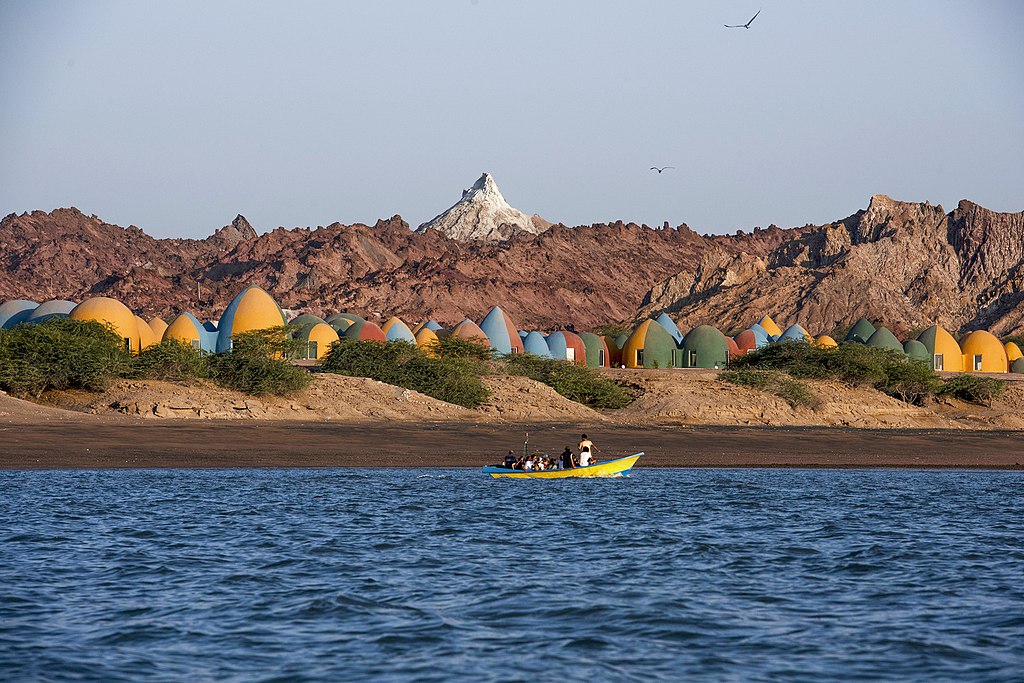
Where Ancient Maritime Civilizations Meet Modern Coastal Landscapes
The Persian Gulf is one of the world’s most historically significant and strategically important seas. Long before the age of modern ports and offshore energy, its coastlines hosted early seafaring cultures, pearl-diving economies, and maritime trade routes linking Mesopotamia, the Indus Valley, East Africa, and the Indian Ocean.
Today, the Persian Gulf offers a distinctive mix of ancient heritage, coastal ecosystems, island landscapes, and modern port cities, making it a unique destination for culturally and environmentally minded travelers.

1. Hormuz Island, Iran – The Rainbow Island of the Persian Gulf
Located near the Strait of Hormuz, Hormuz Island is renowned for its multicolored geological formations, salt caves, and stark coastal landscapes. Historically a major maritime trade hub, the island today offers visitors a rare blend of natural beauty, cultural heritage, and strategic maritime significance.
2. Kish Island, Iran – Tourism and Free-Zone Hub
Kish Island combines beaches, coral reefs, and historical sites with modern tourism infrastructure. Its free-trade status has made it a regional center for shopping, leisure boating, and coastal recreation, while underwater ruins and reefs highlight the Gulf’s marine heritage.
3. Bushehr Historic Port, Iran – Living Maritime History
Bushehr is one of the Persian Gulf’s oldest continuously inhabited ports. Traditional Gulf architecture, narrow streets, and wooden houses reflect centuries of maritime trade. The city offers insight into pre-oil Gulf life centered on shipping, fishing, and commerce.
4. Doha Corniche and The Pearl, Qatar – Modern Gulf Waterfront
Doha’s waterfront showcases the Gulf’s transformation into a global urban and maritime center. The Corniche, traditional dhow harbor, and The Pearl island development combine cultural sites, leisure marinas, and coastal promenades with views of a rapidly evolving skyline.
5. Muharraq Pearling Path, Bahrain – UNESCO Maritime Heritage
The Pearling Path in Muharraq preserves Bahrain’s historic pearl-diving industry, once the backbone of the Gulf economy. The route links coastal sites, merchant houses, and offshore oyster beds, offering a rare maritime cultural landscape recognized by UNESCO.
6. Dubai Creek and Jumeirah Coast, UAE – From Trading Port to Global Icon
Dubai Creek represents the city’s origins as a small trading port, while Jumeirah Beach and the Palm islands showcase its modern coastal transformation. Together, they illustrate the Gulf’s rapid evolution from dhow-based trade to global maritime tourism.
7. Abu Dhabi Corniche and Saadiyat Island, UAE – Culture and Coastline
Abu Dhabi blends pristine beaches with cultural institutions such as the Louvre Abu Dhabi. Saadiyat Island’s conservation zones protect turtle nesting areas, highlighting how coastal tourism and environmental stewardship can coexist.
8. Musandam Peninsula, Oman – Fjords of Arabia
Often called the “Norway of Arabia,” Musandam features dramatic cliffs, fjord-like inlets, and clear waters. Traditional fishing villages, dolphin watching, and diving make it one of the Persian Gulf’s most striking natural destinations.
9. Khasab Port, Oman – Gateway to the Strait of Hormuz
Khasab serves as both a strategic port and a tourism base for exploring Musandam. Dhow cruises through narrow inlets reflect centuries-old maritime traditions in one of the Gulf’s most geopolitically important waterways.
10. Failaka Island, Kuwait – Archaeology and Coastal Calm
Failaka Island preserves remnants of Dilmun, Greek, and Islamic civilizations. Its quiet beaches and archaeological sites provide a contrast to Kuwait City’s urban environment, offering insight into early Gulf maritime settlement.
11. Jubail Marine and Industrial Coast, Saudi Arabia – Industry Meets the Sea
Jubail illustrates the Gulf’s industrial maritime dimension. While primarily known for petrochemical ports, the area also features restored coastal zones and marine parks, highlighting efforts to balance industry with environmental management.
12. Sir Bani Yas Island, UAE – Conservation-Based Island Tourism
Sir Bani Yas combines beaches, mangroves, and wildlife reserves. The island represents a shift toward eco-tourism in the Gulf, integrating marine conservation, heritage sites, and low-impact tourism.
Majara Residence in Hormuz, Iran – View from the sea.
Comparative Snapshot of Key Persian Gulf Destinations
| Destination | Country | Primary Attraction | Tourism Theme |
|---|---|---|---|
| Hormuz Island | Iran | Geology & history | Nature & heritage |
| Kish Island | Iran | Beaches & reefs | Leisure tourism |
| Bushehr | Iran | Historic port | Maritime culture |
| Doha Corniche | Qatar | Urban waterfront | Modern coastal city |
| Muharraq | Bahrain | Pearling heritage | UNESCO culture |
| Dubai Coast | UAE | Beaches & ports | Global tourism |
| Abu Dhabi | UAE | Culture & beaches | Sustainable tourism |
| Musandam | Oman | Fjords & diving | Nature tourism |
| Khasab | Oman | Dhow cruises | Maritime tradition |
| Failaka | Kuwait | Archaeology | Heritage island |
| Jubail Coast | Saudi Arabia | Industry & coast | Industrial maritime |
| Sir Bani Yas | UAE | Wildlife & coast | Eco-tourism |
Why the Persian Gulf Is a Unique Tourism Region
The Persian Gulf stands apart due to:
- Continuous maritime history spanning millennia
- Strategic chokepoints shaping global trade
- Extreme environments adapted by coastal cultures
- Rapid transformation from pearl economies to modern port cities
- Increasing focus on sustainable coastal and marine tourism
Conclusion
From the ancient ports of Iran and Bahrain to the modern skylines of Doha and Dubai, the Persian Gulf offers a layered coastal experience found nowhere else in the world. These twelve destinations reveal how history, geography, and the sea continue to shape the Gulf’s identity. As the region diversifies beyond hydrocarbons, its coastal heritage and marine landscapes are becoming central pillars of its tourism future.
References
-
United Nations Educational, Scientific and Cultural Organization (UNESCO).
Pearling, Testimony of an Island Economy (Bahrain).
UNESCO World Heritage Centre.
https://whc.unesco.org/en/list/1364 -
UNESCO World Heritage Centre.
Maritime Trade Routes and Cultural Landscapes of the Persian Gulf.
https://whc.unesco.org -
Iranian Cultural Heritage, Handicrafts and Tourism Organization (ICHHTO).
Hormuz Island and Persian Gulf Islands Cultural and Natural Heritage.
https://www.chht.ir -
Kish Free Zone Organization.
Kish Island Tourism and Marine Recreation.
https://www.kish.ir -
Ministry of Cultural Heritage, Tourism and Handicrafts of Iran.
Historic Ports of the Persian Gulf: Bushehr.
https://www.mcth.ir -
Qatar Tourism Authority.
Doha Corniche, The Pearl, and Coastal Attractions.
https://www.visitqatar.qa -
Bahrain Authority for Culture and Antiquities.
Muharraq and the Pearling Path.
https://culture.gov.bh -
Dubai Culture & Arts Authority.
Dubai Creek: From Trading Port to Global City.
https://www.dubaiculture.gov.ae -
Department of Culture and Tourism – Abu Dhabi.
Saadiyat Island, Abu Dhabi Corniche, and Coastal Conservation.
https://visitabudhabi.ae -
Ministry of Heritage and Tourism, Sultanate of Oman.
Musandam Peninsula and Khasab Port Tourism.
https://experienceoman.om -
Kuwait National Council for Culture, Arts and Letters.
Failaka Island Archaeology and Maritime History.
https://www.ncac.gov.kw -
Saudi Ministry of Tourism.
Jubail Industrial City and Coastal Development.
https://www.visitsaudi.com -
Environment Agency – Abu Dhabi.
Sir Bani Yas Island: Conservation and Eco-Tourism.
https://www.ead.gov.ae -
Al-Hashimi, A. (2016).
The Maritime History of the Persian Gulf.
Routledge, London. -
Potts, D. T. (2012).
The Archaeology of Elam and the Persian Gulf.
Cambridge University Press. -
United Nations Environment Programme (UNEP).
State of the Marine Environment in the ROPME Sea Area (Persian Gulf).
https://www.unep.org -
Regional Organization for the Protection of the Marine Environment (ROPME).
Persian Gulf Marine Ecosystems and Coastal Management.
https://ropme.org -
National Geographic Society.
Persian Gulf: Geography, History, and Coastal Cultures.
https://www.nationalgeographic.com