
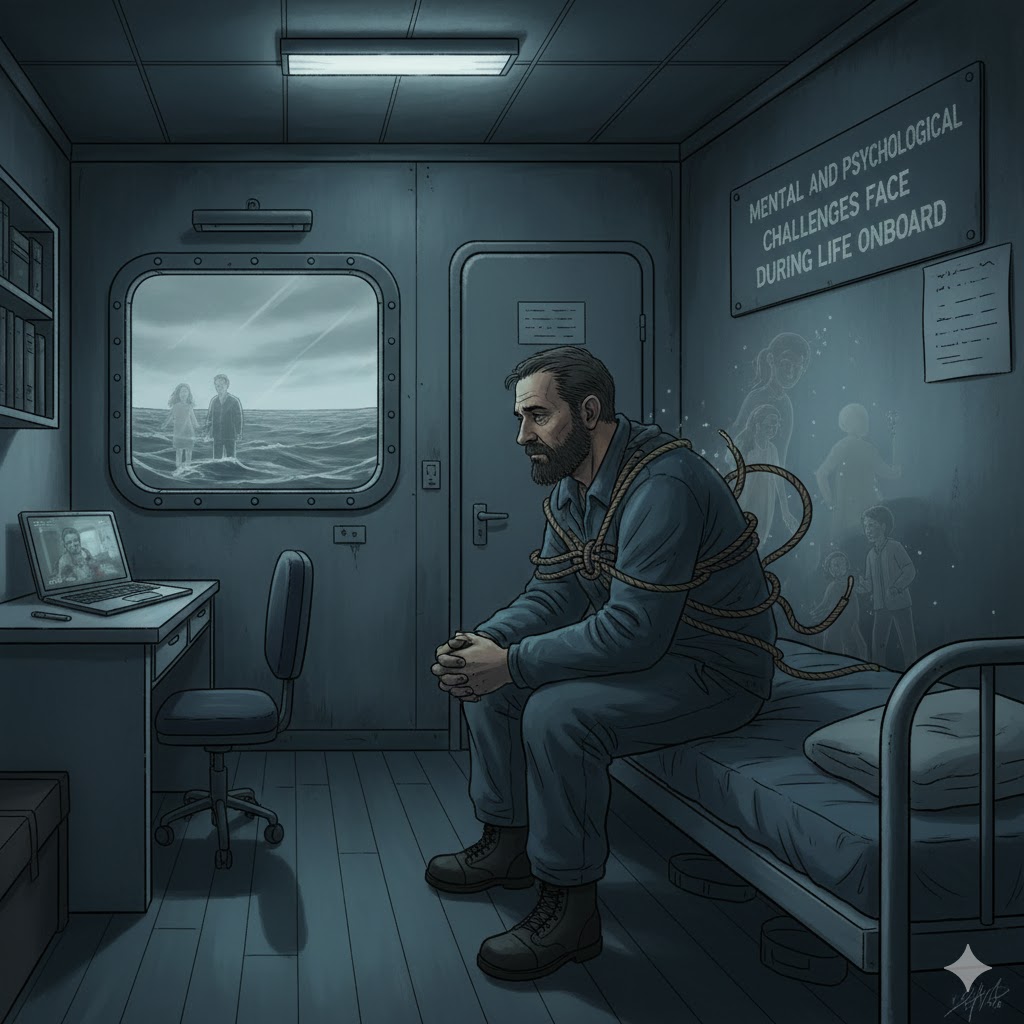
Understanding the Human Cost of Life at Sea
Life at sea is often described in technical terms—ship types, regulations, routes, and operations. Yet behind every vessel is a crew exposed to unique psychological pressures rarely encountered in shore-based professions. Long contracts, isolation, fatigue, multicultural crews, and operational risk combine to make seafaring one of the most mentally demanding occupations in the world.
This article outlines twelve of the most common mental and psychological challenges faced by ship staff during onboard service, with emphasis on causes, manifestations, and why they matter for safety and wellbeing.
1. Social Isolation and Loneliness
Extended periods away from family and friends create profound feelings of isolation. Even on well-crewed ships, emotional loneliness can persist due to limited social compatibility, language barriers, or lack of privacy. This isolation intensifies during long ocean passages or contracts exceeding six months.
2. Separation from Family and Relationship Strain
Prolonged absence from home disrupts family life, parenting roles, and intimate relationships. Seafarers often experience guilt over missed events, anxiety about problems at home, and emotional detachment over time, all of which can affect onboard focus and morale.
3. Fatigue and Chronic Sleep Deprivation
Watchkeeping schedules, night work, port operations, and time-zone changes disrupt circadian rhythms. Chronic fatigue impairs concentration, emotional regulation, and decision-making, increasing both psychological stress and accident risk.
4. Stress from High Responsibility and Safety-Critical Tasks
Ship staff operate in environments where mistakes can result in loss of life, pollution, or major financial damage. Officers and engineers, in particular, carry constant cognitive load related to navigation, machinery reliability, and regulatory compliance.
5. Limited Personal Space and Lack of Privacy
Living and working in confined spaces with the same individuals for months can lead to irritability, frustration, and emotional exhaustion. The inability to mentally “switch off” from the work environment is a major psychological burden.
6. Multicultural Communication Stress
Modern crews are highly multinational. Differences in language proficiency, cultural norms, hierarchy perception, and communication styles can cause misunderstandings, conflict, or feelings of exclusion—especially for junior crew members.
7. Monotony and Sensory Deprivation
Long sea passages can be monotonous, with repetitive routines and limited stimulation. This monotony can lead to reduced alertness, low mood, demotivation, and a sense of time distortion, particularly on automated vessels with minimal manual tasks.
8. Anxiety Related to Job Security and Contracts
Short-term contracts, unclear re-employment prospects, and market volatility create ongoing anxiety. Many seafarers worry about being replaced, blacklisted, or losing income due to illness, incidents, or company restructuring.
9. Exposure to Traumatic Events
Seafarers may witness or be involved in accidents, severe injuries, piracy incidents, deaths onboard, or rescue operations involving migrants or distressed vessels. Such events can trigger acute stress reactions, post-traumatic stress symptoms, or long-term psychological effects.
10. Stigma Around Mental Health at Sea
Despite progress, many seafarers still feel unable to speak openly about mental distress. Fear of being seen as weak, unfit for duty, or unemployable discourages reporting symptoms and seeking help, allowing problems to worsen silently.
11. Limited Access to Mental Health Support
At sea, access to professional psychological support is extremely limited. Internet connectivity may be poor or restricted, and crew may lack confidential channels to seek advice. This isolation makes early intervention difficult.
12. Loss of Personal Identity and Purpose Over Time
Long careers at sea can lead some seafarers to feel disconnected from shore-based society. Repetitive contracts, limited career progression, and weak social ties ashore may cause existential stress, loss of motivation, or identity confusion—especially among senior crew nearing retirement.
–
Why These Challenges Matter for Maritime Safety
Mental wellbeing is directly linked to:
- Situational awareness
- Decision-making quality
- Error management
- Team communication
- Emergency response performance
Unchecked psychological stress increases the risk of human-factor incidents, which remain a leading cause of maritime accidents.
Toward Better Mental Health at Sea
Effective mitigation requires action at multiple levels:
- Company policies supporting realistic contract lengths
- Fatigue-aware watch schedules
- Leadership training for senior officers
- Confidential access to mental health resources
- Normalization of mental health discussions onboard
International frameworks such as the MLC 2006 increasingly recognize mental wellbeing as part of seafarer welfare, but practical implementation remains uneven.
Conclusion
Seafaring is not only physically demanding—it is psychologically complex and emotionally taxing. The twelve challenges outlined above are not signs of individual weakness but predictable responses to an extreme working environment. Recognizing, discussing, and addressing mental health onboard is essential for safer ships, healthier crews, and a more sustainable maritime industry.