
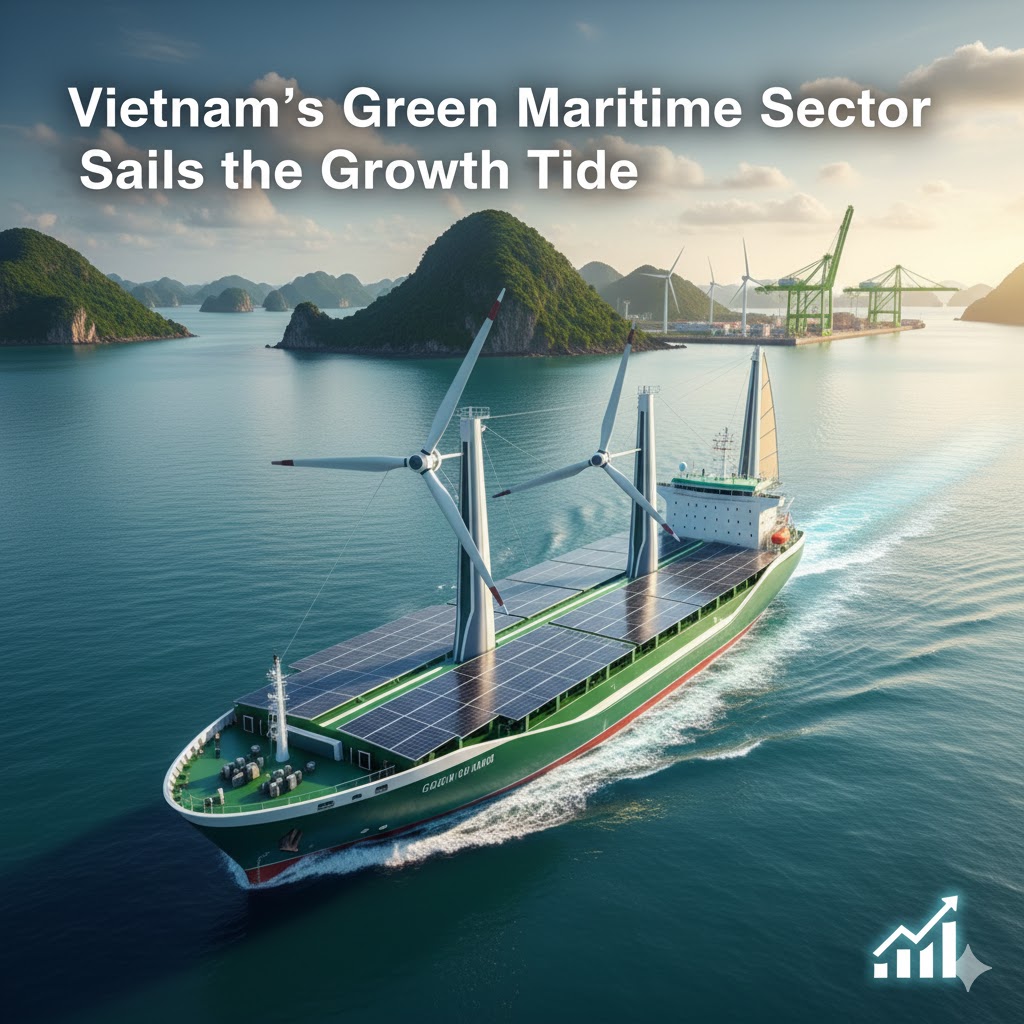
 Vietnam’s maritime sector is undergoing a profound transformation. Long recognised as one of Southeast Asia’s fastest-growing trading nations, Vietnam is now positioning itself at the forefront of green maritime development in the Asia-Pacific region. In 2025, sustainability is no longer a peripheral consideration in Vietnam’s shipping and port strategies; it has become a core pillar of national economic planning, trade competitiveness, and environmental stewardship.
With over 3,200 kilometres of coastline, rapidly expanding port infrastructure, and deep integration into global supply chains, Vietnam’s maritime sector plays a decisive role in its economic trajectory. As international shipping faces mounting pressure to decarbonise, Vietnam is responding with targeted policies, infrastructure investments, and regulatory reforms aimed at aligning its maritime growth with climate objectives.
This article provides an in-depth analysis of Vietnam’s green maritime sector in 2025, examining the drivers of growth, policy frameworks, port and shipping initiatives, investment dynamics, and the challenges that accompany the transition. Rather than presenting sustainability as an abstract goal, the analysis shows how Vietnam is embedding green maritime practices into its broader development strategy and regional ambitions.
Vietnam’s Maritime Sector in the Global Context
A Strategic Maritime Nation
Vietnam’s economy is deeply maritime-dependent. More than 90 percent of the country’s international trade by volume moves by sea, making ports, shipping, and logistics critical enablers of growth. Vietnam has emerged as a major manufacturing and export hub, benefiting from supply chain diversification and shifting production patterns across Asia.
This expanding trade footprint has placed significant pressure on Vietnam’s maritime infrastructure and environmental performance. As shipping volumes rise, so do emissions, port congestion, and ecological risks. The green maritime transition is therefore not only an environmental imperative but also a strategic necessity to sustain trade growth.
From Catch-Up to Leadership
Historically, Vietnam focused on expanding port capacity and connectivity to keep pace with trade growth. In 2025, the focus has shifted toward quality, efficiency, and sustainability. Rather than simply catching up with regional peers, Vietnam aims to differentiate itself as a green, efficient, and future-ready maritime hub.
Policy Foundations of Vietnam’s Green Maritime Strategy
National Green Growth and Net-Zero Commitments
Vietnam’s green maritime push is anchored in broader national commitments to sustainable development and climate action. The government has pledged to achieve net-zero emissions by 2050, a goal that directly implicates transport and logistics.
Maritime transport, while more efficient than other modes on a per-tonne basis, remains a significant source of emissions. Vietnam’s policymakers recognise that aligning shipping and ports with climate goals is essential to meeting national targets and maintaining access to environmentally conscious export markets.
Maritime-Specific Policy Instruments
Vietnam has introduced a range of maritime-specific measures to support decarbonisation and environmental protection. These include incentives for cleaner fuels, energy-efficient vessels, shore power infrastructure, and greener port operations.
Regulatory frameworks increasingly reflect international standards promoted by the International Maritime Organization, signalling Vietnam’s intent to integrate seamlessly into global green shipping regimes rather than develop isolated national rules.
Green Ports: The Backbone of Sustainable Maritime Growth
Port Electrification and Energy Efficiency
Vietnamese ports are central to the country’s green maritime ambitions. In 2025, major ports such as Hai Phong, Cai Mep–Thi Vai, and Da Nang are investing in energy-efficient equipment, electrified cargo handling systems, and smart energy management.
Shore power, also known as cold ironing, is gaining attention as a means to reduce emissions from vessels at berth. While full-scale deployment remains gradual, pilot projects demonstrate Vietnam’s commitment to aligning port operations with global best practices.
Digitalisation and Smart Port Initiatives
Digitalisation plays a critical role in green port development. By optimising vessel calls, cargo flows, and yard operations, digital platforms reduce congestion, fuel consumption, and emissions.
Vietnamese ports are increasingly adopting port community systems and data-sharing platforms that integrate shipping lines, terminal operators, customs authorities, and logistics providers. These systems enhance efficiency while supporting environmental monitoring and reporting.
Greening Vietnam’s Shipping Fleet
Energy-Efficient Vessel Operations
Vietnam’s shipping companies, particularly those engaged in coastal and regional trade, are adopting energy-efficient operational practices. Slow steaming, improved voyage planning, and hull maintenance programmes are among the measures used to reduce fuel consumption and emissions.
While Vietnam’s deep-sea fleet remains relatively small compared to global shipping powers, its coastal and short-sea segments offer significant opportunities for rapid emissions reductions through operational optimisation.
Alternative Fuels and Pilot Projects
Interest in alternative marine fuels is growing in Vietnam, driven by global regulatory trends and customer expectations. LNG is currently viewed as a transitional option, particularly for domestic and regional shipping.
Research and pilot initiatives related to biofuels and future fuels such as ammonia are also emerging, often in collaboration with international partners. These projects position Vietnam as a participant in the global transition rather than a passive rule-taker.
Coastal Shipping and Inland Waterways as Green Transport Solutions
Modal Shift and Emissions Reduction
Vietnam’s extensive network of rivers and coastline provides natural advantages for coastal shipping and inland waterway transport. Promoting these modes supports emissions reduction by shifting cargo away from road transport.
In 2025, government policy increasingly emphasises the role of coastal and inland shipping in reducing congestion, improving logistics efficiency, and supporting regional development. Investments in vessel modernisation and port infrastructure reinforce this strategy.
Supporting Regional Connectivity
Green coastal shipping also enhances regional connectivity, linking industrial zones, ports, and hinterland areas more efficiently. This integration supports sustainable economic development while reducing the environmental footprint of logistics.
Environmental Regulation and Compliance
Aligning with International Standards
Vietnam’s green maritime sector benefits from growing alignment with international environmental regulations. Compliance with IMO conventions on pollution prevention, ballast water management, and energy efficiency enhances Vietnam’s credibility as a maritime jurisdiction.
This alignment reduces regulatory friction for international shipping lines calling at Vietnamese ports and strengthens the country’s integration into global trade networks.
Enforcement and Capacity Challenges
Effective enforcement remains a challenge, particularly given the scale and diversity of Vietnam’s maritime activities. Strengthening institutional capacity, training inspectors, and deploying digital monitoring tools are critical to ensuring consistent compliance.
Investment and Financing of Green Maritime Projects
Attracting Sustainable Finance
Vietnam’s green maritime transition is supported by increasing access to sustainable finance, including green bonds, development bank funding, and public-private partnerships. International investors and financial institutions view Vietnam as a promising destination for green infrastructure investment.
Ports, shipyards, and logistics companies that demonstrate strong environmental governance are better positioned to attract capital under emerging ESG frameworks.
Role of International Partnerships
International cooperation plays a vital role in Vietnam’s green maritime development. Partnerships with multilateral development banks, foreign governments, and private sector actors facilitate technology transfer, capacity building, and financing.
These collaborations accelerate Vietnam’s transition while embedding it within global sustainability networks.
Workforce Development and Skills for Green Shipping
Building a Green Maritime Workforce
The transition to green maritime operations requires new skills across the workforce. Engineers, port operators, seafarers, and regulators must understand energy systems, digital tools, and environmental compliance.
Vietnam is investing in maritime education and training to support this transition, recognising human capital as a critical enabler of sustainability.
Social Dimension of the Transition
Ensuring that the green transition is inclusive and socially sustainable is an emerging priority. Workforce reskilling, safety standards, and labour protections are essential to maintaining social support for maritime transformation.
Challenges Facing Vietnam’s Green Maritime Sector
Infrastructure and Cost Constraints
Despite strong momentum, Vietnam faces challenges in scaling green maritime initiatives. Infrastructure investment requirements are substantial, and the cost of new technologies remains a barrier for smaller operators.
Balancing environmental ambition with economic competitiveness is a delicate task, particularly in a price-sensitive global shipping market.
Policy Coordination and Long-Term Planning
Effective coordination across ministries, port authorities, and industry stakeholders is essential to avoid fragmented implementation. Long-term planning frameworks must remain flexible to accommodate evolving technologies and international regulations.
Vietnam’s Role in Regional and Global Green Shipping
ASEAN Leadership Potential
Vietnam’s progress positions it as a potential leader in green maritime development within ASEAN. By sharing best practices and coordinating regional initiatives, Vietnam can influence the sustainability agenda across Southeast Asia.
Integration into Global Green Corridors
Vietnam’s ports and shipping routes are increasingly viewed as candidates for participation in green shipping corridors, linking low-emission ports and vessels along major trade routes. Participation in such initiatives enhances Vietnam’s global maritime profile.
Long-Term Outlook Beyond 2025
Vietnam’s green maritime sector is poised for sustained growth beyond 2025. As global trade increasingly rewards sustainability, Vietnam’s early investments in green ports, shipping, and regulation will strengthen its competitive position.
Continued progress will depend on consistent policy implementation, investment mobilisation, and international cooperation. If these conditions are met, Vietnam can emerge as a benchmark for sustainable maritime development among emerging economies.
Conclusion
Vietnam’s green maritime sector in 2025 reflects a strategic convergence of economic ambition, environmental responsibility, and regional leadership. By embedding sustainability into maritime policy, infrastructure, and operations, Vietnam is not only reducing environmental impacts but also enhancing trade competitiveness and resilience.
The country’s experience demonstrates that green maritime development is not a constraint on growth but a catalyst for modernisation and integration into future-oriented global supply chains. As the maritime industry continues its global transformation, Vietnam’s approach offers valuable lessons for other emerging maritime nations navigating the transition toward sustainability.
References
Vietnam Ministry of Transport. Maritime Development and Green Transport Policies.
UNCTAD. Review of Maritime Transport 2025.
International Maritime Organization (IMO). Marine Environmental Protection Frameworks.
ASEAN Secretariat. Sustainable Transport and Maritime Cooperation.
World Bank. Green Ports and Sustainable Maritime Infrastructure.
OECD. Decarbonising Transport in Emerging Economies.
Vietnam Briefing. Vietnam’s Green Maritime Sector Sails the Growth Tide.