

Explore Iran’s geography, maritime history, economy, and regional role in global trade. A detailed, humanised guide for students, professionals, and researchers.
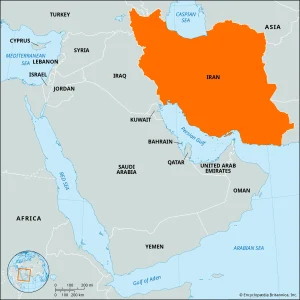
Iran is a country that often appears in headlines, academic debates, and strategic maritime discussions. Yet beyond politics and media narratives, Iran is a nation with an extraordinary depth of civilisation, engineering heritage, strategic geography, and maritime relevance. Its landscape stretches from the snowy peaks of the Alborz Mountains to the warm turquoise waters of the Persian Gulf and the Gulf of Oman. With more than 2,400 kilometres of coastline, Iran stands as a major player in trade, shipping, and maritime transport across the Middle East and Eurasia.
For centuries, Iran has served as a crossroads between East and West—a bridge between the Mediterranean world, South Asia, Central Asia, and Europe. Today, as global energy markets shift, shipping corridors diversify, and climate and security concerns reshape maritime logistics, Iran’s position becomes even more important. Whether one studies maritime transport, global trade systems, shipping policy, or regional geopolitics, understanding Iran is essential.
–
Iran
Iran has a population of approximately 92.4 million people as of 2025, making it the 17th most populous country in the world and accounting for about 1.12% of the global total. The population is predominantly urban, with over 73% of people living in cities. Demographically, Iran is a relatively young nation with a median age of 34 years.
Why Iran Matters for Maritime Operations
Iran’s maritime relevance stems from three interconnected pillars: geography, energy, and global trade. The country sits beside one of the most strategically sensitive waterways on Earth—the Strait of Hormuz. This narrow passage connects the Persian Gulf to the Gulf of Oman and then the Arabian Sea, forming a vital gateway for the world’s crude oil.
Every day, millions of barrels of oil and refined petroleum products pass through this chokepoint. Such volumes mean that fluctuations in Iran’s maritime posture can influence global oil prices, shipping insurance rates, and even decisions by classification societies or flag registries. When the shipping world discusses chokepoints — the Suez Canal, the Bab al-Mandeb, the Malacca Strait — Hormuz is always part of the conversation.
Iran’s maritime infrastructure supports this strategic position. Major ports such as Bandar Abbas, Chabahar, Bushehr, Bandar Imam Khomeini, and Khorramshahr serve varied economic and operational roles. Chabahar, in particular, represents Iran’s effort to integrate with international logistics networks such as the International North–South Transport Corridor (INSTC), which links Russia, Central Asia, and South Asia.
Iran’s maritime significance also extends to fisheries, tanker fleets, naval strategy, port oversight, and ocean sustainability—topics increasingly relevant to IMO policy development and environmental compliance under MARPOL and FuelEU Maritime.
Geography, Coastlines, and Maritime Identity
Iran’s coastline defines much of its identity. To the north lies the Caspian Sea, the world’s largest enclosed inland body of water—a place of fisheries, pipelines, and evolving maritime legislation. To the south, two distinct waters shape Iran’s maritime activities:
-
The Persian Gulf — a warm, shallow sea dotted with offshore platforms, oil terminals, naval bases, and busy shipping lanes.
-
The Gulf of Oman and Indian Ocean — a deepwater gateway connected to global trade networks reaching India, China, and global container hubs.
These regions support complex ecosystems and host industries ranging from petrochemical exports to tourism, fisheries, ship repair, and LNG transport.
Iran’s maritime geography may be compared to a house with two doors: one door (the Persian Gulf) opens into a crowded corridor where neighbours influence every movement; the other (the Gulf of Oman) opens into the open ocean—an independent access path that reduces reliance on confined waters.
This duality explains Iran’s long-term focus on developing deepwater ports and ocean-capable merchant fleets, including VLCC (Very Large Crude Carrier) tankers.
Iran’s control over the Strait of Hormuz
Iran’s control over the Strait of Hormuz gives it significant geopolitical leverage, as this narrow waterway is a critical global energy chokepoint. Bounded to the north by Iran and to the south by Oman and the UAE, the strait sees about 20% of the world’s oil and a substantial portion of liquefied natural gas (LNG) pass through it daily. This makes it the world’s most vital oil transit corridor, with major economies in Asia, including China, India, Japan, and South Korea, heavily reliant on these shipments. Iran has repeatedly threatened to close the strait during regional tensions, an action that would severely disrupt global trade and cause oil prices to spike. While experts note that Iran’s navy and Islamic Revolutionary Guard Corps could temporarily block the channel using mines or fast-attack boats, such a move would also damage Iran’s own economy and relations with key trading partners like China. The persistent threat of closure has prompted Gulf nations like Saudi Arabia and the UAE to develop alternative pipeline routes to bypass the strait. Concurrently, Iran’s foreign relations and the stability of this strategic region are complicated by its domestic human rights situation. International bodies have documented a severe crackdown on dissent, a spike in executions, and the systematic persecution of ethnic and religious minorities. These issues have led to international condemnation and sanctions, further isolating the country and contributing to regional tensions that periodically raise fears about the security of the Strait of Hormuz.
–
Key Developments and Modern Maritime Context
Energy Exports and Tanker Fleets
Iran holds some of the world’s largest reserves of oil and natural gas, and its maritime economy reflects these resources. The National Iranian Tanker Company (NITC) operates a large fleet of tankers involved in regional and international shipping. Despite sanctions challenges, classification requirements, and insurance complexities, the fleet remains essential to Iran’s export model.
These vessels depend on international rules governed by organisations such as the International Maritime Organization (IMO). Compliance topics—for example, the IOPP certificate (MARPOL Annex I), AIS broadcasting obligations, or CII reporting—play a growing role in Iran’s shipping governance, especially as environmental regulations evolve.
Iran’s major shipping companies and its maritime education system are both crucial to the country’s strategic goal of maintaining a strong presence in global shipping, particularly in the Persian Gulf region. The governance of Iran’s maritime education system is notably fragmented, with responsibilities spread across multiple ministries rather than centralized under a single authority. This structural issue can impact the efficiency and standardization of training. Historically, Iran has worked to align its training and certification standards with international conventions like the International Convention on Standards of Training, Certification and Watchkeeping for Seafarers (STCW). The quality of this education is critical, as human error is a leading contributor to maritime accidents, highlighting the importance of effective training for safety at sea.
Two state-controlled companies dominate Iran’s merchant fleet. The following table summarizes their primary roles and current operational challenges:
| Company | Primary Role & Characteristics | Current Operational Challenges |
|---|---|---|
| IRISL (Islamic Republic of Iran Shipping Lines) | Iran’s national maritime carrier for container, bulk, and general cargo; operates a vast network of international subsidiaries. | Subject to extensive international sanctions due to alleged transport of military-related cargo. Repeated, damaging cyberattacks have severely disrupted its fleet communications. |
| NITC (National Iranian Tanker Company) | Specializes in transporting crude oil; a key subsidiary of the National Iranian Oil Company and the largest tanker company in the Middle East. | Also targeted by sanctions and major cyberattacks. Plays a central role in exporting Iranian oil, often employing tactics to evade sanctions. |
Ports and Logistics Modernisation
Iran has actively expanded its port capabilities to compete with regional logistics hubs. The Shahid Rajaee Port Complex, near Bandar Abbas, handles significant shares of Iran’s container throughput. Port facilities are increasingly digitised, implementing customs modernisation, security upgrades aligned with the ISPS Code, and improved ship repair facilities.
Regional Trade Corridors and Connectivity
Strategically, Iran serves as a key actor in projects aiming to reshape Eurasian logistics, including:
- INSTC (North–South Corridor) linking India, Russia, and Northern Europe
- Caspian maritime cargo exchanges between Iran, Kazakhstan, Turkmenistan, and Russia
- Alternative connectivity routes bypassing the Suez Canal
These developments position Iran not only as an oil exporter—but as a transit state shaping future trade landscapes.
Challenges and Practical Solutions
Every maritime system faces constraints, and Iran is no exception. Some challenges are environmental, such as marine pollution, declining freshwater inflow into the Persian Gulf, and coastal ecosystem stress. Others are operational—ranging from vessel flagging compliance to insurance availability, ship recycling governance, and PSC detention risk variation.
Sanctions and economic restrictions pose unique operational pressures affecting:
- marine insurance chains
- classification society collaboration
- spare part sourcing
- AIS broadcasting patterns
- fleet renewal cycles
Yet Iranian ports continue to adapt by investing in domestic shipbuilding capacity, maritime education, renewable energy projects, port electrification planning, and growing collaboration with regional maritime universities.
Iran’s maritime academies train cadets in navigation, engineering, environmental compliance, and STCW standards—helping align human capital with global requirements.
Case Studies and Real-World Maritime Examples
Consider a VLCC approaching the Persian Gulf. Traffic separation schemes, pilotage requirements, and coordination with MarineTraffic, Equasis, and port authority systems help ensure safety. Moments like these illustrate Iran’s integration into global maritime transport norms: no vessel simply arrives; it enters a system of surveillance, regulation, and strategic coordination.
Another example is the ongoing development of Chabahar as an international logistics hub. The port demonstrates how maritime infrastructure can drive economic transformation. It not only supports shipping—it reshapes diplomacy, trade partnerships, and global logistics network design.
Future Outlook and Maritime Trends
Iran’s maritime future will be influenced by major transitions: decarbonisation, digitalisation, and regional market expansion.
- Decarbonisation: Ports are exploring LNG bunkering feasibility, renewable energy integration, and IMO GHG compliance pathways.
- Fleet digitalisation: AIS-based optimisation, smart port systems, and improved cargo scheduling are emerging topics.
- Blue economy growth: Fisheries management, marine tourism potential, and offshore energy diversification are rising priorities.
Iran’s maritime sector, shaped by both tradition and innovation, will continue evolving along with regional and global maritime policy frameworks.
FAQ
Is Iran important for global shipping?
Yes. Because of its strategic position near the Strait of Hormuz and major energy exports, Iran plays a crucial maritime role.
Does Iran follow IMO regulations?
Iran is an IMO member and participates in conventions like MARPOL and SOLAS, though geopolitical circumstances influence implementation pace.
Which ports are most important in Iran?
Bandar Abbas, Chabahar, and Bandar Imam Khomeini are key national and international maritime hubs.
Is Iran part of international maritime trade corridors?
Yes. Iran is central to emerging Eurasian trade strategies such as the INSTC.
Does Iran have a large tanker fleet?
Yes. Iran operates one of the largest state-owned tanker fleets in the region.
Conclusion
Iran is a nation of deep history, cultural richness, and strategic maritime significance. Beyond headlines, Iran’s ports, tanker fleets, geography, and international trade connections make it a central actor in global maritime operations. Whether studied academically, commercially, or from a policy perspective, Iran offers lessons on resilience, geography, and the evolving dynamics of maritime trade.
References
-
IMO – https://www.imo.org
-
UNCTAD Maritime Data – https://unctad.org
-
World Bank Logistics Performance Indicators – https://lpi.worldbank.org
-
EMSA – https://www.emsa.europa.eu
-
MarineTraffic – https://www.marinetraffic.com
-
Lloyd’s Register – https://www.lr.org
-
DNV Maritime – https://www.dnv.com
-
ClassNK – https://www.classnk.or.jp
-
RINA – https://www.rina.org