
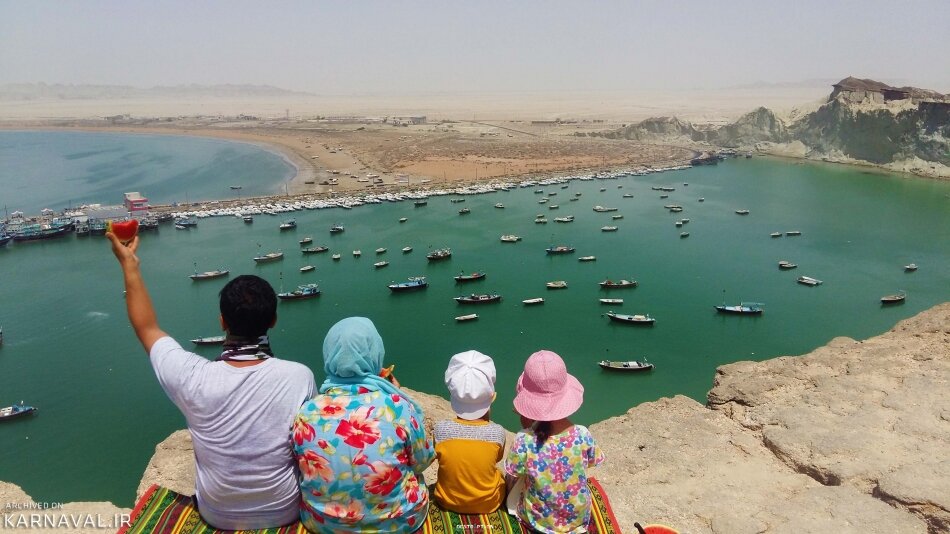
Tourism in the Persian Gulf and Oman Sea depends on maritime stability, safe waters, predictable geopolitics, intact ecosystems, and freedom of navigation across Hormuz.
The coastlines of the Persian Gulf and the Oman Sea have transformed dramatically over the last four decades. What were once quiet pearl villages and dhow harbors are now cruise ports, global airline hubs, yacht marinas, coastal resorts, Formula racing venues, desert-island hotels, and heritage tourism corridors. Dubai, Abu Dhabi, Doha, Muscat, Ras Al-Khaimah, Kish, Qeshm, Bahrain, and Salalah are not merely commercial cities—they are emerging maritime tourism economies whose lifelines depend on stable water conditions, safe sea lanes, and predictable geopolitical behavior.
In this region, tourism is not an isolated industry. It is the surface reflection of deeper maritime security, healthy fisheries, clean coastal waters, stable fuel markets, and open Strait of Hormuz navigation. When the sea is steady, tourism thrives; when risk rises, occupancy falls.
Why Tourism Here Needs Maritime Calm, Not Just Airports
Air connectivity made the Persian Gulf a tourism magnet, but the tourism product is ultimately maritime:
- beaches and islands
- pearl-diving heritage tours
- dhow cruises and sunset marinas
- scuba reefs, wreck dives, and dolphin routes
- cruising circuits that link Dubai, Muscat, Doha, Sir Bani Yas,
- seaside archaeological routes in Oman, Iran, Bahrain, and Qatar
The sea is not a background—it is the foundation. Tourism in the Gulf is coastal, maritime, and climate-dependent. Naval incidents, tanker collisions, or political escalations are felt directly in hotel bookings, cruise arrivals, insurance premiums, and airline promotions.
Hormuz: The Silent Regulator of Tourism and Perception
The Strait of Hormuz may carry oil tankers on maps, but it carries something equally critical for tourism: confidence.
When Hormuz is stable:
- cruise lines schedule seasonal Persian Gulf circuits
- winter tourism surges in Qatar, Oman, and UAE
- dhow village economies and diving communities gain momentum
- yacht shows and marina investments accelerate
When Hormuz appears tense:
- cruise operators re-route vessels
- insurance premiums spike
- marketing campaigns contract
- travel advisories shape tourist psychology
Tourism is not only affected by real incidents, but by perceived possibility. Marine stability is a psychological economy.
Eco-Tourism: Dependent on Coral, Mangroves, and Fisheries Health
Across the Persian Gulf and Oman Sea, new high-value tourism is strategically shifting away from a reliance on luxury towers toward the fragile wealth of living ecosystems. Its foundation lies in unique natural assets: the vibrant coral gardens of Kish, Qeshm, Musandam, and the Daymaniyat Islands; the ancient turtle nesting zones of Ras Al-Hadd; the serene mangrove channels navigated by kayak in Abu Dhabi and Qeshm; the playful dolphin coastlines near Muscat and Khasab; and the majestic whale-watching corridors of the deep Oman Sea. These experiences are wholly dependent on intact marine biodiversity. The threats are direct and business-ending: an oil film, concentrated desalination brine, toxic tanker runoff, the constant turbulence of coastal dredging, or untreated port effluents do not merely cause ecological damage—they permanently cancel marketable tourism products. A single widespread coral bleaching event is therefore not just a habitat loss; it represents the evaporation of entire diving packages, the cancellation of cruise excursions, and the loss of coastal employment for a generation of youth.
In short, across the Persian Gulf and Oman Sea, new high-value tourism depends not on luxury towers but on:
- coral gardens in Kish, Qeshm, Musandam, Daymaniyat
- turtle nesting zones in Ras Al-Hadd
- mangrove kayaking in Abu Dhabi and Qeshm
- dolphin coastlines in Muscat and Khasab
- whale watching corridors in the Oman Sea
Cultural Coastal Tourism and Heritage Identity
Tourism in this region transcends beaches; it is fundamentally an engagement with a deep and living maritime culture. This includes the active dhow-building yards in Sur, the pearl diving heritage museums of Bahrain, the distinctive trading architecture of Hormuz, the historic coastal fortresses guarding Muscat and Sohar, the unique island crafts of Qeshm, Kish, and Larak, and the rich fishing village cooking traditions from Bushehr to Bandar Abbas. For local communities, this form of tourism performs a vital dual function: it preserves cultural memory and does so gainfully, turning heritage into livelihood. However, this entire ecosystem of cultural tourism is highly vulnerable to maritime uncertainty. It collapses if regional tensions disrupt the steady flow of visitors. When hotels stand half-empty due to perceived risk, the loss ripples outward to the traditional cooperatives, the artisans in boat-making yards, and the vibrant markets of fishing ports, stripping away the essential supplemental earnings that sustain both heritage and community.
Therefore, tourism is not just beaches—it is maritime culture:
- dhow-building yards in Sur
- pearl diving heritage museums in Bahrain
- Hormuzian trading architecture
- coastal fortresses of Muscat and Sohar
- island crafts in Qeshm, Kish, Larak
- fishing village cooking traditions in Bushehr and Bandar Abbas
For regional communities, tourism preserves memory—gainfully. But heritage tourism collapses if maritime uncertainty disrupts visitor flow. When hotels are half-empty due to tension, traditional cooperatives, boat makers, and fishing-port markets lose supplemental earnings.
Cruise Tourism: Sensitive to Any Sign of Instability
Cruise lines are among the most risk-averse sectors in global tourism. They adjust routes not by local experience but by global media perception.
- A minor naval standoff can lead to instant port cancellation.
- A tanker explosion or missile threat near Hormuz can remove the entire Persian Gulf from seasonal cruise itineraries.
Cruise schedules are not merely port visits—they fuel local guides, market vendors, museum tickets, terminal buses, and food cooperatives. One cancelled season means thousands of lost service jobs for coastal towns.
Luxury and Marina Tourism: Dependent on Insurance and Seaspace Peace
Tourism and Environmental Stewardship: One Fate, Not Two
Environmental decline is not a secondary concern—it is an economic one.
- If desalination brine continues to increase salinity, diving tourism suffers.
- If tanker spills coat beaches, hotel beaches close.
- If fish nurseries crash, coastal cuisine and seafood tourism weaken.
- If mangroves erode, eco-kayak operators lose business.
A polluted Gulf cannot sell itself as a sanctuary.
Tourism as Diplomatic Capital
The Persian Gulf’s tourism rise is not only commercial—it is soft power. Mega-events, sports tourism, Formula logistics, cultural expos, aviation hubs, art districts, and museum islands project global visibility.
But visibility depends on peace.
Air travel can surge despite tension—but beach weddings, diving charters, cruise stops, and dhow tours collapse under maritime anxiety.
Tourism is diplomacy translated into hospitality.
Conclusion
The Persian Gulf and Oman Sea tourism economy rests on a tripod:
- marine safety and geopolitical calm
- environmental integrity of coasts and biodiversity
- predictable maritime logistics through Hormuz
Boats, beaches, coral, culture, oysters, dolphins, mangroves, and museums all rely on an ocean that is safe, clean, and politically quiet. In this region, tourism is not a luxury—it is an alternative to oil dependency and a cultural bridge to the world. Its continuity depends on maritime stability not as an abstract security doctrine, but as a lived condition of calm seas, open straits, non-toxic coastlines, and uninterrupted visitor confidence.
Where seas are steady, tourism flourishes.
Where fear travels on the tide, tourism recedes.
References
-
UNWTO – Coastal Tourism in Gulf & West Asia
-
World Travel and Tourism Council – GCC Tourism Economy Outlook
-
Oman Ministry of Heritage & Tourism – Coastal Eco Routes
-
UAE Tourism & Marina Development Strategic Plan
-
Qatar Tourism – Cruise & Coastal Integration Strategy
-
Bahrain Authority for Culture & Antiquities – Pearl Heritage Coastal Framework
-
UNEP Regional Seas – Gulf Marine Quality & Tourism Vulnerability
-
IUCN – Coral and Mangrove Sensitivity in Gulf & Oman Sea