
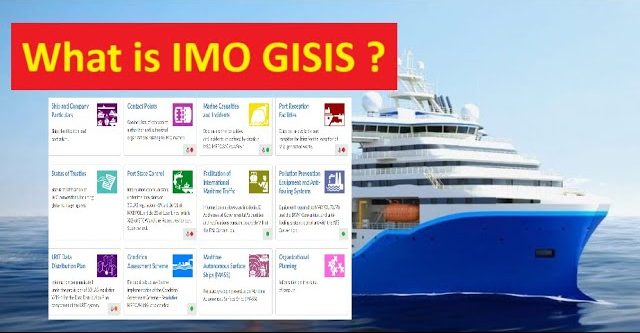
Learn how to use the IMO GISIS database step-by-step. A clear, practical maritime guide for cadets and young officers: casualty reports, PSC detentions, MARPOL cases, port facilities, audit results, and digital compliance.
The IMO Global Integrated Shipping Information System (GISIS) is the central digital archive where the maritime world submits and verifies what really happens at sea. While conventions such as SOLAS, MARPOL, and STCW are taught in classrooms, GISIS reveals how they are actually enforced: where collisions occur, why ships are detained, how pollution is reported, and how ports receive waste. Most cadets hear its name only during STCW or safety modules, but few are trained to navigate it confidently. This guide changes that by taking the reader from first login to applied use in vessel operations, exams, and onboard safety routines.
Why GISIS Matters in Today’s Maritime Profession
Modern shipping runs on transparency, traceability, and data-driven compliance. GISIS is the digital core of that system. It transforms maritime rules into evidence by providing casualty files, pollution case summaries, port reception details, audit findings, and regulatory communication channels. A cadet preparing for an oral exam can search collision reports to better understand how COLREG watchkeeping failures unfold in reality. A junior engineer can look at machinery fire investigations to connect classroom knowledge of oil mist detection with real-world accidents. Port officers, vetting teams, and company safety departments also rely on GISIS for trend analysis, benchmarking safety performance, and preparing vessels for detention-risk inspections.
For students, understanding GISIS is no longer optional. It has become a core professional skill alongside ECDIS familiarization, GMDSS watch duties, and MARPOL record-keeping.
Step-by-Step: How to Use the IMO GISIS Platform
GISIS is not just a database; it is the operational mirror of international maritime law. The platform integrates information from MARPOL Annexes, SOLAS chapters, STCW requirements, ISM auditing, ballast water monitoring, ship recycling rules, and national implementation programmes. In simple terms, it shows whether countries and ships do what the conventions require, not merely what is written on paper. It is an essential reference point for those studying international maritime governance, port State control regimes, and accident causation patterns.
Although GISIS contains large amounts of data, registering and navigating the platform is straightforward once you understand the process. The following step-by-step sequence reflects how cadets, officers, and researchers commonly begin using the system. Unlike general explanations, these steps are designed as a practical workflow that can be followed on a computer while reading.
1. Access the Official GISIS Portal
Open your browser and go to the official system address:
It is strongly recommended to access GISIS from a laptop or desktop computer rather than a mobile device, because many tables, reports, and filters are easier to view on a large screen.
2. Create a Public User Account
GISIS allows some content to be viewed without login, but having an account unlocks additional educational material.
Follow this path:
Sign Up → Public User Registration
You will be asked to enter basic identification details, including:
-
Full name
-
Email address (preferably institutional)
-
Country of residence
-
Organisation or academy name
After submitting the form, a verification email is usually sent within minutes.
3. Log In and Explore the Main Dashboard
Once logged in, you will see the GISIS homepage. The dashboard includes:
-
A list of available modules
-
News or recent updates submitted by IMO Member States
-
A search bar at the top
-
Icons indicating whether a module is Public, Restricted, or Partially Accessible
Public modules appear with full colour icons, while restricted modules appear grey or locked.
4. Open a Module You Want to Explore
To begin learning effectively, most students start with the Casualty Investigation, PSC Database, or MARPOL Violations modules. Simply click the module title to open it.
Each module includes:
-
A short description of its purpose
-
Search filters (country, ship type, date range, severity category, etc.)
-
A results list or dataset table
Navigation may feel technical at first, but becomes intuitive with repeated use.
5. Filter the Data to Match Your Learning Objective
GISIS contains thousands of entries, so filtering is essential.
Common filters include:
-
Ship type (bulk carrier, RoRo, tanker, passenger vessel)
-
Cause or category (machinery failure, collision, fire, pollution)
-
Time period (such as the last five years)
-
Region or MoU area
This filtering step transforms GISIS from a large database into a focused learning tool.
6. Open a Report or Record
Clicking an item in the results table will open the official submission. Depending on the module, you may find:
-
PDF investigation reports
-
Tabulated deficiency lists
-
Narrative summaries
-
Enforcement outcomes
-
Contact details for relevant authorities
These official records provide context that cannot be found in textbooks alone.
7. Download or Save the Relevant Document
Most modules allow downloading of records. PDF files, especially in accident investigation or audit modules, are useful for:
-
Classroom assignments
-
Oral exam preparation
-
Safety meeting references onboard
-
Research writing and citations
Saving reports builds a personal knowledge library you can refer to later.
8. Use Search History or Bookmarks
GISIS does not automatically store user search history, so bookmarking pages in your browser is recommended—especially for recurring use of:
-
Port Reception Facilities
-
Contact Points
-
IMO Member State Audit Results
Developing personal bookmarks speeds up future navigation and reflects professional digital practice.
9. Log Out Securely After Use
When using GISIS in training centres, shared computers, or public terminals, always log out to protect your credentials.
–
Key GISIS Modules Explained in Practice
Casualty Investigation Reports
This is the most valuable learning repository for maritime safety education. Every major marine accident—fires, explosions, steering failures, groundings, stability loss, flooding, or collisions—appears here with investigative narrative, root causes, and corrective measures. Instead of abstract textbook cases, cadets can read the verified chain of events: What was the bridge team doing before impact? Was fatigue documented? Did the second engineer react correctly during crankcase overheating? This module enables maritime students to connect theory with consequence, responsibility, and procedural discipline.
Port State Control Detention and Deficiency Records
The PSC section reflects reality at the gangway: detentions, observed deficiencies, and follow-up actions by Paris, Tokyo, Black Sea, Riyadh, and other MoUs. It demonstrates what inspectors consistently discover: malfunctioning fire dampers, missing muster lists, inoperative emergency lighting, non-compliant oil filtering systems, and expired crew certificates. For cadets preparing for bridge or engine responsibilities, PSC records become a preventive checklist rather than a post-failure discovery.
MARPOL Violations
Environmental non-compliance cases, from illegal oily water discharges to sulphur exceedance, bunker spills, and garbage mis-segregation, are archived with penalty outcomes and investigative notes. For those studying marine environmental protection, this module illustrates how global enforcement varies by region and why pollution prevention training is not merely moral rhetoric but a legal obligation backed by inspection powers and sanctions.
Port Reception Facilities
Before any port call, ships must know whether oily residues, sewage, chemicals, dry cargo dust, or sludge can be discharged ashore. GISIS provides these critical reception capabilities in a country-by-country and port-by-port structure. For cadets working on voyage planning exercises, this turns garbage management plans and SOPEP readiness into operational planning, not administrative paperwork.
IMO Member State Audit Scheme (IMSAS)
Here, users see how well individual countries implement IMO conventions. The value is not only academic; it reveals which flag states maintain systematic, audited safety oversight and which must improve infrastructure, training, or reporting systems. For maritime law students, IMSAS provides a real-world perspective on how governance challenges differ across oceans and economies.
Ballast Water, Ship Recycling, ISPS and Hazardous Materials Modules
As maritime sustainability evolves, these sectors grow in relevance. Future officers operating LNG, methanol, hybrid, or carbon-capture-equipped ships will increasingly rely on GISIS for system approvals, incident data, sampling results, and hazardous material inventories. The database already reflects the shift from traditional fuel safety towards holistic environmental navigation and life-cycle ship compliance.
–
Using GISIS in Practical Maritime Work
GISIS is not merely for academic assignments. Onboard, safety officers can review global casualty summaries before monthly drills to identify trends in navigation or engine failures. Superintendent teams preparing for vetting inspections use PSC historical data to forecast likely detention focus areas. Maritime lecturers integrate GISIS incident narratives into simulator briefings, demonstrating how poor lookout or incorrect isolation of fuel lines can escalate to catastrophic consequence. Even on the bridge, officers planning calls to unfamiliar ports consult reception facilities, national reporting contacts, and regional pollution protocols.
–
Challenges and the Future Evolution of GISIS
GISIS is powerful, but its interface can feel technical to first-time users. Filters, search layers, and module menus require attention. When data appears incomplete, students should cross-reference PSC MoU publications, MAIB or ATSB investigations, and class society alerts. Jargon and regulatory phrasing also demand patience, but IMO model courses and consolidated conventions provide clarity. The key is repetition: the more a cadet explores the modules, the more intuitive navigation becomes.–
GISIS is gradually transforming from a static archive into a live maritime ecosystem. Cloud upgrades now support faster submissions, while upcoming analytics tools aim to detect risk patterns before accidents occur. Integration with AIS, THETIS, and environmental monitoring systems signals a shift from reporting after failure to predictive oversight before casualty. As green fuels, decarbonisation targets, and digital inspections expand, GISIS will sit at the heart of maritime safety intelligence, similar to how ECDIS and GMDSS define contemporary navigation competence.
–
Conclusion
GISIS is, in essence, the living record of global shipping. It archives every lesson written in steel, water, smoke, fatigue, storm, and regulation. For cadets, it is not simply a research source but a professional compass guiding safer navigation, responsible engineering, environmental stewardship, and operational integrity. Learning to use GISIS today prepares future officers to interpret tomorrow’s maritime reality—not as witnesses after disaster, but as leaders preventing it.
References
International Maritime Organization – https://www.imo.org
GISIS Database – https://gisis.imo.org
Equasis – https://equasis.org
EMSA – https://emsa.europa.eu
MAIB – https://www.gov.uk/maib-reports
ATSB – https://www.atsb.gov.au
USCG Marine Investigations – https://www.dco.uscg.mil/Investigations