

Global trade has become inseparable from container shipping. Every year, tens of millions of steel boxes move across oceans, carrying everything from smartphones and automobiles to food, machinery, and raw materials. Over the past two decades, the volume of goods transported by container ships has increased continuously, driven by globalization, e-commerce, and the rise of Asian manufacturing hubs.
Data from maritime authorities, including the Hong Kong Marine Department and national port agencies, clearly shows a structural shift: Asia—especially China—now dominates the world’s container port rankings. In 2005, European and North American ports still featured prominently among the global top ten. By 2021, only Rotterdam remained—and even then, at the lower end of the list.
Below is an in-depth, SEO-optimized overview of the largest container shipping hubs in the world today, explaining not just where they are, but why they matter.
Asia’s Rise as the Center of Global Container Trade
The dominance of Asian ports is no coincidence. Several long-term trends have converged:
- China’s role as the “world’s factory”
- Massive state-backed investments in port infrastructure
- Deepwater terminals capable of handling ultra-large container vessels (ULCVs)
- Advanced automation, digitalization, and intermodal connectivity
Together, these factors have allowed Asian ports to handle unprecedented container volumes, often exceeding the total throughput of entire regions elsewhere.
1. Port of Shanghai, China – The World’s Busiest Port

The Port of Shanghai is the undisputed leader of global container shipping. Although its maritime history stretches back more than 180 years, Shanghai only became the world’s busiest port in 2010, when it overtook Singapore—a position it has held ever since.
-
Annual throughput: ~47 million TEUs
-
Total area: ~3,619 km²
-
Quay length: Over 20 km
-
Infrastructure: 125 wharves across 19 terminals
A defining milestone was the opening of the Yangshan Deep Water Port, connected to the mainland by the 32-kilometer Donghai Bridge. Yangshan is now the largest automated container terminal in the world, setting benchmarks for efficiency, safety, and digital port operations.
Beyond cargo, Shanghai is also a major cruise hub, welcoming around one million passengers annually—highlighting its dual role as a logistics and tourism gateway.
2. Port of Singapore – The World’s Transshipment Capital

The Port of Singapore remains the backbone of global transshipment. While Shanghai leads in total volume, Singapore excels as the world’s most connected container hub.
-
2021 throughput: 37.5 million TEUs
-
Global reach: Links to 600+ ports in 120+ countries
-
Share of global trade: ~20% of worldwide freight flows
Singapore’s strength lies in its strategic location on the main East–West shipping corridor and its highly efficient port management. The port handled 599 million tonnes of cargo in 2021, and vessel arrivals reached nearly 2.81 billion gross tons.
Adding to its maritime influence, the Singapore Registry of Ships ranks among the world’s top five, reinforcing the country’s status as a comprehensive maritime hub.
3. Port of Ningbo-Zhoushan, China – Cargo Volume Champion

Often overlooked outside maritime circles, Ningbo-Zhoushan is a giant in its own right.
-
Container throughput (2021): ~31.1 million TEUs
-
Total cargo volume: ~1.12 billion tonnes
-
Global ranking: No.1 worldwide in total cargo for 11 consecutive years
Dating back to the 5th century AD, this port is one of China’s oldest. Today, it connects with nearly 600 ports across 100 countries, supported by 191 berths and more than 200 quay cranes.
Its ability to handle both containerized and bulk cargo at scale makes Ningbo-Zhoushan indispensable to global supply chains.
4. Port of Shenzhen, China – Gateway to China’s Tech Heartland
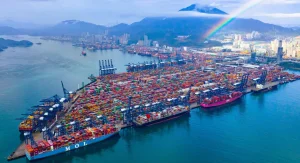
The Port of Shenzhen serves as the maritime gateway to the Pearl River Delta—one of the world’s most powerful manufacturing and technology regions.
-
Structure: Multiple ports including Yantian, Shekou, Chiwan, and Nansha
-
Connectivity: 300+ shipping routes to over 100 countries
Beyond shipping, Shenzhen’s ecosystem is unique. Global logistics firms such as UPS, DHL, Kerry Logistics, and Nippon Express operate large facilities here, while tech giants like Huawei and Tencent are headquartered nearby. This proximity between production, innovation, and export gives Shenzhen a strategic edge.
5. Port of Guangzhou, China – Southern China’s Trade Engine
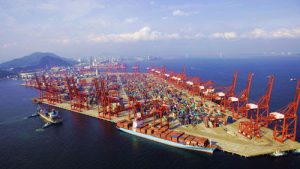
The Port of Guangzhou anchors trade in southern China and supports several inland provinces.
-
Throughput (2018): ~24.5 million TEUs
-
Key terminals: Nansha, Xinsha, Huangpu
The Nansha Deepwater Terminal alone handles over 70% of the port’s total cargo, with facilities designed for mega-container vessels such as CMA CGM’s Ben Franklin. This makes Guangzhou a vital node linking China’s domestic economy with global markets.
6. Port of Qingdao, China – Automation and Heavy Cargo Expertise
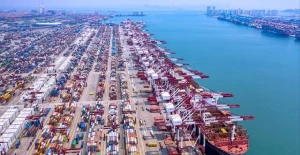
Founded in 1892, the Port of Qingdao occupies a strategic position between the Bohai Rim and Yangtze River Delta regions.
-
Capacity: 500+ million tonnes annually
-
Berths: 96 operational berths
-
Specialty: Partial automation and heavy-lift cargo
Qingdao is often cited as a model for next-generation smart ports, combining automation with large-scale industrial logistics.
7. Port of Busan, South Korea – Transshipment Powerhouse
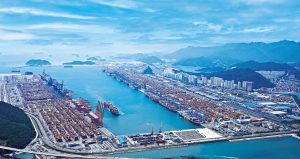
The Port of Busan is South Korea’s maritime lifeline and one of the world’s leading transshipment hubs.
-
Throughput (2019): ~22.7 million TEUs
-
Global ranking: 6th in container volume, 3rd in transshipment
Backed by significant government investment, Busan is rapidly expanding its terminals and logistics zones, aiming to climb even higher in global rankings.
8. Port of Tianjin, China – Northern China’s Strategic Hub
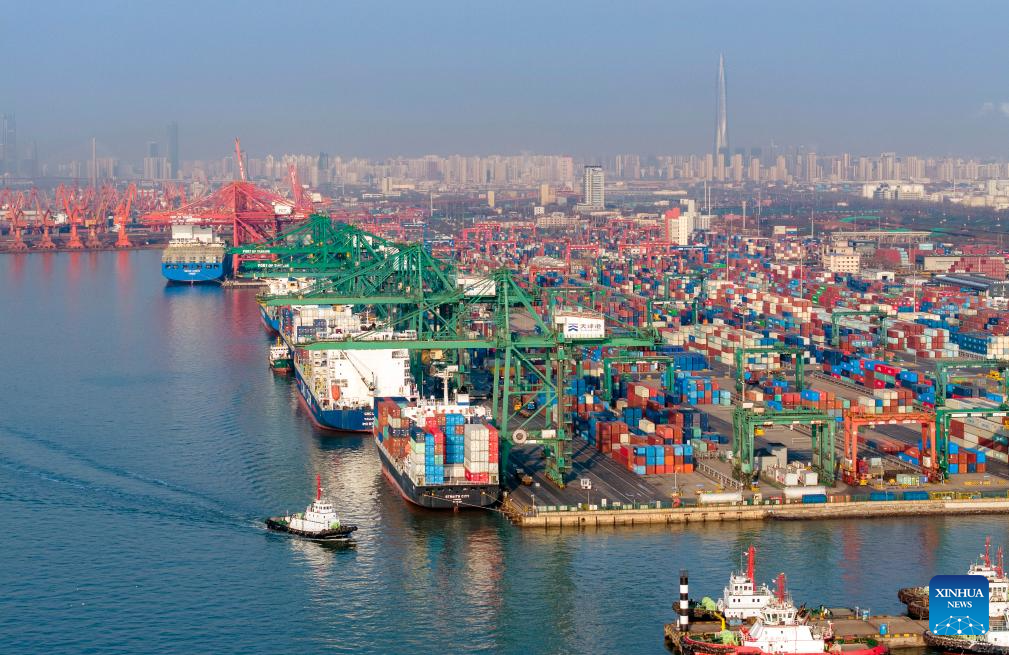
The Port of Tianjin serves as the main maritime gateway for northern China, including Beijing.
-
Area: ~131 km² (largest artificial port in China)
-
Quay length: ~34 km
-
Throughput (2021): ~20.3 million TEUs
Despite setbacks following the 2015 industrial explosions, Tianjin has continued to modernize and remains critical for regional and international trade.
9. Port of Hong Kong – A Former Giant Adapting to Change

Once the world’s busiest container port, Hong Kong now ranks ninth globally.
-
Throughput (2021): ~17.8 million TEUs
-
Connectivity: 470+ ports worldwide
Limited space and competition from rapidly expanding mainland Chinese ports have reduced Hong Kong’s relative position, yet it remains a key deepwater transshipment center.
10. Port of Rotterdam, Netherlands – Europe’s Maritime Gateway
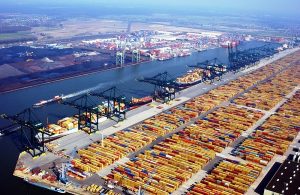
The Port of Rotterdam is Europe’s largest seaport and the only non-Asian port in the global top ten.
-
Historical status: World’s busiest port (1962–2004)
-
Modern features: Automated terminals, robotic cranes, autonomous vehicles
Serving a hinterland of more than 50 million consumers, Rotterdam exemplifies how digitalization and smart logistics can sustain competitiveness even as global trade shifts eastward.
What These Shipping Hubs Tell Us About the Future
The geography of global container shipping reflects broader economic realities:
-
Asia is the center of gravity for manufacturing and exports
-
Scale, automation, and connectivity define port competitiveness
-
European ports must innovate to remain relevant
As container volumes continue to grow and vessels become even larger, the world’s biggest shipping hubs will play an increasingly decisive role in shaping global supply chains, trade resilience, and economic power.