
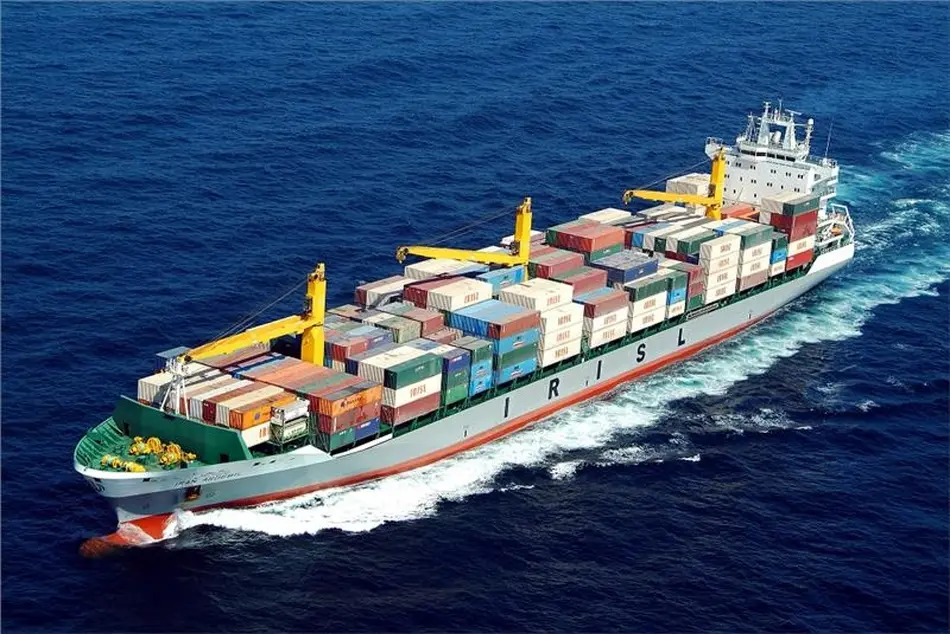
Maritime industry meaning explained: what it includes, why it matters, how it works, and how shipping, ports, and people keep global trade moving.
When people hear the phrase maritime industry, many think only of ships moving across the ocean. In reality, the maritime industry is far broader, deeper, and more influential than a single vessel or voyage. It is the invisible system that enables global trade, energy supply, food security, and economic connectivity between nations.
Every smartphone, vehicle, item of clothing, and piece of furniture you use has likely spent time at sea. More than 80% of global trade by volume is transported by ships. Behind that movement lies a vast network of people, ports, regulations, technologies, and services that together form what we call the maritime industry.
This article explains the meaning of the maritime industry in a clear, structured, and globally accessible way. It explores what the industry includes, how it operates, why it is essential to modern life, and how it is evolving. The goal is to provide a solid foundation for students, professionals, and general readers who want to truly understand the maritime sector beyond surface-level definitions.
Why the Maritime Industry Matters for Maritime Operations
The maritime industry matters because it is the backbone of international commerce and one of the few truly global industries. Ships connect continents in a way that no other transport mode can match at scale or cost.
The engine of global trade
Most international trade relies on maritime transport because it is efficient, flexible, and cost-effective. A single container ship can carry more cargo than thousands of trucks or hundreds of cargo aircraft. This efficiency keeps consumer prices lower and allows economies to specialize and trade competitively.
Organizations such as UNCTAD regularly emphasize that disruptions in maritime transport quickly translate into inflation, shortages, and economic instability.
Strategic importance for nations
For coastal and trading nations, the maritime industry is a strategic asset. Ports generate employment, shipping supports exports, and national fleets enhance economic resilience. Control over sea lanes and maritime infrastructure has historically shaped geopolitical power—and continues to do so today.
Safety, environment, and regulation
Maritime operations involve risk: collisions, groundings, pollution, and human error. The industry therefore operates under a dense regulatory framework coordinated globally by the International Maritime Organization. This ensures that ships built in one country can safely trade worldwide under common rules.
What Is the Maritime Industry?
At its core, the maritime industry includes all activities related to the use of seas and oceans for transport, trade, resources, and services. It is not a single sector but a system of interlinked domains.
A simple definition
The maritime industry can be defined as:
The collection of economic activities, services, infrastructure, and professionals involved in the design, construction, operation, regulation, and support of ships and maritime transport.
This definition highlights that ships are only one element in a much larger ecosystem.
Main Components of the Maritime Industry
Shipping and ship operations
Shipping is the most visible part of the maritime industry. It includes container shipping, bulk carriers, tankers, gas carriers, Ro-Ro vessels, cruise ships, ferries, and offshore support vessels. Each ship type serves a specific function within global trade and mobility.
Ship operations involve navigation, cargo handling, maintenance, crewing, safety management, and compliance with international conventions such as SOLAS and MARPOL, overseen by the International Maritime Organization.
Ports and terminals
Ports are the interface between sea and land. Without ports, ships would be useless. Modern ports are complex logistics hubs, integrating cranes, warehouses, customs, rail links, and digital systems.
Port authorities and terminal operators manage vessel traffic, cargo flows, and safety. European maritime safety coordination, for example, is supported by the European Maritime Safety Agency.
Shipbuilding and repair
Shipyards design, build, and repair vessels. From small coastal craft to ultra-large container ships, shipbuilding requires advanced engineering, skilled labor, and compliance with classification rules.
Classification societies such as Lloyd’s Register, DNV, and American Bureau of Shipping play a central role in ensuring ships meet safety and technical standards.
Maritime services and support industries
Around every ship exists a network of service providers: ship management companies, crewing agencies, insurers, surveyors, lawyers, bunker suppliers, and maritime training institutions. These services enable ships to operate efficiently and legally across jurisdictions.

Maritime Industry Meaning in Economic Terms
Contribution to global GDP
The maritime industry contributes trillions of dollars annually to the global economy. Shipping alone underpins global supply chains, while ports, shipbuilding, offshore energy, and fisheries add further value.
The World Bank has repeatedly highlighted maritime transport as a key enabler of economic development, especially for developing and island nations.
Employment and livelihoods
Millions of people work in maritime-related jobs, both at sea and ashore. Seafarers, dock workers, naval architects, marine engineers, port planners, regulators, and logistics professionals all form part of the maritime workforce.
These jobs often provide stable income and international career mobility, particularly in regions with limited land-based opportunities.
Maritime Industry and Regulation
Why global rules are necessary
Ships operate across borders daily. Without harmonized regulations, safety and environmental protection would be impossible. The maritime industry is therefore one of the most regulated sectors in the world.
International conventions adopted by the International Maritime Organization—such as SOLAS, MARPOL, and STCW—set minimum standards for safety, pollution prevention, and crew training.
Role of flag states and port states
The country under whose flag a ship sails (the flag state) is responsible for enforcing regulations on that vessel. Port states inspect foreign ships calling at their ports through Port State Control regimes. This dual system promotes compliance and accountability.
Technology and Innovation in the Maritime Industry
Digitalization and smart shipping
Modern ships are increasingly digital. Electronic navigation systems, satellite communication, performance monitoring, and automated reporting are now standard. Digitalization improves safety, fuel efficiency, and transparency.
Automation and autonomy
Automation is gradually entering maritime operations, from automated terminals to decision-support systems on ships. Fully autonomous ships remain limited, but partial automation is reshaping crew roles and training requirements.
Environmental technologies
New fuels, energy-efficiency measures, and emission-reduction technologies are transforming ship design and operation. These changes are driven by climate policy and IMO greenhouse gas strategies.
Challenges and Practical Solutions
The maritime industry faces multiple challenges: decarbonization, crew shortages, geopolitical tensions, cyber risks, and aging infrastructure. None of these can be solved in isolation.
Practical solutions involve coordinated regulation, investment in training, technological innovation, and international cooperation. Industry bodies such as the International Chamber of Shipping and BIMCO play important roles in aligning industry responses.
Case Studies and Real-World Applications
Container shipping and global supply chains
The COVID-19 pandemic revealed how sensitive global supply chains are to maritime disruption. Port congestion, vessel delays, and container shortages demonstrated the central role of shipping in everyday life.
Energy transport by sea
Oil, LNG, and increasingly alternative fuels are transported by specialized vessels. Maritime transport enables energy security for importing nations and revenue for exporting countries.
Future Outlook and Maritime Trends
The future maritime industry will be greener, more digital, and more regulated. Decarbonization targets will reshape ship design and operations. Training and human competence will remain essential as systems grow more complex.
At the same time, maritime trade volumes are expected to grow with global population and consumption, ensuring the industry’s continued relevance.
Frequently Asked Questions (FAQ)
What is the maritime industry in simple terms?
It is all activities related to ships, ports, and sea-based transport and services.
Does the maritime industry only include shipping?
No. It also includes ports, shipbuilding, regulation, services, and offshore activities.
Why is the maritime industry important?
Because it enables most global trade and supports economic development worldwide.
Who regulates the maritime industry globally?
Primarily the International Maritime Organization, supported by national authorities.
Are maritime jobs only at sea?
No. Many maritime careers are shore-based in ports, logistics, engineering, and management.
Is the maritime industry changing?
Yes. Digitalization, environmental regulation, and new technologies are transforming it rapidly.
Conclusion
Understanding the maritime industry meaning requires looking beyond ships on the horizon. It is a complex, global system that connects economies, cultures, and people across oceans. From the food we eat to the energy we use, the maritime industry quietly supports modern life.
For students, professionals, and policymakers, appreciating this industry’s scope is the first step toward engaging with its challenges and opportunities. As the world navigates climate change, globalization, and technological transition, the maritime industry will remain not just relevant—but essential.
References
-
International Maritime Organization – https://www.imo.org
-
UNCTAD – https://unctad.org
-
World Bank – https://www.worldbank.org
-
International Chamber of Shipping – https://www.ics-shipping.org
-
Lloyd’s Register – https://www.lr.org
-
DNV – https://www.dnv.com
-
Bowditch, N. The American Practical Navigator.