
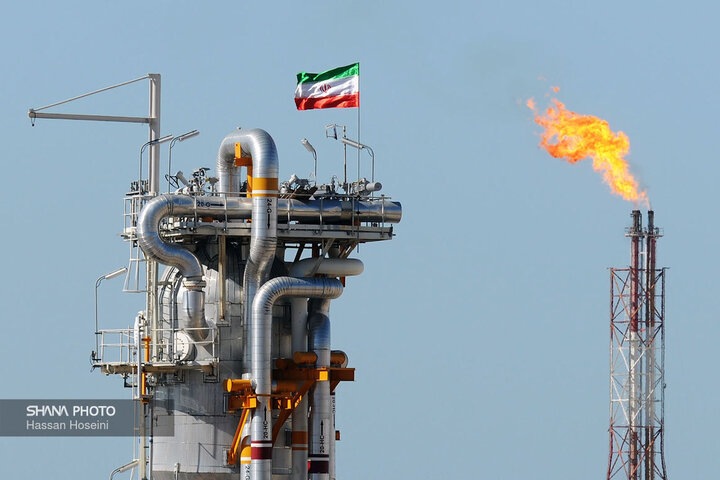
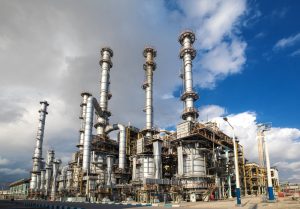
The modern global economy is built on petroleum not only as fuel, but also as chemistry. From jet fuel to plastic components, fertilizers to solvent bases, polyester to pharmaceuticals, the petrochemical chain is the silent infrastructure of daily life. No region contributes more to this chain than the Persian Gulf.
Iran, Saudi Arabia, Qatar, the UAE, and Kuwait have built the world’s densest constellation of refining complexes, LNG condensate processors, ethylene crackers, and downstream petrochemical clusters. What leaves these shores does not merely power vehicles—it builds clothing fibers, phone casings, medical devices, container packaging, solar film coatings, detergents, and fertilizers that feed billions.
And almost all of it passes through one narrow maritime throat: the Strait of Hormuz.
Persian Gulf Petrochemical Power: Beyond Crude Oil
Public debates often focus on crude oil volumes, but the deeper dependency is on what Persian Gulf refineries make after extraction:
- gasoline, diesel, kerosene, jet fuel
- LPG and condensate
- naphtha for petrochemical cracking
- ethylene and propylene chains
- urea, ammonia, and nitrate fertilizers
- polyethylene (PE), polypropylene (PP), PET resins
- synthetic rubbers and elastomers
- industrial solvents, aromatics, methanol
These products are not optional luxuries. They sit at the base of:
- global plastics manufacturing
- food production and agricultural inputs
- aviation networks
- maritime bunkering
- pharmaceuticals and medical packaging
- electronics, cables, insulation foam, textiles
Remove Persian Gulf petrochemical exports and nearly every industrialized economy will face shortages.
Strait of Hormuz: The Petrochemical Artery of the World
The Strait of Hormuz is not just an oil chokepoint; it is the world’s petrochemical gateway. Through it move:
- refined fuels
- condensate and LPG
- petrochemical feedstocks
- LNG ships carrying ethane products and gas derivatives
More than any other corridor on Earth, Hormuz carries value-added hydrocarbons—commodities that cannot be instantly substituted. While crude can be sourced elsewhere with price pain, polymer feedstocks and Gulf-grade petrochemicals have no short-term global replacement at equivalent scale.
If Hormuz Closed: What Actually Breaks First
The common assumption in a Hormuz closure scenario is a sudden collapse in gasoline markets. In reality, the sequence of systemic shock follows a different, more insidious order.
A. Plastics and Packaging Collapse
The first rupture would occur not at the pump, but in global supply chains. The world’s logistical backbone—from shipping films and food seals to the very containers that move goods—depends on polyethylene (PE) and polypropylene (PP) produced in the Gulf. The immediate consequence would be a paralysis in supermarket logistics, cold-chain distribution, and pharmaceutical packaging, as the essential materials for safe transport and storage vanish from the system.
B. Aviation and Jet Fuel
Asia’s vast aviation network, spanning India, Singapore, Malaysia, Korea, and Japan, is critically fueled by jet fuel refined in the Persian Gulf. A closure would force an immediate reduction in flight frequencies, trigger astronomical ticket price spikes, and constrict global air cargo lanes, severing a vital artery of global connectivity and commerce.
C. Fertilizers and Global Food Costs
Qatar and Saudi Arabia are dominant exporters of urea, ammonia, and nitrates, the foundational compounds for modern agriculture. Their absence would cripple grain exporters, destabilize food security across Africa and Asia, and send global cereal prices soaring. The food supply shock would manifest on dinner tables long before the fuel crisis reached the forecourt.
D. Petrochemical Manufacturing Chains
The invisible sinews of modern manufacturing—textiles, automotive plastics, electronics, industrial coatings, and appliance parts—all rely on polymer feedstocks from the Persian Gulf. A full closure, therefore, transcends an energy crisis; it precipitates a global materials crisis, halting production lines far from the Middle East.
Why This Dependency Exists
This profound reliance is not an accident but the result of structural realities. First, the Geographic Refining Logic of the Persian Gulf, with its access to exceptionally cheap extraction zones, allows for refining and petrochemical cracking at a scale and cost unmatched anywhere else. Second, the sheer Scale of capacity built there is unparalleled; while China’s petrochemical industry is massive, it itself is heavily reliant on Gulf naphtha, condensate, and LNG derivatives. Third, Consistency and Specialization matter immensely. Persian Gulf producers export standardized, high-purity grades essential for medical packaging, clean plastics, and specialized manufacturing. These intricate supply chains cannot be instantly rerouted to alternative sources like North Sea oil, US shale streams, or West African crudes:
1. Geographic Refining Logic
The Gulf sits on cheap extraction zones, allowing refining and cracking to happen at extremely competitive cost.
2. Scale
No other region has built petrochemical capacity at Persian Gulf magnitude. China’s capacity is huge but heavily reliant on Gulf naphtha, condensate, and LNG derivatives.
3. Consistency and Specialization
Persian Gulf producers export standardized, high-purity petrochemical grades essential to medical packaging, clean plastics, and specialized manufacturing lines. One cannot instantly shift these chains to North Sea, US shale, or West African streams.
Asia’s Quiet Reliance
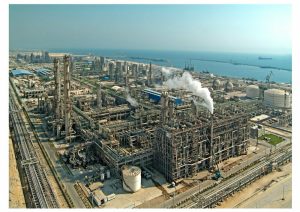
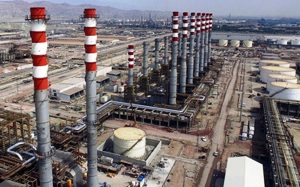
Asia’s economic machinery is disproportionately and quietly wired into this corridor. Japan and Korea depend on Gulf naphtha and LPG; India on refined fuels and polymers; China on petrochemical feedstocks; and Southeast Asia on aviation fuels and fertilizers. Even if alternative crude oil supplies were found, substituting the specific, specialized outputs of Gulf refineries is extremely limited. This output is not merely large—it is specialized, locked into multiyear contracts, and hardwired into the continent’s industrial planning.
In brief, Asia depends disproportionately on this corridor:
- Japan and Korea for naphtha and LPG
- India for refined fuels and polymers
- China for petrochemical feedstocks
- Southeast Asia for aviation fuels and fertilizers
Even if crude supply continues from elsewhere, petrochemical substitution remains extremely limited. Persian Gulf refinery output is not just large—it is specialized, already locked into multiyear supply contracts and built into industrial planning.
Europe’s and Africa’s Fragile Link
The dependency extends west and south. European industry utilizes Persian Gulf polymers to sustain its export manufacturing, while African agriculture is tightly bound to the cycles of Gulf urea and ammonia. Tankers carrying these petrochemicals and fertilizers feed markets from Morocco to Kenya. If these flows slow, the price of bread will rise in African cities long before fuel shortages make headlines in the West.
- European industry uses Gulf polymers to maintain export manufacturing.
- African agriculture is tightly tied to Gulf urea and ammonia cycles.
Persian Gulf petrochemical tankers feed fertilizer markets from Morocco to Kenya. If flows slow, bread prices rise before fuel shortages hit headlines.
Freight, Insurance, and Maritime Confidence
The entire petrochemical supply chain operates on a bedrock assumption of an open Hormuz, predictable tanker insurance rates, uninterrupted bunkering, and risk-neutral transit. A sudden security spike—even absent a full closure—shatters this confidence. Insurance premiums skyrocket and tanker rotations slow. Petrochemicals suffer more acutely than crude because they move on fixed schedules to feed factories, not to speculative trading exchanges. For global manufacturing, the requirement is continuity, not headlines. In short, the petrochemical chain assumes:
- open Hormuz
- predictable tanker insurance rates
- uninterrupted bunkering cycles
- risk-neutral maritime transit
A sudden security spike—even without closure—raises insurance premiums and slows tanker rotation. Petrochemicals suffer more than crude because they move on scheduled supply to factories, not speculative oil exchanges. Factories require continuity, not headlines.
The Invisible Dependence
Most people never see the petrochemicals themselves. They only see the manifestations: packaged food, sterile hospital syringes, detergent bottles, seat cushions, baby formula containers, and smartphone casings. The intricate chain stretching from the Strait of Hormuz to plastics, to packaging, to food and medicine, operates in the background, invisible and taken for granted. But if it breaks, the performance of modern life doesn’t just slow down—it grinds to a halt. Most people never see petrochemicals. They just see:
- packaged food
- clean hospital syringes
- detergent bottles
- seat cushions
- baby formula containers
- smartphone casings
The chain from Hormuz to plastics to packaging to food and medicine is invisible—but if it breaks, modern life is not just slowed; it stops performing.
Conclusion
The Strait of Hormuz is not simply an oil artery—it is the refinery and petrochemical bloodstream of the industrial world.
If oil pauses, markets panic.
If petrochemicals pause, systems fail.
Global agriculture, airlines, medical supply chains, consumer goods manufacturing, and food packaging all depend on continual hydrocarbon transformation in the Persian Gulf and seamless transit through Hormuz.
The world does not merely burn Persian Gulf products—it is built from them.
References
- https://pgpic.ir/en/About-us/Subsidiaries/Production-Companies/The-Persian-Gulf-Hovizeh-Gas-Refining-Co
-
International Energy Agency, refinery and petrochemical dependency reports
-
US Energy Information Administration, Strait of Hormuz chokepoint data
-
UNCTAD Maritime Transport Review, Persian Gulf petrochemical logistics
-
World Bank fertilizer and food security supply assessments
-
Persian Gulf national energy and petrochemical export data (Saudi Aramco, ADNOC, QatarEnergy)
-
OECD petrochemical materials dependency overview
-
APIC and GPCA petrochemical supply chain bulletins
- https://iranpress.com/content/20737/iran-persian-gulf-star-refinery-capacity-expands-60000-bpd