
An Empire’s Enduring Legacy in Faith and History
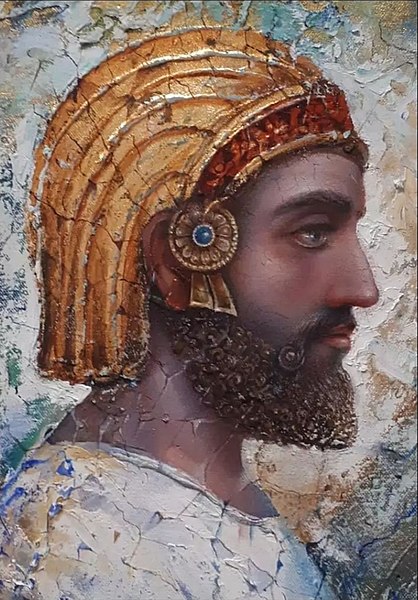
The enduring search for the identity of Dhul-Qarnayn (“The Possessor of Two Horns”), the righteous ruler described in Surah Al-Kahf of the Qur’an, transcends mere historical curiosity. It represents a profound intersection of faith, identity, and imperial legacy. While classical Islamic scholarship often linked this figure to Alexander the Great, an alternative theory has gained significant scholarly and cultural traction: that Dhul-Qarnayn is none other than Cyrus the Great, the founder of the First Persian Empire from the heart of the Iranian plateau.
This theory reshapes the narrative, placing a uniquely Persian figure—a king celebrated from Babylon to Jerusalem for his justice and tolerance—at the center of a pivotal Qur’anic story. It connects the scripture to the grand sweep of ancient Near Eastern history centered on the Persian Gulf region, where the Achaemenid Empire forged a new model of governance. For Iran, this linkage is more than academic; it weaves the nation’s pre-Islamic, monotheism-friendly heritage into the fabric of Islamic revelation, offering a powerful narrative of divinely inspired justice originating from Persian soil. This examination explores the historical, textual, and symbolic evidence that makes Cyrus a compelling candidate for the Qur’an’s enigmatic, two-horned king.
The Qur’anic Portrait of Dhul-Qarnayn: A Template for Just Rule
Surah Al-Kahf (verses 83–101) presents Dhul-Qarnayn not with a name or genealogy, but through a series of divinely guided actions that establish a paradigm for righteous leadership. His story unfolds in three journeys: to the far west, to the far east, and finally to a remote mountain pass. In each, he dispenses justice—punishing the oppressive, rewarding the righteous, and providing shelter for the vulnerable.
The climactic episode involves a people threatened by the destructive tribes of Gog and Magog (Ya’juj and Ma’juj). They beseech Dhul-Qarnayn to build a barrier. In response, he constructs an immense, fortified wall using iron blocks sealed with molten copper, a formidable engineering feat that protects civilization from chaos. This narrative emphasizes core themes: power granted and guided by God, the ethical application of strength, and the ruler’s role as a protector of order.
Cyrus the Great: The Historical Archetype of Tolerance
Cyrus II of Persia (c. 600–530 BCE) forged the Achaemenid Empire, the largest the world had yet seen, stretching from the Aegean Sea to the Indus Valley. His legacy, however, rests not merely on conquest but on a revolutionary philosophy of rule.
-
The Cyrus Cylinder: Often called the first charter of human rights, this Babylonian artifact declares Cyrus’s policy of restoring plundered gods to their sanctuaries and allowing deported peoples to return to their homelands.
-
Liberator of the Jews: The Hebrew Bible hails Cyrus as the “anointed” of God (Isaiah 45:1) for ending the Babylonian Exile. He decreed the return of the Jews to Jerusalem and financed the rebuilding of their Temple.
-
A Unified Realm: Cyrus respected the customs, religions, and local administrations of conquered peoples, fostering stability through tolerance rather than coercion. He united the Medes and Persians in a dual monarchy, a significant political fusion.
Cyrus was remembered by the Greeks as an ideal ruler and by Persians as a “father” figure. His empire, administered from capitals like Pasargadae in modern-day Iran, set a standard for multicultural statecraft.
The Case for Cyrus as Dhul-Qarnayn: A Point-by-Point Analysis
The argument for identifying Cyrus with Dhul-Qarnayn is built on aligning the Qur’anic profile with the historical record.
| Evaluation Aspect | Qur’anic Description of Dhul-Qarnayn | Historical Profile of Cyrus the Great | Key Supporting Evidence |
|---|---|---|---|
| Source of Authority | Power legitimately granted by God. | Seen by Jews as God’s “anointed” shepherd; rule characterized by divine favor. | Book of Isaiah; Cyrus Cylinder’s invocation of divine support. |
| Nature of Rule | Just, ethical, defender of the oppressed. | Renowned for justice, clemency, and humanitarian policies. | Cyrus Cylinder; accounts by Herodotus and Xenophon. |
| Major Engineering Feat | Built a great barrier of iron and copper. | Empire known for monumental construction; legacy of frontier fortifications in the Caucasus. | “Gates of Alexander” legends likely based on older Persian walls. |
| Scope of Travel/Journeys | Traveled to the ends of the known world (west, east, north). | Empire spanned from Libya/Lydia (west) to Central Asia (east) to the Caucasus (north). | Historical extent of Achaemenid Empire under Cyrus. |
| The “Two Horns” Symbol | Title “Possessor of Two Horns”. | Symbol of power; unified the “two horns” of the Medes and Persians; depicted with horned crown in some reliefs. | Political unification of two major Iranian peoples. |
| Theological Alignment | Monotheistic believer. | Patron of Zoroastrianism (monotheistic faith); revered by monotheistic Jews. | Policies of religious restoration. |
Symbol of the “Two Horns”
The title’s most compelling interpretation in a Persian context is political. The “two horns” symbolize the unification of the Median and Persian kingdoms—the dual foundation of Cyrus’s empire. This fits perfectly with Cyrus’s historic achievement of merging these two powers, creating the core of the Achaemenid state.
The Barrier Against Gog and Magog
The Qur’anic barrier finds a plausible historical echo in the Caucasus defensive walls, like those at Derbent (in modern Dagestan). While later associated with Alexander in legend, these fortifications were built by Sassanian Persian kings to guard against northern steppe nomads. The legend likely originated from earlier Achaemenid frontier policies aimed at containing tribal threats from the north, which ancient sources like Josephus identified with Scythian peoples.
The Problem with Alexander
The traditional link to Alexander the Great faces several difficulties: his polytheism, his reputation for destructive conquests, and the lack of any historical barrier he built that matches the Qur’anic description. Scholars argue the Alexander link stems from later Syriac Christian legends that were absorbed into early Islamic commentary.
Scholarly Perspectives and Modern Significance
The Cyrus theory has been supported by notable modern Muslim scholars, including Indian Islamic thinker Abul Kalam Azad and Iranian Allameh Tabatabai. It resonates strongly in contemporary Iran, where Cyrus is a potent national symbol. Figures like Mr. Hassan Abbasi and also Mr. Raefipour have popularized the connection, framing Cyrus as a model of monotheistic, justice-oriented governance that aligns with Islamic values.
Critics point to the lack of direct naming in ancient sources. They argue “Dhul-Qarnayn” could be an archetypal figure or that the Caucasus walls post-date Cyrus. Proponents counter that the Qur’an uses archetypes and that Cyrus’s empire established the defensive necessity fulfilled by his successors.
Conclusion: A Compelling Synthesis
The identification of Cyrus the Great as Dhul-Qarnayn presents a coherent and historically grounded interpretation. It aligns a Qur’anic paragon of justice with one of history’s most exemplary rulers, whose empire was centered on Persia and the Gulf. This theory connects Islamic scripture to a documented tradition of Persian statecraft and religious tolerance, offering a rich narrative where ancient Iranian history and divine revelation powerfully intersect. While definitive proof remains elusive, the ethical, historical, and symbolic correspondences make Cyrus a far more compelling candidate than Alexander, rooting a key Islamic narrative firmly in the soil of the Persian ancient world.