
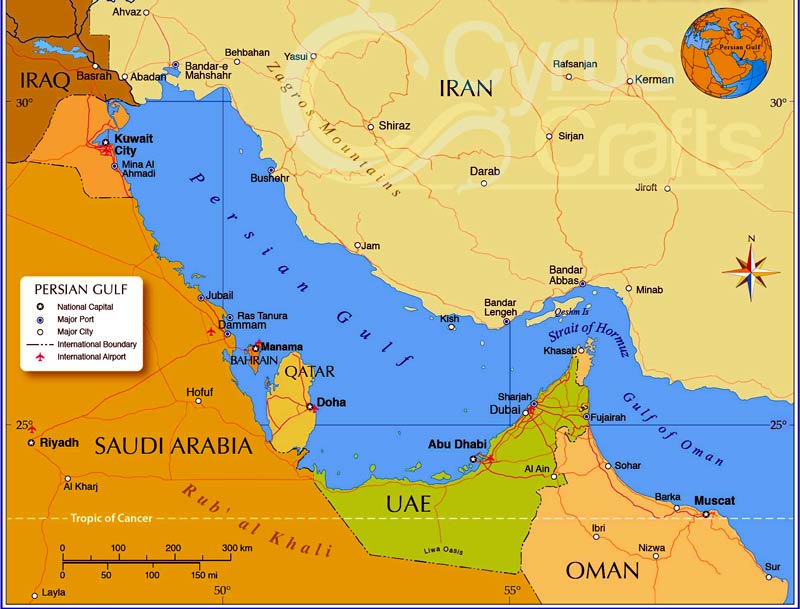
Persian Gulf ports are the backbone of global energy trade, linking oil and LNG producers to world markets through strategic maritime routes.
At dawn, as the sun rises over the calm but strategically charged waters of the Persian Gulf, massive oil tankers and LNG carriers begin another carefully choreographed day. These vessels are not simply ships; they are moving lifelines of the global economy. From the ports of Ras Tanura, Mina al-Ahmadi, Kharg Island, Jebel Ali, and Hamad, energy flows outward to Asia, Europe, Africa, and the Americas. Every departure carries with it not only crude oil or liquefied natural gas, but also geopolitical significance, economic stability, and the daily energy security of billions of people.
The Persian Gulf ports sit at the heart of global energy trade. Despite the rise of renewable energy and regional diversification, hydrocarbons transported from this region continue to power factories, fuel ships, generate electricity, and heat homes worldwide. For maritime professionals, port authorities, ship operators, regulators, and students of shipping economics, understanding the role of Persian Gulf ports is essential to understanding modern maritime trade itself.
Why This Topic Matters for Maritime Operations
For maritime operations, Persian Gulf ports represent a convergence point where port efficiency, navigational safety, geopolitical risk, and environmental responsibility meet. Any disruption in these ports or the shipping lanes connecting them to global markets immediately affects freight rates, tanker availability, insurance premiums, and fuel prices. From a bridge officer navigating congested waters to a port planner designing future terminals, the operational implications are constant and global in scale.
–
The Strategic Geography of the Persian Gulf
A Natural Energy Corridor
The Persian Gulf is a relatively narrow, shallow body of water stretching roughly 1,000 kilometers between the Arabian Peninsula and Iran. What gives it extraordinary importance is not its size, but its position. The Gulf connects to the open ocean through the Strait of Hormuz, a maritime chokepoint barely 21 nautical miles wide at its narrowest navigable section. This narrow passage functions like a valve in the world’s energy system. When it flows freely, global markets remain stable; when threatened, volatility rises almost instantly.
According to data compiled by the U.S. Energy Information Administration, approximately one-fifth of globally traded petroleum passes through the Strait of Hormuz each year. This concentration of energy traffic has no parallel elsewhere in maritime trade, making Persian Gulf ports uniquely sensitive and strategically critical.
Proximity to Energy Reserves
The ports surrounding the Persian Gulf serve countries holding some of the largest proven oil and gas reserves in the world. Saudi Arabia, Iran, Iraq, Kuwait, Qatar, and the United Arab Emirates collectively account for a substantial share of global hydrocarbon supply. Ports are therefore not peripheral infrastructure; they are direct extensions of upstream oil fields and gas reservoirs, designed to move energy from desert wells to distant consumers with minimal delay.
–
Major Persian Gulf Ports Driving Global Energy Trade
Ras Tanura, Saudi Arabia
Ras Tanura is often described as the beating heart of global oil exports. Operated by Saudi Aramco, it is one of the largest oil terminals in the world. The port’s offshore berths and onshore storage facilities allow it to handle millions of barrels per day, supplying crude oil primarily to Asian markets such as China, Japan, and South Korea.
From a maritime perspective, Ras Tanura exemplifies scale and precision. Vessel traffic services, pilotage, and terminal scheduling are tightly integrated to minimize waiting time and reduce navigational risk. Classification societies such as Lloyd’s Register and DNV are heavily involved in maintaining tanker safety standards in this high-density operational environment.
Mina al-Ahmadi, Kuwait
Mina al-Ahmadi serves as Kuwait’s primary oil export terminal. Its offshore loading facilities accommodate very large crude carriers (VLCCs), enabling long-haul shipments to Europe and Asia. The port has steadily modernized its infrastructure, integrating digital monitoring systems to improve loading accuracy and environmental protection.
The port’s development aligns closely with international guidance from organizations such as the International Maritime Organization (IMO), particularly regarding oil pollution prevention and port state control compliance.
Kharg Island, Iran
Kharg Island functions as Iran’s principal crude oil export hub. Despite geopolitical pressures and sanctions affecting trade volumes, the port remains a technically capable and strategically positioned facility. Its exposed offshore loading terminals require advanced mooring systems and weather monitoring, offering real-world lessons in operating under constrained political and environmental conditions.
Jebel Ali and Fujairah, United Arab Emirates
While Jebel Ali is best known as a container megahub, its role in supporting energy trade should not be underestimated. It provides essential services, ship repair, and logistics support for tankers operating across the Gulf. Fujairah, located outside the Strait of Hormuz, has grown into one of the world’s most important bunkering and oil storage hubs. Its geographic position allows vessels to refuel without entering the congested Gulf, reducing navigational and geopolitical exposure.
Industry data from Clarksons Research and Lloyd’s List Intelligence consistently rank Fujairah among the top global bunkering ports, illustrating how strategic location can redefine maritime energy logistics.
Ras Laffan, Qatar
Ras Laffan is synonymous with liquefied natural gas. As the world’s largest LNG export port, it anchors Qatar’s role as a leading LNG supplier. Specialized LNG carriers, built under stringent standards set by IACS member societies such as ABS and ClassNK, operate on fixed schedules connecting Ras Laffan to terminals in Asia and Europe.
The port demonstrates how port design, vessel technology, and international safety codes like the IGC Code come together to enable safe, large-scale gas transport.
–
Energy Shipping Routes and Maritime Chokepoints
The Strait of Hormuz as a Maritime Bottleneck
The Strait of Hormuz is the most critical maritime chokepoint in energy trade. Tankers navigating the strait must follow traffic separation schemes regulated under IMO conventions and monitored by coastal states. The narrow shipping lanes, combined with fishing traffic and naval patrols, demand high situational awareness and strict adherence to the International Regulations for Preventing Collisions at Sea (COLREGs).
Even minor incidents in the strait can ripple across global markets. From a maritime risk management perspective, this makes voyage planning, crew training, and insurance coverage especially complex for Gulf voyages.
Beyond Hormuz: Global Trade Routes
Once through Hormuz, energy cargoes disperse across the Indian Ocean toward the Malacca Strait, the Suez Canal, or the Cape of Good Hope. Each route presents its own operational challenges, from congestion in Southeast Asia to piracy risks in certain regions. Organizations such as the International Chamber of Shipping (ICS) and BIMCO regularly issue guidance to help ship operators manage these risks while maintaining schedule reliability.
–
Port Infrastructure and Technological Evolution
Automation and Digitalisation
Modern Persian Gulf ports increasingly rely on automation to handle high cargo volumes safely and efficiently. Real-time monitoring of loading arms, digital twins of terminal operations, and predictive maintenance systems are becoming standard. These technologies reduce human error and align with safety management principles promoted by the International Safety Management (ISM) Code. For maritime students, these ports offer living examples of how digital transformation reshapes traditional seamanship and port operations.
Environmental Protection Measures
Energy ports face intense scrutiny regarding environmental impact. Oil spills, air emissions, and ballast water management are constant concerns. Persian Gulf ports have responded by investing in spill response vessels, double-hull tanker requirements, and compliance with the Ballast Water Management Convention. Classification societies such as Bureau Veritas and RINA play a key role in verifying compliance, while oversight bodies like EMSA and national authorities such as the UK Maritime and Coastguard Agency (MCA) provide regulatory benchmarks followed worldwide.
–
Challenges and Practical Solutions in Persian Gulf Energy Shipping
Operating in the Persian Gulf presents challenges that go beyond routine maritime operations. High temperatures affect equipment reliability and crew endurance, while shallow waters demand precise draft management. Political tensions add another layer of complexity, influencing insurance costs and voyage planning decisions.
Practical solutions have emerged through experience rather than theory. Enhanced crew training under the STCW Convention, improved weather routing, and stronger cooperation between port authorities and naval forces have collectively improved safety and reliability. The Gulf’s operational environment demonstrates how maritime resilience is built incrementally, through systems, standards, and shared responsibility rather than single technological fixes.
–
Case Studies: Real-World Maritime Energy Operations
LNG Supply Stability During Energy Market Volatility
During periods of global gas shortages, particularly in recent years, LNG exports from Ras Laffan played a stabilizing role for European and Asian markets. Fixed long-term contracts, combined with flexible spot cargoes, allowed Qatar to respond rapidly to demand spikes. From a maritime perspective, this required precise coordination between port schedules, vessel availability, and receiving terminals. Industry analysis published by UNCTAD highlights how such maritime flexibility mitigates supply shocks more effectively than pipeline-based systems alone.
Fujairah’s Rise as a Strategic Energy Hub
Fujairah’s development illustrates how ports can adapt to geopolitical risk. By positioning itself outside the Strait of Hormuz, the port attracted investment in storage, blending, and bunkering facilities. Today, it supports not only Gulf producers but also international shipping lines seeking reliable fuel supplies. This evolution reflects broader principles discussed in port economics literature, including those published by the World Bank on maritime logistics resilience.
–
Future Outlook and Maritime Trends
Energy Transition and the Role of Gulf Ports
While the global energy transition is accelerating, Persian Gulf ports are unlikely to lose relevance in the near future. Instead, their role is evolving. Many ports are investing in infrastructure to handle alternative fuels such as ammonia and hydrogen, positioning themselves as future energy hubs rather than purely oil and gas terminals.
This transition aligns with strategic roadmaps published by organizations like the Global Maritime Forum, which emphasize gradual adaptation rather than abrupt displacement of existing energy systems.
Increased Regulatory Oversight
Future operations will likely face stricter environmental and safety regulations. Enhanced emissions monitoring, digital reporting to flag states, and tighter port state control inspections are already emerging trends. For maritime professionals, familiarity with regulatory bodies such as IACS, IMO, and regional authorities will be as important as traditional navigation skills.
–
Frequently Asked Questions
Why are Persian Gulf ports so important to global energy trade?
They connect some of the world’s largest oil and gas reserves directly to international markets through established maritime routes.
What percentage of global oil passes through the Strait of Hormuz?
Roughly 20% of globally traded petroleum transits the strait each year, making it a critical chokepoint.
Which Persian Gulf port is the largest LNG exporter?
Ras Laffan in Qatar is the world’s largest LNG export port.
How do international regulations affect Gulf energy shipping?
Conventions from the IMO, such as MARPOL and SOLAS, shape vessel design, port operations, and environmental protection measures.
Are Persian Gulf ports adapting to the energy transition?
Yes. Many are investing in infrastructure for alternative fuels and cleaner maritime operations.
What role do classification societies play in Gulf ports?
They ensure vessels and port facilities meet international safety and environmental standards.
–
Conclusion: Key Takeaways for the Maritime Community
Persian Gulf ports are more than export terminals; they are strategic maritime systems that underpin global energy stability. Their continued operation depends on a delicate balance of infrastructure investment, regulatory compliance, technological innovation, and geopolitical awareness. For maritime professionals and students alike, these ports offer invaluable lessons in how shipping, energy, and global economics intersect.
As the energy landscape evolves, understanding Persian Gulf ports and global energy trade remains essential. Those who grasp this relationship are better equipped to navigate the future of maritime operations in an interconnected world.
References
International Maritime Organization (IMO). (2023). IMO conventions and maritime safety. https://www.imo.org
International Chamber of Shipping (ICS). (2023). Shipping and world trade. https://www.ics-shipping.org
UNCTAD. (2023). Review of Maritime Transport. https://unctad.org
World Bank. (2022). Port reform and energy logistics. https://www.worldbank.org
Clarksons Research. (2023). Energy shipping markets outlook. https://www.clarksons.com
Lloyd’s List Intelligence. (2023). Middle East energy trade analysis. https://lloydslist.com
Global Maritime Forum. (2023). Energy transition pathways for shipping. https://www.globalmaritimeforum.org
DNV. (2023). Maritime safety and energy transport. https://www.dnv.com
American Bureau of Shipping (ABS). (2023). LNG carrier standards. https://ww2.eagle.org