
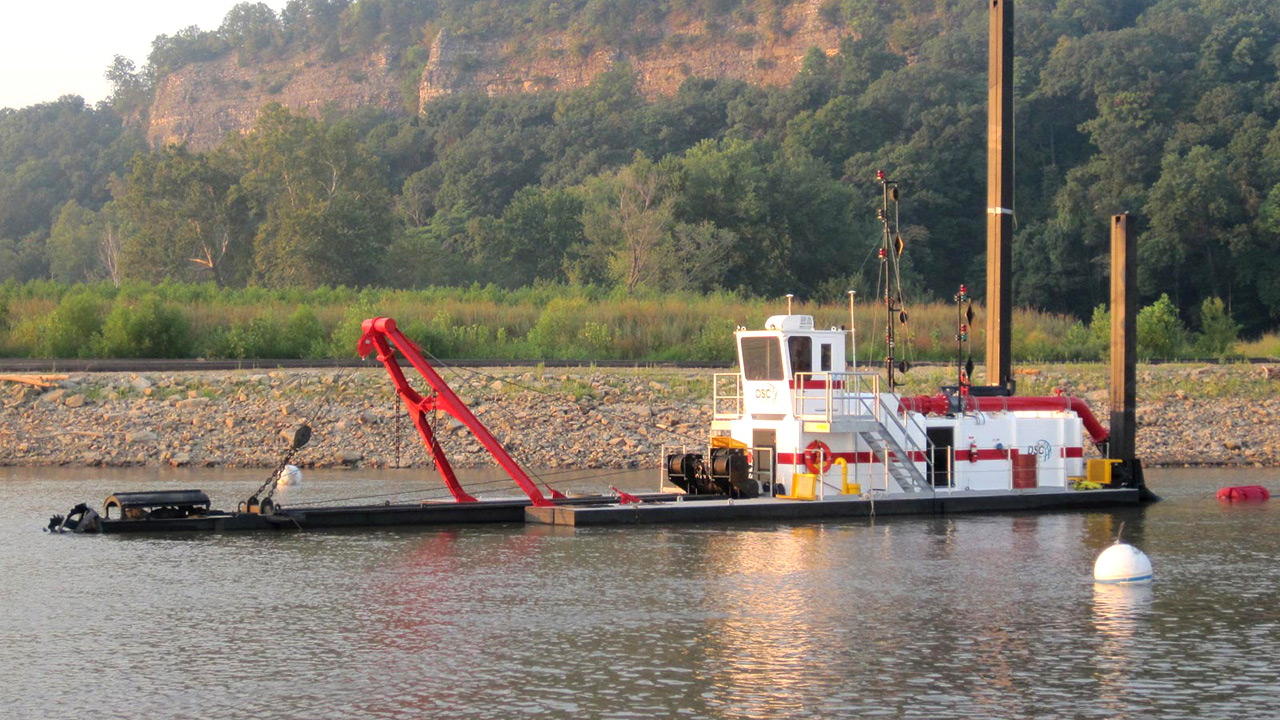
Discover the vital services of dredging companies, from maintaining global shipping lanes and protecting coasts to enabling offshore wind farms and environmental remediation. This guide explores their engineering solutions.
Imagine a world where the largest container ships couldn’t reach their ports, where coastal cities were defenseless against storms, and where the foundations for clean energy couldn’t be built at sea. This would be our reality without dredging—a vital yet often unseen engineering discipline that maintains the very arteries of global trade and development. Dredging companies are the specialized contractors who perform this complex work, operating a fleet of sophisticated vessels to reshape the underwater world. Far from merely “digging,” they provide a diverse portfolio of critical maritime infrastructure services. Their work ensures that approximately 90% of globally traded goods can move through ports, that communities are shielded from rising seas, and that ambitious projects like offshore wind farms transition from blueprint to reality. This article dives deep into the multifaceted world of dredging services, exploring how these companies enable commerce, protect coastlines, fuel the energy transition, and restore aquatic environments.
Why Dredging Services Are Fundamental to Global Systems
Dredging is a cornerstone of maritime operations because it directly addresses the constant dynamic between land and water. Sediment naturally moves with currents and tides, inevitably accumulating in channels and harbors—a process known as siltation. If left unchecked, this natural infilling would strangle ports and block waterways within years. The work of dredging companies to combat this is not a one-time activity but a continuous cycle of maintenance essential for economic security. Beyond maintenance, their capital projects literally expand the map, creating new land for airports, ports, and urban development, particularly in coastal megacities. In the face of climate change, their role has become even more strategic, serving as a first line of defense through beach nourishment and levee construction, and as a key enabler of the green energy revolution by preparing seabeds for wind turbine foundations and inter-array cables. In essence, dredging companies are not just earth-movers; they are strategic partners in building resilient, sustainable, and connected coastal economies on a global scale.
Core Dredging Services: The Pillars of Maritime Infrastructure
The suite of services offered by modern dredging contractors can be broadly categorized by the project’s primary objective. Each category requires distinct expertise, equipment, and methodologies.
Port and Navigation Maintenance Dredging
This is the essential, ongoing service that keeps global commerce flowing. Maintenance dredging involves the periodic removal of accumulated sediments from shipping channels, berths, turning basins, and port approaches to restore them to their designed depths. As global shipping trends towards ever-larger vessels with deeper drafts—such as ultra-large container ships—the tolerance for sedimentation shrinks. A few centimeters of unexpected silt can mean the difference between a fully loaded ship sailing safely or being forced to lighter its load at great expense. Dredging companies perform this work on tight schedules, often using Trailing Suction Hopper Dredgers (TSHDs) that can operate with minimal disruption to port traffic. These self-propelled vessels “trail” a suction pipe along the seabed, collecting material into their hull, then transport it to a designated placement site. For example, the Port of Rotterdam, Europe’s largest, requires continuous maintenance dredging to sustain its 24-meter depth, ensuring access for the world’s biggest ships. This service is the non-negotiable foundation of port operability, directly impacting a region’s competitiveness and trade capacity.
Capital Dredging for New Ports and Waterways
While maintenance preserves existing infrastructure, capital dredging creates it. This service involves the excavation of virgin seabed or land to construct entirely new maritime assets or significantly enlarge existing ones. Projects include deepening and widening approach channels for new port terminals, carving out new harbors, or creating access canals for industrial facilities. This is large-scale, precision engineering, often involving the removal of hard materials like rock, which requires powerful Cutter Suction Dredgers (CSDs). These stationary vessels use a rotating cutter head to break up material, which is then pumped through pipelines over long distances, sometimes for reclamation. A landmark example is the expansion of the Suez Canal in 2015, where dredging companies excavated over 250 million cubic meters of material to create a new parallel channel, effectively doubling the canal’s capacity. Such projects are monumental undertakings that reshape geography and redefine global trade routes.
Coastal Protection and Beach Nourishment
In an era of sea-level rise and intensifying storms, dredging companies are key players in climate adaptation. Coastal protection services involve engineering natural or hard structures to reduce erosion and flood risk. Beach nourishment—the placement of sand onto eroding shores—is a primary soft engineering technique. Dredging companies source high-quality sand from offshore borrow areas using TSHDs and spray it onto beaches, rebuilding coastal buffers that protect inland property and habitat. Beyond beaches, they construct hard defenses like submerged breakwaters, seawalls, and revetments. These projects often involve the precise placement of rock and engineered armor units. Following Hurricane Sandy in the US, massive beach nourishment projects along the New Jersey and New York coastlines, involving millions of cubic yards of sand, were crucial for restoration and future resilience. This service blends civil engineering with environmental science to safeguard communities.
Land Reclamation
Land reclamation is the ultimate act of maritime territorial creation. Dredging companies provide the service of reclaiming land from the sea by hydraulically pumping dredged sand into confined areas, building new ground for development. This is a cornerstone of urban expansion in dense coastal cities and island nations. The scale can be staggering. Projects like Singapore’s Tuas Port development or the Palm Islands in Dubai required billions of cubic meters of fill material. The process involves precise planning: building containment dykes, selecting suitable sand, and implementing drainage to accelerate consolidation. Beyond urban expansion, reclamation creates space for critical infrastructure such as airports (e.g., Hong Kong International Airport), industrial zones, and port terminals. This service transforms maritime space into valuable terrestrial assets, addressing geographical constraints and fueling economic growth.
Environmental and Remediation Dredging
This specialized service focuses on improving water quality and ecosystem health. Environmental dredging targets the removal of contaminated sediments polluted by historical industrial activity—such as heavy metals, PCBs, or pesticides—from riverbeds, lakes, and harbors. The work requires extreme care to avoid spreading pollutants. Dredging companies use enclosed, precision equipment like environmental grabs or hydraulic dredges with silt curtains to minimize resuspension. The contaminated material is then transported to licensed, secure containment facilities. A notable example is the ongoing cleanup of the Great Lakes Areas of Concern in the United States and Canada, where decades of sediment remediation are restoring aquatic ecosystems. Related services include water quality improvement projects, where dredging removes nutrient-rich sediments that cause harmful algal blooms, and habitat restoration, such as recreating tidal wetlands or oyster beds. This work demonstrates the industry’s pivot towards not just infrastructure, but ecological stewardship.
Offshore Wind Farm Site Preparation and Cable Trenching
The global push for renewable energy has created a major new market for dredging services: offshore wind. Dredging companies are essential in preparing the seabed for turbine foundations, whether for monopiles, jacket structures, or gravity-based foundations. This involves leveling the seabed and removing obstacles to ensure stable installation. Furthermore, they provide cable trenching and burial services to protect the inter-array and export power cables that connect turbines to each other and to the shore. Specialized vessels, including fallpipe vessels for rock placement and jetting or ploughing systems for cables, are used. In Europe’s North Sea, companies like DEME and Van Oord are instrumental in building wind farms like Hollandse Kust Zuid. As the International Energy Agency (IEA) highlights the need for a massive acceleration in offshore wind to meet net-zero goals, the role of dredging in site preparation becomes increasingly strategic and in demand.
Table 1: Overview of Key Dredging Services and Their Applications
| Service Category | Primary Objective | Typical Equipment Used | Example Project Outcome |
|---|---|---|---|
| Maintenance Dredging | Maintain safe navigational depths | Trailing Suction Hopper Dredger (TSHD) | A port channel remains accessible to deep-draft vessels year-round. |
| Capital Dredging | Create new maritime infrastructure | Cutter Suction Dredger (CSD), Backhoe Dredger | A new deep-water port terminal is constructed. |
| Coastal Protection | Defend shorelines from erosion/flooding | TSHD (for nourishment), Rock placement vessels | An eroded beach is widened, restoring habitat and storm buffer. |
| Land Reclamation | Create new land from water bodies | CSD, TSHD, Long-distance pumping systems | New ground is formed for an airport runway or urban expansion. |
| Environmental Dredging | Remove contaminated sediments | Environmental Grab Dredger, Closed clamshells | A polluted riverbed is cleaned, improving water quality and ecology. |
| Offshore Wind Support | Prepare seabed and protect cables | Fallpipe vessel, Cable plough/ Trencher | A leveled seabed ready for turbine installation and buried cables. |
The Enabling Technologies and Expertise Behind the Services
Delivering these diverse services requires more than just powerful vessels; it demands an integrated suite of technologies and deep multidisciplinary expertise.
Advanced Fleet and Precision Equipment
Modern dredging companies operate a sophisticated fleet, each vessel type a tool for a specific task. The Cutter Suction Dredger (CSD), with its powerful cutter head, is the standard for hard soils and long-distance pumping. The Trailing Suction Hopper Dredger (TSHD) offers mobility and efficiency for large-volume sand projects. For precision work near structures or in contaminated sites, Backhoe Dredgers and Grab Dredgers are employed. The industry is continuously innovating, developing hybrid propulsion systems and vessels capable of using alternative fuels to reduce carbon footprints. Furthermore, specialized assets like rock installation vessels for coastal defense or cable-laying vessels for the offshore wind sector are now integral parts of a leading contractor’s portfolio.
Digitalization and Monitoring
The industry has been transformed by digital tools. Precision dredging is now standard, using Real-Time Kinematic (RTK) GPS and 3D underwater surveys to guide excavators with centimeter-level accuracy. Companies employ digital twin technology to model projects virtually before execution, optimizing efficiency. During dredging, turbidity monitoring is critical for environmental compliance. Sensors measure suspended particles in the water, allowing operators to adjust their methods instantly to stay within strict limits set by agencies like the US Environmental Protection Agency (EPA) or the European Maritime Safety Agency (EMSA). This data-driven approach minimizes environmental impact and ensures contractual precision.
Integrated Project Management and Engineering
Perhaps the most critical “service” is intangible: integrated project management. A major dredging contract is a complex maritime engineering project. It requires expertise in geotechnical engineering (to understand soil mechanics), hydrography (for surveying), marine biology (for environmental impact assessment), and navigation safety. Dredging companies manage a vast logistical chain—from sourcing fill material and obtaining permits from bodies like the US Army Corps of Engineers, to coordinating with marine traffic and ensuring the safety of their crews and the public. Their project managers synthesize these disciplines to deliver on time, within budget, and in compliance with all regulations—a service as valuable as the physical dredging itself.
The Future of Dredging Services: Sustainable and Smart Solutions
The trajectory of the dredging industry is being reshaped by two powerful forces: the imperative of sustainability and the rise of smart technology. Leading companies are no longer just service providers; they are becoming solutions partners for a changing world.
The Sustainability Imperative: Circular Dredging
The traditional linear model of “dredge, transport, dispose” is evolving towards a circular economy model. The focus is on finding beneficial uses for all dredged material. Clean sand is a resource for nourishment or reclamation. Silts and clays are being investigated for uses in construction materials, such as bricks or as a component in cement. Innovations like de-watering and treatment plants allow for the processing of contaminated sediments, transforming a waste problem into inert material for landfill cover or controlled applications. This “circular dredging” approach minimizes the need for disposal sites and aligns with global sustainability goals, turning a necessary service into a creator of secondary resources.
Decarbonization and Green Fleet Transition
The maritime sector, including dredging, is under pressure to reduce greenhouse gas emissions. Dredging companies are investing in the green transition of their fleets. This includes retrofitting existing vessels with energy-saving devices, experimenting with biofuels, and designing newbuilds with battery-hybrid propulsion or LNG power. The ultimate goal is to develop vessels capable of running on green methanol or hydrogen. These advancements are not merely for regulatory compliance; they represent a long-term strategic shift to reduce fuel costs and future-proof operations in a carbon-constrained world.
Autonomy, AI, and the Smart Dredge
The future is intelligent. The industry is moving towards increased automation and data analytics. We are seeing the development of autonomous survey vessels that can map a site without a crew on board. Artificial Intelligence (AI) is being applied to optimize dredge pump performance in real-time, adjusting for soil type to maximize efficiency. Predictive maintenance algorithms analyze equipment data to prevent breakdowns before they happen. These smart technologies promise significant gains in safety—by removing personnel from hazardous areas—and in efficiency, reducing project time, fuel consumption, and costs. The dredging company of the future will leverage these tools to provide even more precise, predictable, and sustainable services.
FAQ: Common Questions About Dredging Services
1. What’s the difference between capital and maintenance dredging?
Capital dredging involves excavating new material, usually for a new construction project like a port expansion or canal. It’s a one-time, large-scale effort to create new infrastructure. Maintenance dredging is the recurring removal of recently settled material (silt, sand) to keep an existing waterway or port at its designed operational depth. Think of capital dredging as building a new road, and maintenance dredging as repaving and clearing that road regularly.
2. How do dredging companies handle environmentally sensitive areas?
They employ a range of mitigation measures. These include using precision equipment to minimize spillage, installing silt curtains to contain suspended sediments, conducting pre- and post-dredging ecological surveys, and carefully timing work to avoid sensitive periods like fish spawning seasons. For contaminated sites, they use enclosed clamshells and closely monitor water quality. Environmental protection plans are a core part of modern project execution.
3. Is the material from dredging just waste?
Absolutely not. While some contaminated material requires secure disposal, the vast majority of dredged material is a valuable resource. Clean sand is essential for beach nourishment and reclamation. Other materials are increasingly used in construction, agriculture, and habitat creation. The industry’s goal is to find a beneficial use for all dredged material, moving towards a “zero-waste” model.
4. How long does a typical dredging project take?
The duration varies enormously. A small marina maintenance project might take a week. A major port deepening or land reclamation project can take several months to multiple years. The timeline depends on the volume of material, weather conditions, equipment used, and complexity of environmental and logistical constraints.
5. What are the biggest challenges in a dredging project?
Key challenges include accurately identifying subsurface soil conditions (which can differ from initial surveys), managing environmental compliance in real-time, working within narrow weather windows, coordinating with active maritime traffic, and securing suitable placement sites for dredged material. Effective risk management and experienced project teams are crucial to navigate these challenges.
6. How is the offshore wind industry changing dredging services?
It has created a major new, high-growth market. It demands specialized services like seabed leveling and cable trenching, driving innovation in vessel design (e.g., jack-up dredgers) and precision technology. It also pushes the industry towards greener operations to align with the sustainability ethos of renewable energy. Dredging has become an indispensable part of the offshore wind supply chain.
7. Who regulates dredging activities?
Dredging is heavily regulated. Multiple authorities are typically involved: national or federal agencies (like the U.S. Army Corps of Engineers or UK’s Marine Management Organisation), port authorities, and environmental protection agencies. They regulate permits, environmental impact, navigation safety, and the final placement of dredged material. International frameworks from the IMO, particularly the London Convention on dumping at sea, also provide guidelines.
Conclusion: The Integral Role of Dredging in Our World
From ensuring the ship delivering your goods can reach port to protecting coastal homes from storm surges and enabling the clean energy transition, the services of dredging companies are deeply woven into the fabric of modern life. They are the unseen enablers of global trade, climate resilience, and sustainable development. This exploration reveals an industry that has evolved far beyond simple excavation. Today’s leading dredging contractors are integrated marine engineers, combining massive mechanical power with digital precision, environmental science, and complex project management to solve some of the most pressing challenges at the water’s edge. As global trends—from megaships and sea-level rise to the offshore wind boom—continue to evolve, the demand for their expertise will only grow. Their ongoing transformation towards circular practices and smart technologies promises that this essential industry will continue to build and protect our world, not just with scale, but with increasing sophistication and responsibility. When you look at a thriving port, a restored beach, or an offshore wind farm, you are seeing the indispensable handiwork of dredging.
References
-
International Maritime Organization (IMO). London Convention and Protocol.
-
UNCTAD. Review of Maritime Transport 2023.
-
International Energy Agency (IEA). Offshore Wind Outlook 2023.
-
European Marine Safety Agency (EMSA). Environmental Aspects of Dredging.
-
U.S. Army Corps of Engineers (USACE). Dredging and Dredged Material Management.
-
PIANC (The World Association for Waterborne Transport Infrastructure). Sustainable Dredging Practices.
-
Van Oord. Offshore Wind Project Portfolio.
-
DEME Group. Environmental Dredging and Remediation.
-
Boskalis. Coastal Protection and Beach Nourishment.
-
Marine Technology Society. Advances in Dredging Technology.