


A comprehensive guide to Wallem Ship Management covering fleet size, services, safety standards, and global operations across commercial shipping.
In a maritime industry shaped by global trade volatility, regulatory complexity, and accelerating decarbonisation, ship management companies operate largely out of public view yet exert a decisive influence on safety, efficiency, and commercial performance. One of the most established names in this domain is Wallem Ship Management. With more than a century of maritime heritage, Wallem has evolved from a regional shipping house into a global ship management organisation supporting owners, charterers, and financiers across multiple vessel segments.
For maritime professionals, students, and industry observers, understanding how Wallem structures its fleet management, delivers technical and crew services, and operates across continents provides valuable insight into how modern third-party ship management works in practice. This article explains Wallem’s fleet scale, service portfolio, and global operational footprint in a clear, people-first manner suitable for international readers, including those for whom English is not a first language.
Why This Topic Matters for Maritime Operations
Ship management directly affects vessel safety, regulatory compliance, operating costs, crew welfare, and environmental performance. As owners increasingly outsource management to specialised firms, understanding how a global manager like Wallem operates helps stakeholders evaluate risk, quality, and long-term value in shipping operations.
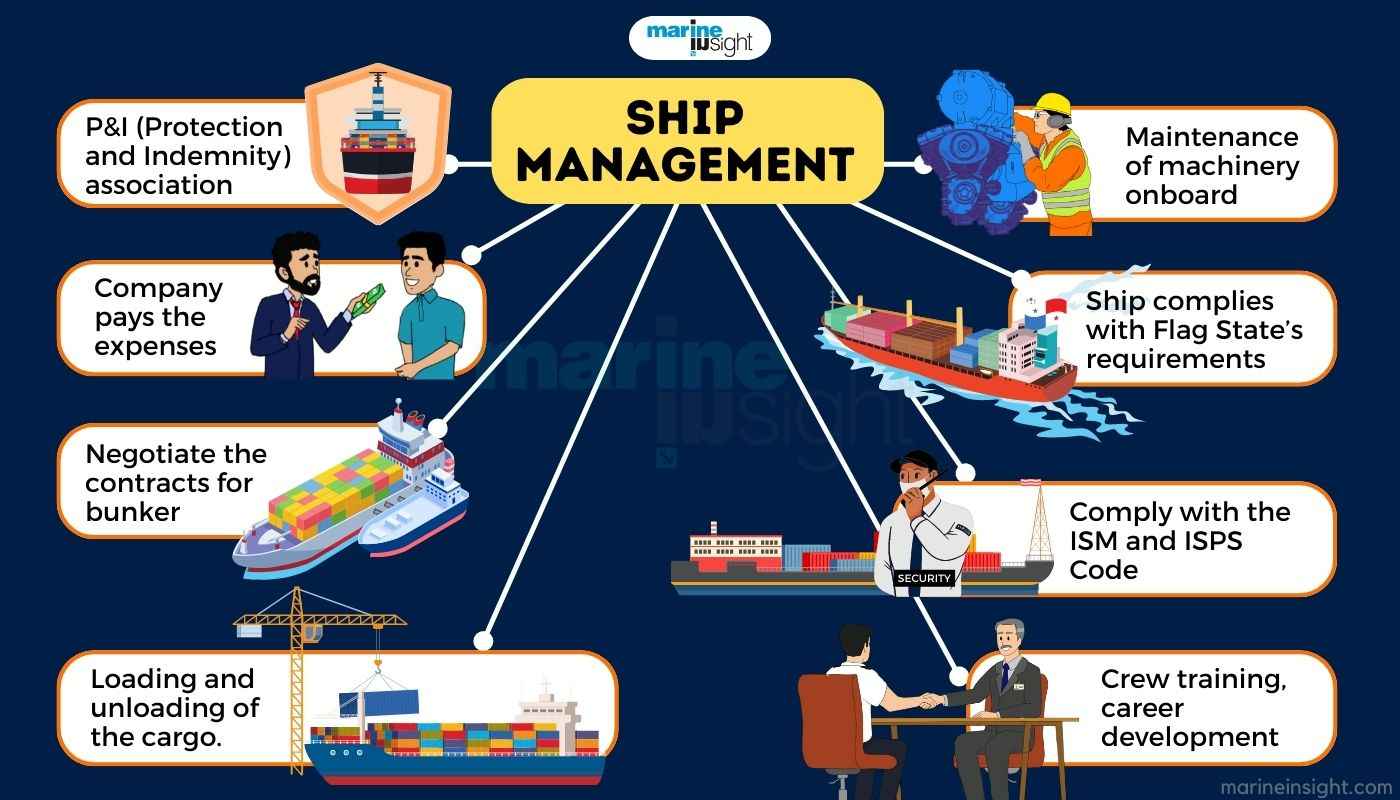
Credit: Marineinsight
Company Background and Corporate Evolution
Wallem traces its origins to the early twentieth century in Asia, developing initially as a trading and shipping enterprise. Over time, the group adapted to shifts in global shipping by separating ownership from management and focusing on professional ship management services. This transition mirrors a broader industry trend in which owners retain strategic control while delegating day-to-day operations to technically sophisticated managers.
Today, Wallem functions as a third-party ship manager, working for a diverse client base that includes shipowners, private equity investors, leasing houses, and banks. Its longevity is not only a matter of age but of institutional learning—procedures, safety culture, and compliance systems refined across multiple shipping cycles and regulatory eras.
Fleet Size and Vessel Portfolio
Overall Fleet Scale
Wallem manages a fleet numbering in the hundreds of vessels. While exact figures fluctuate as contracts begin and end, the company consistently ranks among the larger independent ship management firms worldwide. The managed fleet spans multiple flag states and class societies, reflecting the globalised nature of modern shipping.
This scale allows Wallem to benefit from operational economies without losing the ability to tailor services to individual owners. From a management perspective, fleet size matters because it determines bargaining power with suppliers, access to crew pools, and the ability to invest in digital and safety systems.
Vessel Types Under Management
Wallem’s portfolio is intentionally diversified. The managed fleet includes bulk carriers, container ships, tankers, gas carriers, and selected specialised vessels. Bulk carriers form a substantial share, reflecting steady demand for professional management in the dry bulk sector, where cost control and safety performance are critical to charterer confidence.
Container vessels under Wallem’s care range from feeder ships to larger liner-trade vessels, requiring strong coordination with terminal operators, liner schedules, and port state control regimes. Tankers and gas carriers, although fewer in number, demand higher technical specialisation and strict adherence to international conventions such as MARPOL and the ISGOTT framework, reinforcing Wallem’s emphasis on structured safety management systems.
Flags and Classification Societies
Wallem-managed vessels are registered under a variety of reputable flag administrations, including open and national registries. The fleet is classed by leading members of the International Association of Classification Societies (IACS), such as Lloyd’s Register, DNV, ABS, and Bureau Veritas. Managing across multiple flags and classes requires robust internal compliance systems to ensure that survey cycles, statutory certificates, and class conditions are continuously monitored and addressed.
Core Ship Management Services
Technical Ship Management
At the heart of Wallem’s offering lies technical ship management. This function covers planned maintenance, dry-docking, condition monitoring, and technical troubleshooting. Engineers ashore work closely with shipboard teams to ensure machinery reliability and compliance with class and statutory requirements.
A practical way to understand technical management is to think of it as preventive healthcare for ships. Rather than reacting to failures, Wallem’s systems emphasise planned maintenance schedules, trend analysis of machinery data, and early intervention. This approach reduces off-hire risk and supports predictable operating budgets for owners.
Crew Management and Training
Crew management is one of the most sensitive aspects of ship operations, as it directly affects safety, performance, and compliance with the Maritime Labour Convention (MLC). Wallem recruits and manages multinational crews, ensuring certification in line with the STCW Convention and flag-state requirements.
Beyond recruitment, Wallem invests in training and career development. Structured appraisal systems, competency matrices, and refresher training help maintain consistent standards across the fleet. For seafarers, this translates into clearer career pathways and more stable employment relationships, while owners benefit from lower crew turnover and better onboard performance.
Safety Management and Regulatory Compliance
Wallem operates Safety Management Systems (SMS) aligned with the International Safety Management (ISM) Code. These systems define procedures for navigation, cargo handling, machinery operation, and emergency response. Regular internal audits, combined with external audits by flag states and classification societies, ensure continuous compliance.
From an educational perspective, Wallem’s approach illustrates how the ISM Code functions not as a static manual but as a living management framework. Lessons learned from incidents and near-misses are fed back into procedures, closing the loop between experience and formal documentation.
Commercial and Operational Support
While not a commercial operator in the chartering sense, Wallem provides operational support that directly influences commercial outcomes. Voyage optimisation, fuel management, and port cost control all affect a vessel’s profitability. By monitoring bunker consumption and route planning, Wallem helps owners reduce operating expenses while meeting charterer expectations.
This operational role becomes increasingly important under market mechanisms such as the IMO Carbon Intensity Indicator (CII), where operational decisions directly influence regulatory ratings and, potentially, market access.

Digitalisation and Technology Adoption
Fleet Management Systems
Modern ship management relies heavily on digital platforms. Wallem employs integrated fleet management systems covering maintenance, procurement, crew records, and compliance tracking. These systems provide transparency to owners, who can access performance data and compliance status in near real time.
Digitalisation also enhances internal coordination. Shore staff across different offices can work from a common data environment, reducing information silos and supporting consistent decision-making across the fleet.
Data-Driven Decision Making
Beyond basic record-keeping, Wallem increasingly uses data analytics to support maintenance planning and fuel efficiency initiatives. By analysing trends in machinery performance or fuel consumption, the company can identify anomalies before they escalate into failures or regulatory non-compliance.
For maritime students, this illustrates a key industry shift: ship management is no longer only about experience and intuition, but also about interpreting data streams to support safer and more efficient operations.
Environmental Management and Decarbonisation
Environmental compliance has moved from a regulatory obligation to a strategic priority. Wallem supports owners in meeting MARPOL requirements, ballast water management standards, and sulphur emission limits. More recently, attention has turned to greenhouse gas reduction under IMO’s revised climate strategy.
Wallem assists with implementing energy-efficiency measures such as hull performance monitoring, speed optimisation, and fuel management practices. While ship managers do not decide on major capital investments like alternative fuels, they play a crucial role in ensuring that operational measures deliver measurable emission reductions.
In practical terms, Wallem acts as the interface between regulatory ambition and operational reality, translating abstract policy goals into day-to-day shipboard practices.
Global Operations and Office Network
Geographic Presence
Wallem’s operations are supported by a global network of offices across Asia, Europe, and other maritime hubs. This geographic spread allows the company to remain close to both vessels and clients, facilitating rapid response to technical issues, port state control inspections, or crew changes.
A decentralised office structure also reflects the reality of shipping as a 24-hour industry. When a vessel encounters an issue in one time zone, support can be mobilised from another, reducing delays and operational risk.
Interface with Authorities and Industry Bodies
Operating globally requires constant interaction with maritime authorities and industry organisations. Wallem works with flag administrations, port state control regimes, and classification societies to ensure compliance and smooth vessel operations. Engagement with organisations such as the International Maritime Organization (IMO) and the International Chamber of Shipping (ICS) keeps the company aligned with evolving regulatory expectations.
Quality Assurance and Risk Management
Quality assurance in ship management is about consistency. Wallem applies standardised procedures across its fleet while allowing for vessel-specific adaptations. Internal audits, management reviews, and key performance indicators are used to monitor safety, environmental performance, and operational reliability.
Risk management extends beyond technical failures to include human factors, cyber security, and regulatory change. By identifying risks early and embedding mitigation measures into procedures, Wallem supports owners in navigating an increasingly complex operating environment.
Case Examples from the Fleet
While individual client details are confidential, typical examples illustrate Wallem’s role in practice. A bulk carrier undergoing a mid-life special survey benefits from coordinated planning between the technical team, class society, and shipyard, minimising downtime and cost overruns. A container vessel operating under tight liner schedules relies on efficient crew changes and proactive maintenance to avoid delays.
These examples show how ship management is not an abstract service but a series of coordinated actions that keep ships trading safely and profitably.
Future Outlook and Industry Trends
Looking ahead, ship management companies face both challenges and opportunities. Regulatory complexity will continue to increase, particularly in environmental and social governance. Digitalisation will deepen, with greater use of remote inspections, condition-based maintenance, and integrated reporting platforms.
For Wallem, maintaining competitiveness will depend on balancing scale with service quality. Investment in people, systems, and compliance capabilities will remain essential as owners demand higher transparency and demonstrable performance improvements.
Frequently Asked Questions
How many ships does Wallem manage?
Wallem manages several hundred vessels globally, with numbers varying as management contracts change.
What types of ships are in Wallem’s fleet?
The managed fleet includes bulk carriers, container ships, tankers, gas carriers, and selected specialised vessels.
Does Wallem own ships?
Wallem primarily operates as a third-party ship manager and does not generally own the vessels it manages.
How does Wallem ensure safety and compliance?
Through ISM-compliant Safety Management Systems, regular audits, crew training, and close coordination with flag states and class societies.
Is Wallem involved in decarbonisation efforts?
Yes. Wallem supports owners with energy-efficiency measures, emissions monitoring, and compliance with IMO environmental regulations.
Where is Wallem headquartered?
Wallem’s historical roots and corporate presence are in Asia, with a global network of operational offices.
Conclusion and Key Takeaways
Wallem Ship Management exemplifies how modern ship management integrates technical expertise, crew welfare, regulatory compliance, and digital tools into a cohesive operational model. Its large and diverse fleet, global office network, and structured management systems illustrate why third-party managers play a central role in today’s shipping industry.
For shipowners, maritime professionals, and students, understanding Wallem’s approach provides a practical window into how ships are managed safely and efficiently across the world’s oceans. As shipping continues to evolve, the role of experienced, globally connected managers like Wallem will remain critical to sustaining safe and responsible maritime trade.
References
International Maritime Organization (IMO). (2023). IMO instruments and conventions. https://www.imo.org
International Chamber of Shipping (ICS). (2024). Shipping and world trade. https://www.ics-shipping.org
International Association of Classification Societies (IACS). (2024). About IACS and its members. https://iacs.org.uk
UNCTAD. (2023). Review of Maritime Transport. https://unctad.org
Lloyd’s List Intelligence. (2024). Ship management and fleet trends. https://lloydslist.com
Equasis. (2024). Global ship and company information. https://www.equasis.org