
12/29/2025
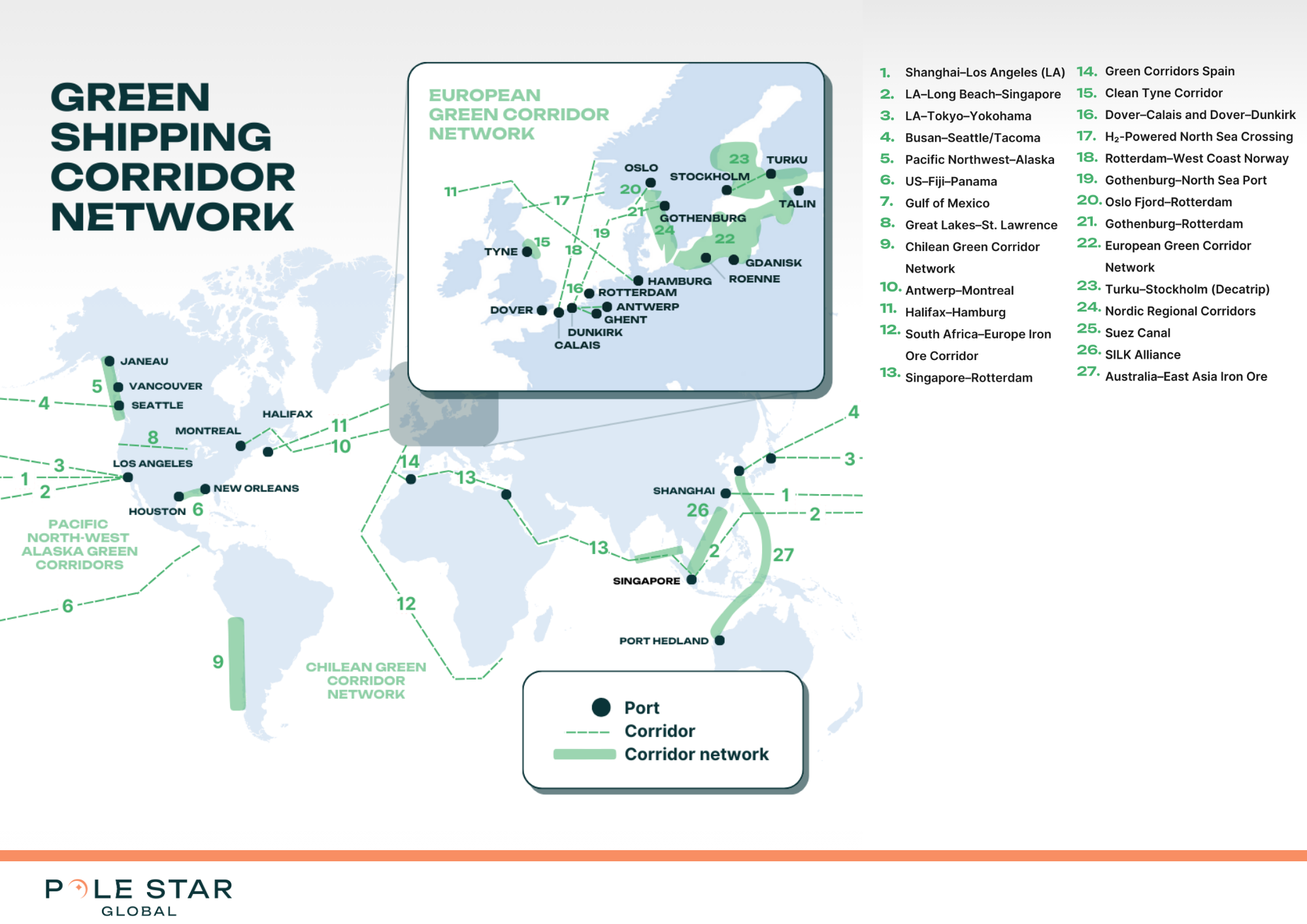
Global momentum behind green shipping corridors is accelerating, with several initiatives now transitioning from planning to execution. According to the latest annual assessment by the Global Maritime Forum and the Getting to Zero Coalition, four corridors have entered the implementation stage, marking a critical milestone in the pathway toward zero-emission maritime transport.
Rapid Expansion of Corridor Initiatives Worldwide
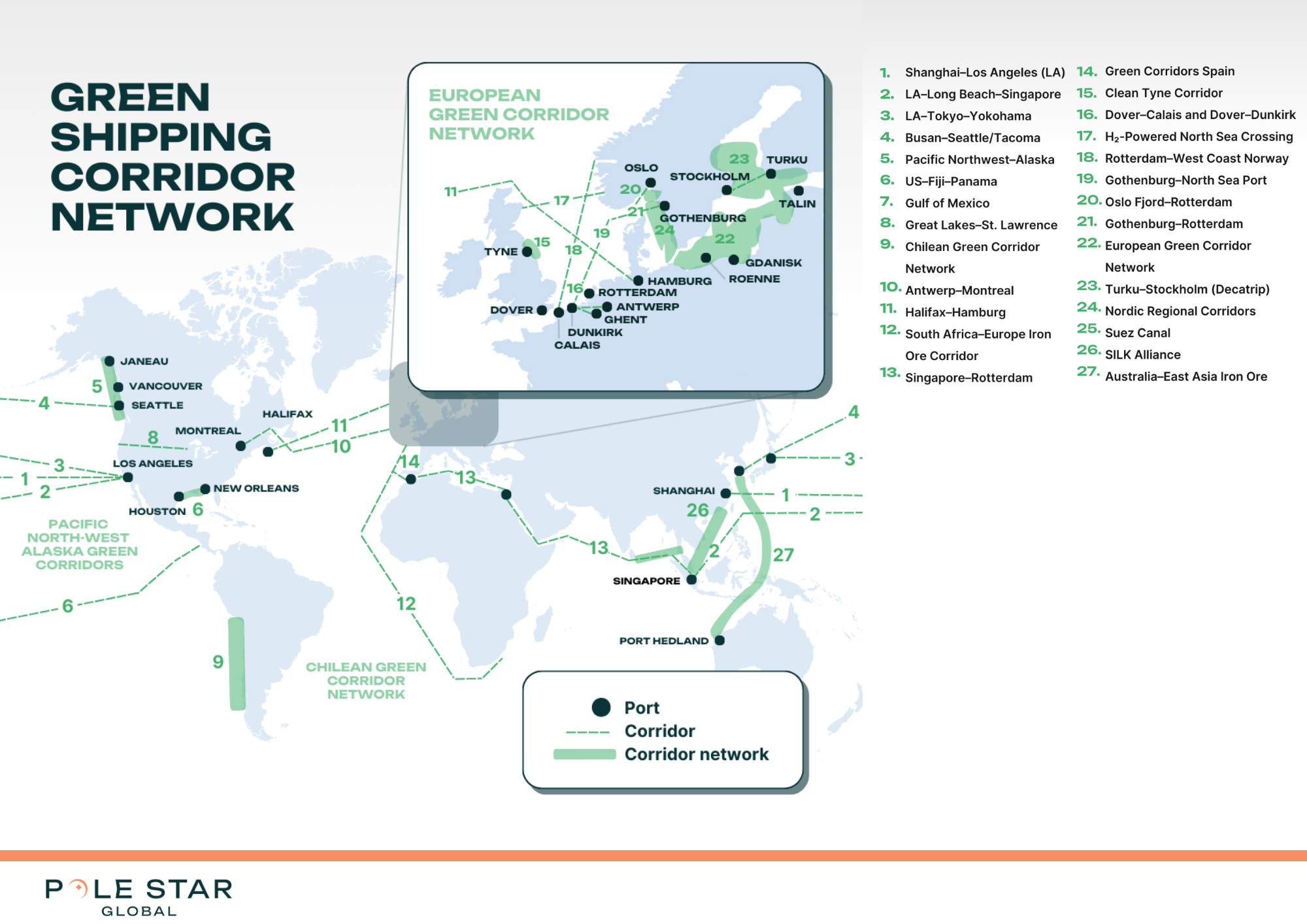
The 2025 report records 25 newly launched initiatives, bringing the global total to 84 green shipping corridor projects. These initiatives now span all major regions, with new activity reported in China, India, Brazil, Chile, Ghana, and Kenya, reflecting a clear shift from a predominantly European focus toward a more globally balanced corridor landscape.
Projects are categorised according to their maturity level:
-
24 in the initial phase
-
16 in preliminary exploration
-
28 in advanced exploration
-
12 in preparation
-
4 in implementation
For the first time, the report explicitly differentiates between corridors under construction—including new vessels, bunkering infrastructure, and port energy systems—and those that are already operational, a distinction that highlights tangible progress beyond policy declarations.
First Corridors Under Construction and in Operation
Four corridors have reached the most advanced stage:
-
Oslo–Rotterdam
-
Stockholm–Turku
-
Vaasa–Umeå
-
Australia–East Asia iron ore deep-sea route
Notably, the Vaasa–Umeå and Australia–East Asia routes are already operational, making them the world’s first functioning green shipping corridors. These projects demonstrate that zero-emission shipping is no longer confined to pilot studies but is beginning to operate under commercial conditions, particularly in short-sea shipping and bulk trade.
Market Signals Strengthen, but Structural Barriers Persist
Compared with the previous year, the number of projects in pre-commercial and commercial stages has doubled, suggesting that technological readiness, stakeholder coordination, and financing structures are improving. However, the report cautions that long-term prospects remain uncertain.
Key barriers include:
-
The persistent cost gap between conventional marine fuels and low- or zero-carbon alternatives (e-fuels, green methanol, ammonia).
-
Policy delays, particularly at the international level, which continue to obscure future market signals.
Jesse Fahnestock, Director of Decarbonization at the Global Maritime Forum, argues that the delayed adoption of the International Maritime Organization Net-Zero Framework should be treated not as a setback, but as a strategic window. According to the report, this period can be used to launch corridor projects that deliver early economic benefits and shape the design of future global incentive mechanisms.
Linking Cargo Demand, Policy, and Fuel Supply
A central recommendation of the report is to strengthen the connection between cargo owners’ willingness to pay a green premium and the concrete development of shipping corridors. This approach builds on ongoing work with the Zero Emission Maritime Buyers Alliance (ZEMBA), which aims to aggregate demand for zero-emission maritime transport and de-risk investments in clean fuels.
The report also calls for the replication and adaptation of proven policy frameworks already deployed in the European Union, Australia, and Norway. While countries such as China, Brazil, and India possess favourable strategic conditions—large cargo volumes, industrial capacity, and political interest—the report notes that operational policy instruments remain underdeveloped in many of these markets.
A Strategic Inflection Point for Maritime Decarbonisation
Overall, the 2025 findings position green shipping corridors at a strategic crossroads. The concept has moved decisively beyond vision-setting into early implementation, yet its long-term success will depend on tighter alignment between international regulation, fuel economics, port infrastructure, and cargo owner engagement.
If leveraged effectively, the current transition phase could determine not only the pace of corridor deployment but also the structure of the future zero-emission shipping market.