
12/29/2025
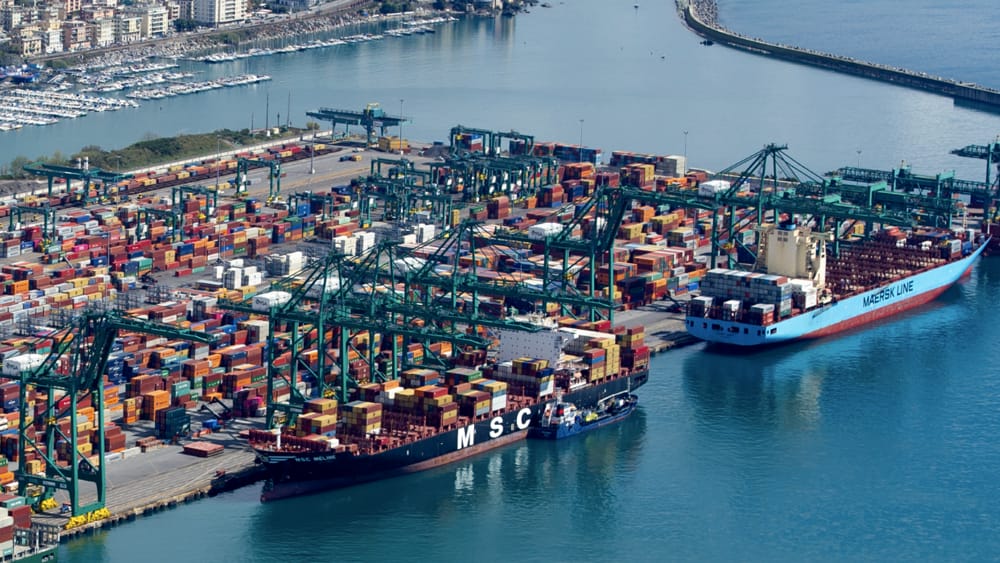
The global maritime industry is undergoing a fundamental power shift. In 2025, the world’s largest container shipping companies have demonstrated an unprecedented appetite for port and terminal acquisitions, moving beyond their traditional role as vessel operators to become dominant infrastructure owners . This strategic rush, fueled by record pandemic-era profits and a drive for supply chain control, is rapidly consolidating global trade routes into the hands of a few corporate giants.
The trend represents a massive acceleration of vertical integration. Carriers are no longer content to be tenants at major ports; they are becoming the landlords. This strategic pivot, aimed at securing operational reliability and financial returns, is fundamentally redefining competitive balances and raising new questions about market control and regulatory oversight .
The Megadeals Reshaping the Map
The scale of investment in 2025 has been staggering, headlined by transactions that would have been unthinkable just a few years ago.
The most significant move is the proposed $22.8 billion acquisition of Hutchison Ports Holdings by a consortium of MSC’s Terminal Investment Limited (TiL) and investment giant BlackRock . This single deal would transfer control of 43 ports across 23 countries to the MSC-backed group, instantly making TiL the world’s largest terminal operator . The portfolio includes two strategic ports along the Panama Canal, a critical global chokepoint. However, the deal faces intense scrutiny, including a review by China’s antitrust regulator and a separate audit by the Panamanian government, highlighting the geopolitical complexities of such large-scale infrastructure transfers .
Not to be outdone, CMA CGM fortified its network in a key growth region by acquiring a 48% controlling stake in Santos Brasil Participações S/A . This $1.2 billion investment gives the French carrier command over Tecon Santos, the largest container terminal in South America’s biggest port, which handles approximately 40% of Brazil’s container volume .
| Company | Key 2025 Investment | Estimated Value | Strategic Rationale |
|---|---|---|---|
| MSC (via TiL) & BlackRock | Acquisition of 43 ports from Hutchison Ports | $22.8 billion | Become world’s largest terminal operator; control strategic Panama Canal assets |
| CMA CGM | 48% stake in Santos Brasil (Port of Santos) | ~$1.2 billion | Control South America’s largest container hub (40% of Brazil’s volume) |
| A.P. Moller – Maersk | Expansion of APM Terminals Pipavav, India | $2 billion | Build capacity aligned with India’s growth and own fleet’s operational needs |
–
Beyond Acquisitions: The Greenfield Frontier
Alongside mergers and acquisitions, major carriers are committing vast sums to greenfield projects, designing new infrastructure from the ground up. This allows them to build terminals tailored to their largest vessels and environmental goals.
India has emerged as the prime battleground for these new developments. Maersk has signaled a massive $2 billion investment to expand its APM Terminals facility in Pipavav, a project aimed at strengthening multimodal connectivity with India’s hinterland . CMA CGM has also committed to the region, signing a letter of intent to build six dual-fuel LNG container ships at an Indian shipyard—a first for a major international carrier .
According to analysis from Drewry, approximately 40% of the expected capacity growth for major terminal operators in the short to medium term will come from this mix of mergers, acquisitions, and new projects .
The Driving Forces: Why Carriers Are Buying
This aggressive push is driven by a confluence of strategic and financial motives:
-
Securing Operational Control: The severe port congestion and operational disruptions experienced during the pandemic revealed the vulnerability of relying on third-party terminals. Owning port assets guarantees priority berthing and handling for a carrier’s own vessels, insulating them from global bottlenecks.
-
Financial Diversification: Ports are seen as stable, long-term infrastructure assets that provide predictable cash flows. For carriers still flush with cash from the pandemic boom, terminals represent a smart financial investment beyond the volatile shipping market .
-
Fleet and Sustainability Alignment: With carriers investing heavily in new, larger, and alternatively-fueled ships (like MSC’s and CMA CGM’s growing LNG-powered fleets ), they need terminals capable of servicing them. Greenfield projects allow for the integration of shore power and other green technologies from day one .
-
Navigating Trade Uncertainty: Facing a potential “decade of overcapacity” in vessel space and volatile trade policies that are suppressing import volumes in key markets like the U.S. , controlling port infrastructure provides a lever to manage capacity and secure revenue.
Challenges and Regulatory Headwinds
This consolidation of power does not come without significant challenges and rising opposition.
-
Antitrust and Geopolitical Scrutiny: The MSC-BlackRock deal is a prime example. It is under review by European and Chinese antitrust authorities, while also sparking a political backlash in China, where the seller, CK Hutchison, has been accused of harming national strategic interests .
-
Shifting Trade Patterns: Carriers are making billion-dollar bets on specific regions and trade lanes. However, these patterns can shift rapidly due to geopolitics or economic policy. For instance, the drastic 58-65% collapse in U.S. solar equipment imports in 2025 due to tariff changes shows how quickly cargo flows can evaporate .
-
The Overcapacity Paradox: The container shipping industry itself is bracing for a surge in new vessel capacity, which could depress freight rates . While owning terminals provides some insulation, it also ties carriers even more deeply to the fixed costs of infrastructure, requiring high utilization to be profitable.
The New Balance of Power
The events of 2025 confirm that control over strategic port infrastructure has moved from a complementary tactic to the core of global shipping strategy. The lines between carrier, terminal operator, and logistics provider are blurring beyond recognition.
As the regulatory reviews of 2025’s megadeals proceed, their outcomes will set a critical precedent. One thing is clear: the era where global ports were neutral, multi-user facilities is giving way to a new age where the world’s most critical trade gateways are increasingly owned by the very shipping lines that sail through them.