
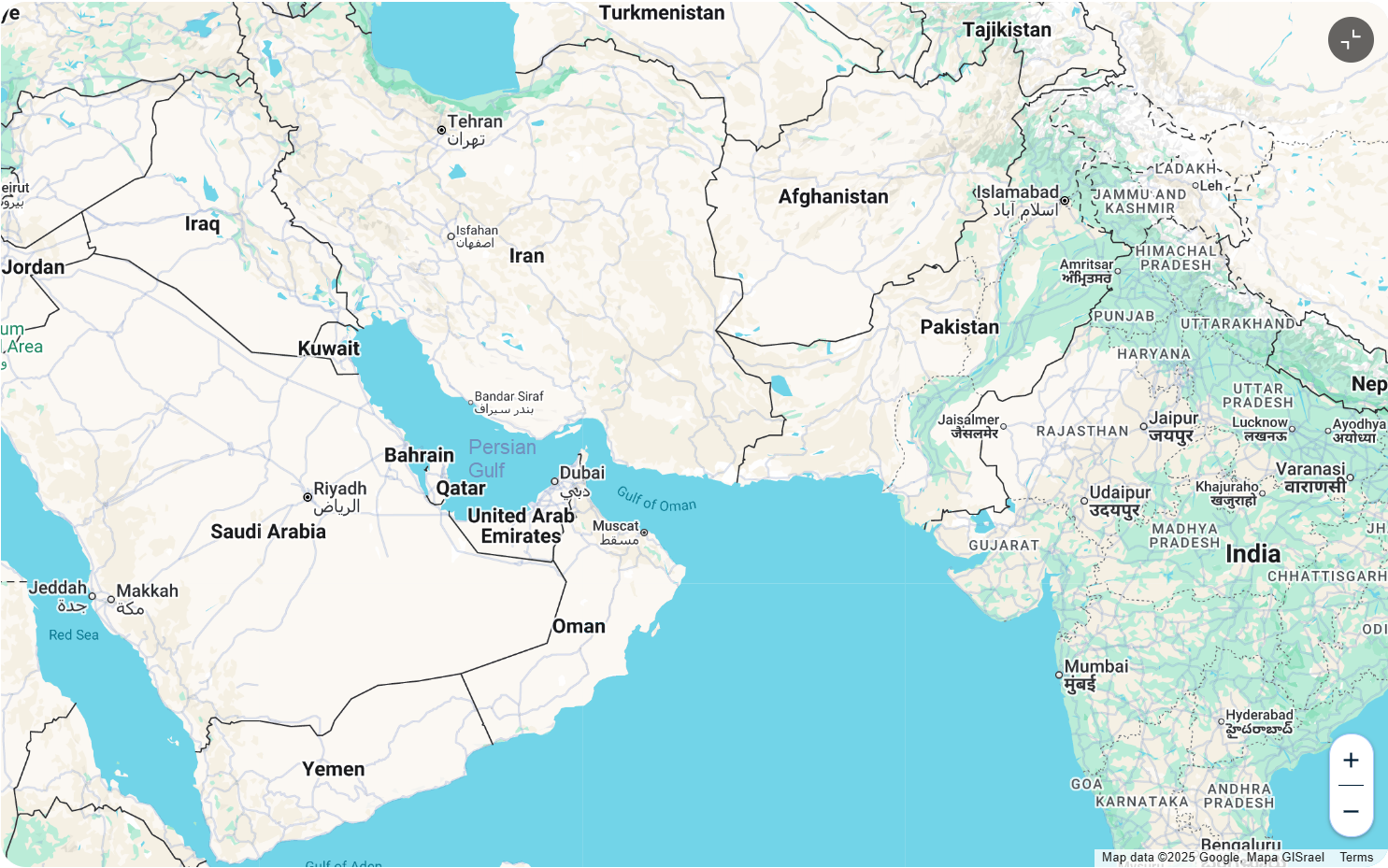
For centuries, the Persian Gulf has been a vital artery of global commerce, its waters connecting empires and cultures. At the heart of this maritime network stood Bandar Siraf, a legendary port whose name was once synonymous with immense wealth and far-reaching influence. From its origins in the Sasanian era to its zenith in the early Islamic period, Siraf was more than a port—it was a cosmopolitan crossroads, a hub for the Silk Road’s sea lanes, and a powerful engine of economic and cultural exchange between East and West .
Today, its physical ruins whisper tales of a glorious past, offering invaluable insights into ancient maritime logistics, trade, and intercultural dialogue. This article explores the remarkable history of Bandar Siraf, the port that mastered the winds and waves of the Indian Ocean trade.
The Strategic Foundation of a Maritime Power
Bandar Siraf’s story begins in antiquity, with its foundations tracing back to the Parthian era (248 BC – 224 AD) . However, its strategic rise is most closely tied to the Sasanian Empire (224-651 AD). Recognizing the Persian Gulf’s potential, the empire’s founder, Ardeshir Babakan, is credited with establishing or revitalizing Siraf as a key node for expanding trade and securing the coastline of the strategic province of Fars .
The port’s geographical location was its greatest asset. Nestled on the northern shore of the Persian Gulf in what is now Iran’s Bushehr Province, it offered a rare combination of a sheltered natural harbor and proximity to vital overland routes connecting to major inland cities like Shiraz and Firuzabad . This made it a perfect “gateway to China” for overland Persian merchants and a secure hub for seafaring traders .
- Sasanian Maritime Policy: The Sasanian kings actively developed maritime infrastructure and trade, seeing it as crucial for state power and prosperity.
- Natural Advantages: The deep, protected harbor provided safe anchorage for large vessels, a critical factor for a major port .
- Inland Connections: Siraf was not an isolated coastal town but was linked to the heartland of the Iranian plateau, facilitating the flow of goods.
The Trading Empire: Wealth from Across the Seas
Siraf reached its golden age between the 9th and 10th centuries, during the early Islamic period. As the Abbasid Caliphate flourished, demand for luxury goods soared, and Siraf’s merchants expertly navigated the monsoon winds to become the primary linchpin in a vast trade network .
The port’s commercial reach was staggering. Historical accounts and archaeological evidence paint a picture of a city whose warehouses brimmed with the world’s treasures .
Key Trade Connections and Commodities of Bandar Siraf:
| Trade Direction | Key Regions Connected | Goods Imported to Siraf | Goods Exported/Transshipped |
|---|---|---|---|
| East & Southeast Asia | China, the “Spice Islands” (Indonesia) | Silk, porcelain, paper, spices (nutmeg, cloves), camphor, aloe wood | Textiles (linen), glassware, dates, pearls |
| South Asia | India, Sri Lanka | Teak wood, spices, precious stones (rubies, diamonds), ivory, Indian steel | |
| East Africa | Zanzibar, Swahili Coast | Ivory, gold, ebony, exotic animals | |
| Regional & Overland | Afghanistan, Central Asia | Lapis lazuli from Badakhshan | All imported luxury goods destined for the Middle East and Mediterranean |
This trade generated colossal wealth. The 10th-century geographer Istakhri noted that Siraf rivaled the great city of Shiraz in size and importance . Merchants amassed legendary fortunes, with some reportedly worth over 30 million dinars—a sum that allowed them to build lavish multi-story mansions from imported teak and decorated brick .
The Ingenious Economy and Society of a Maritime Superpower
The prosperity of Bandar Siraf was not accidental; it was engineered through sophisticated maritime logistics and a unique merchant-centric social structure. The port’s economy functioned with remarkable efficiency, built on the reliable cycle of the monsoon winds. Merchants planned entire years around these winds: setting sail for India and East Africa with the summer southwest monsoon and returning home on the winter northeast monsoon.
This predictable schedule allowed Siraf to become a year-round entrepôt. Even when fleets were at sea, the city’s warehouses and markets buzzed with activity, handling goods from regional overland caravans and preparing for the next fleet’s return. The city’s financial instruments were advanced for their time. Historical accounts describe a system of credit and partnership (qirad or mudaraba) that funded voyages, spreading risk between capital-owning investors and traveling merchants. This system fueled entrepreneurial ventures and was underpinned by a reputation for commercial honesty that became Siraf’s brand across the Indian Ocean.
The social fabric of Siraf was dominated by a class of super-wealthy merchant princes. They lived in multi-story mansions on the terraced hillsides overlooking the harbor, homes built with imported teak and decorated with stucco and carved panels. Archaeology reveals that these were not just residences but also combined offices, warehouses, and guesthouses for foreign traders. Beneath this elite was a diverse population of sailors, shipbuilders, dockworkers, artisans, and shopkeepers who serviced the global trade machine, making Siraf a true maritime industrial city.
Archaeological Windows: Unearthing a Lost World
Our detailed understanding of Siraf comes primarily from modern archaeology, most notably the excavations led by British archaeologist David Whitehouse in the 1960s and 70s. These digs transformed Siraf from a legend in texts into a tangible, mapped ancient city.
The findings were staggering:
-
Urban Layout: The city was meticulously planned with defined residential, commercial, and industrial quarters. A main street ran from the congregational mosque down to the waterfront, lined with shops.
-
The Congregational Mosque: Its remains show multiple phases of expansion, mirroring the city’s growth. The use of teak wood for roof supports and decorative stucco mihrabs (prayer niches) speaks to both imported luxury and local artistry.
-
Merchant Houses: Excavations of homes revealed courtyards, private baths, and ceramic pipelines for running water, indicating a high standard of living. The recovery of stone and glass weights points to active commercial activity within the homes.
-
Material Culture: The 16,000+ finds tell a global story: Chinese Yue-type stoneware and white porcelain, Indian red polished ware, Islamic glazed ceramics with cobalt and luster designs, and ivory pieces from East Africa. A single fragment of Tang dynasty porcelain could testify to a journey of over 5,000 miles.
These artifacts, now housed in museums like the British Museum and the National Museum of Iran, are the physical evidence of the connections Siraf fostered.
Cultural Synthesis: Where Religions and Ideas Met
The constant influx of people made Bandar Siraf a dynamic crucible of cultural and religious exchange. While the congregational mosque stood as the city’s monumental heart, evidence suggests a landscape of pluralism.
Historical geographers like Al-Mas’udi noted the presence of Zoroastrians (Majus), the pre-Islamic religion of Persia. It is highly probable that Jewish merchants, who were key players in the wider Indian Ocean trade network, had a community in Siraf. The existence of a local Christian community is attested to in texts, and the trade link to India and Central Asia raises the possibility of small Buddhist or Hindu enclaves among foreign merchants.
This interaction was not passive. Sirafi scholars and navigators contributed to the fusion of knowledge. Persian nautical expertise, Arab geographical knowledge, and Indian celestial navigation techniques likely blended here. The city was a conduit for the transfer of technology, such as astrolabe use and shipbuilding techniques, and for the flow of scientific and philosophical texts between the Abbasid Caliphate’s “House of Wisdom” in Baghdad and the learned centers of India.
The Causes of Decline: A Perfect Storm
The fall of Bandar Siraf in the 11th century is a classic case study of how interconnected factors can unravel a civilization’s hub. The catastrophic earthquake of 977 CE (or 967 CE, according to some sources) was a devastating blow from which the city struggled to recover. This seismic event likely damaged the water management systems and the infrastructure of the port itself.
Simultaneously, major political shifts destabilized its hinterland. The rise of the Buyid dynasty and subsequent conflicts disrupted the secure overland routes to Shiraz and Isfahan, breaking a critical link in Siraf’s supply chain. Furthermore, the Fatimid Caliphate’s rise in Egypt actively promoted the Red Sea route via the port of Aydhab as a faster, safer alternative for goods moving between Asia and the Mediterranean. This geopolitical realignment diverted the main flow of commerce away from the Persian Gulf.
Finally, environmental and security issues compounded the problem. Siltation may have affected the harbor, while increased piracy from bases like Qeys Island made merchant voyages prohibitively risky. By the time the Italian traveler Marco Polo vaguely referenced “Siraf” in the 13th century, it was a shadow of its former self, its role as a premier port decisively taken over by Hormuz on the Strait of Hormuz.
Siraf’s Legacy and Modern Rediscovery
The story of Bandar Siraf did not end with its abandonment. For centuries, it was known only as the village of Taheri, its past glory buried. Its modern identity was re-established in 1835 by a British East India Company officer. However, it was the systematic archaeological work of the 20th century that revealed its true scale and significance.
Today, Siraf is recognized as a site of Outstanding Universal Value. It has been on Iran’s Tentative List for UNESCO World Heritage inscription since 1997, cited as a paramount example of an early Islamic mercantile port and a key node in the maritime Silk Road.
Its legacy is profound:
-
A Blueprint for Globalization: Siraf demonstrates that dense, long-distance economic and cultural networks are a historical norm, not a modern invention.
-
Maritime Heritage: The knowledge of monsoon navigation, dhow construction, and port administration developed here underpinned Indian Ocean trade for centuries.
-
A Symbol of Cross-Cultural Dialogue: In an era often defined by conflict, Siraf stands as a powerful testament to how commerce can foster coexistence and mutual enrichment between diverse civilizations.
For Iran and the world, preserving Siraf is about honoring a foundational chapter in human connectivity. It reminds us that the Persian Gulf has always been a central stage for world history, and that ports like Siraf were the engines that made it so.
Gallery
-
 Rock-cut graves in the Shilaw valley
 -
 Rock-cut graves in the Shilaw valley
 -
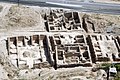 Ruins of buildings at Siraf
 -
 Siraf skyline
 -
 Nasori Castle, former residence of the local shaikhs
 -
 Beach near Siraf


💡 Frequently Asked Questions
1. What is the most famous artifact found at Bandar Siraf?
While thousands of artifacts have been found, the Chinese stoneware and porcelain fragments are particularly iconic for tracing direct trade links. Equally significant are the ivory objects, which provide concrete evidence of trade with East Africa. A famous example is an ivory chess piece or spindle whorl, highlighting the luxury goods that passed through the port.
2. Why did Bandar Siraf decline while other ports survived?
Siraf’s decline was due to a combination of factors—a natural disaster that crippled its infrastructure, political instability that severed its overland connections, and a geopolitical shift in global trade routes toward the Red Sea. Other ports, like Hormuz, succeeded by adapting to new political realities and possibly offering better natural harbors as siltation affected Siraf.
3. Can tourists visit Bandar Siraf today?
Yes, the archaeological site is accessible to visitors. Located near the modern town of Taheri in Bushehr Province, it requires some planning. Key sights include the congregational mosque, the ruins of merchant houses, the old bazaar street, and the cliff-side cemeteries. The best time to visit is between October and April, when the Persian Gulf climate is milder.
4. How does Siraf compare to other famous ancient ports like Venice or Alexandria?
Like Venice, Siraf was a wealthy, quasi-independent mercantile republic whose power derived entirely from maritime trade and networks. Unlike Alexandria, which was a royal capital and cultural megacity, Siraf was a specialized commercial gateway. A closer comparison might be to Malacca or Oman’s Sohar—ports whose immense wealth and influence were directly tied to their command of a specific oceanic trade corridor.
References
-
UNESCO World Heritage Centre. (1997). Siraf (Islamic Republic of Iran). Tentative Lists. Retrieved from UNESCO website.
-
Whitehouse, D. (1970). Siraf: A Medieval Port on the Persian Gulf. World Archaeology.
-
Persian Gulf Online. (2023). Bandar Siraf: The Ancient Port. Retrieved from Persian Gulf Online historical archive.
-
Mirza, M. I. (2018). The Maritime Silk Road and the Persian Gulf. In Oxford Research Encyclopedia of Asian History.
-
Archaeology Magazine. (2009). The Seas of Sinbad. Archaeological Institute of America.