
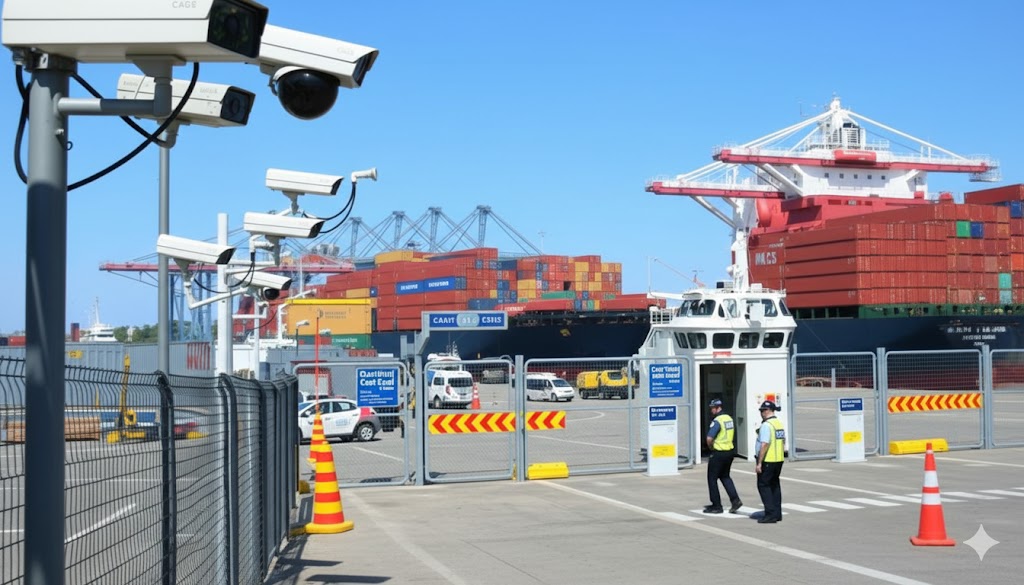
Explore how modern seaports combat piracy through the ISPS Code, layered security, and advanced tech. Learn about global measures protecting ships, cargo, and passengers for safer maritime trade.
Imagine a world where nearly 90% of everything you own—from the food you eat to the device you’re using—travels by sea. Now, imagine the vital nodes where this global exchange happens, our seaports, facing persistent threats from modern pirates and other maritime criminals. While tales of historical pirates may seem distant, the challenge of maritime security is more immediate and complex than ever. A single breach in port security can ripple across the globe, causing shipping delays, financial losses in the billions, and tragic human cost. This article delves into the critical, often unseen, world of port security. We will explore how modern ports act as fortified gatekeepers, implementing a sophisticated blend of international regulations, physical barriers, cutting-edge technology, and human vigilance. From the mandatory International Ship and Port Facility Security (ISPS) Code to the coordinated patrols in high-risk waters, this is the story of how the maritime industry collaborates to protect the lifeblood of global trade and ensure the safety of everyone who sails.
Why Port Security Matters for Global Maritime Operations
The security of seaports is not merely a local or national concern; it is a foundational pillar of global economic stability and security. Ports are critical infrastructure where the flow of commerce intersects with potential vulnerabilities. A successful attack or major security incident at a key port can have cascading effects, disrupting global supply chains, destabilizing energy markets, and undermining international trade confidence. Organizations like the United Nations Conference on Trade and Development (UNCTAD) consistently highlight that secure and efficient ports are essential for the economic development of nations, especially those reliant on maritime trade. A breach in port security, such as the smuggling of weapons, the infiltration by stowaways, or an act of sabotage, can lead to catastrophic consequences, including environmental disaster from a compromised oil tanker or the loss of life on a passenger vessel.
Beyond economic impacts, ports are front-line defenders against evolving asymmetric threats. Modern maritime piracy and armed robbery at sea, though geographically concentrated, remain severe dangers. Regions like the Gulf of Guinea and the Singapore Strait continue to report incidents where criminals target vessels for cargo theft, kidnap for ransom, or even hijacking. The port, therefore, serves as both a potential target and a crucial safe haven. Effective port security measures deter pirates by making it harder for them to blend in, gather intelligence, or access vulnerable ships. Furthermore, ports play a key role in implementing broader maritime domain awareness, cooperating with agencies like the European Maritime Safety Agency (EMSA) and national coast guards to monitor and secure the approaches to their harbors. This interconnected responsibility—protecting the port itself, the ships within it, and the surrounding waters—makes port security a complex, multi-layered endeavor that is vital for safeguarding seafarers, passengers, and the uninterrupted movement of world commerce.
The Framework of Modern Port Security: Regulations and Strategies
The contemporary approach to port security is built upon a structured international framework, most notably the International Ship and Port Facility Security (ISPS) Code. Developed under the auspices of the International Maritime Organization (IMO) in response to the security concerns of the early 2000s, the ISPS Code provides a standardized, risk-based template for assessing and mitigating security threats to ships and port facilities.
The ISPS Code: A Risk-Based Blueprint
The ISPS Code mandates that all signatory nations conduct thorough security assessments for their ports. This process involves identifying critical assets, evaluating potential threats (from piracy and terrorism to smuggling and stowaways), and assessing vulnerabilities. Based on this assessment, each port facility must develop and implement a detailed Port Facility Security Plan (PFSP). This plan is a living document that outlines precise procedures for different security levels:
-
Security Level 1: Normal, baseline protective measures.
-
Security Level 2: Enhanced measures for a heightened risk.
-
Security Level 3: Exceptional measures for a probable or imminent incident.
The PFSP covers every aspect of port operations, from access control and monitoring of restricted areas to procedures for handling sensitive information and responding to security threats. The plan must be approved by the relevant national authority, often in consultation with recognized security organizations or classification societies like DNV or Lloyd’s Register, which offer certification and verification services.
The Layered Security Model: A Defensive Archipelago
In practice, ports operate on a layered security model, often compared to concentric rings of defense. This concept, also known as “defense in depth,” ensures that a breach in one layer does not compromise the entire system.
-
The Outer Layer: This encompasses the maritime approaches to the port. It involves monitoring vessel traffic using Automatic Identification Systems (AIS), radar, and coastal surveillance. Cooperation with national navies and coast guards, as seen with the US Coast Guard (USCG) or the Australian Maritime Safety Authority (AMSA), is crucial for patrolling these zones and intercepting suspicious vessels before they reach port waters.
-
The Middle Layer: This includes the port’s entrance channels and anchorage areas. Security here involves controlled pilotage, where licensed pilots guide ships in, and the monitoring of vessels at anchor. Port control authorities may require ships to provide advanced notice of arrival with detailed crew and cargo manifests.
-
The Inner Layer: This is the port facility itself—the docks, warehouses, and terminals. This is where the most visible ISPS measures are active: fencing, guarded gates, biometric access controls, patrols, and surveillance systems. All persons, vehicles, and cargo entering or leaving must be screened. This layer also includes the crucial ship-port interface, where the ship’s own security plan, overseen by its Ship Security Officer (SSO), must align with the port’s PFSP, managed by the Port Facility Security Officer (PFSO).
–
Key Technologies and Operational Measures in Port Protection
To implement the ISPS framework effectively, ports deploy an array of technologies and procedures that create a continuous security envelope. Physical barriers like high fences, bollards, and anti-climb mesh form the first visible line of defense, defining the port facility’s security perimeter. Access to this controlled area is strictly managed through manned gates equipped with credential checks—often using smart cards or biometric data like fingerprints or iris scans—linked to central databases that verify an individual’s authorization level.
Once inside, movement is tracked and monitored. A dense network of high-definition CCTV cameras, many with pan-tilt-zoom, thermal imaging, and low-light capabilities, provides comprehensive coverage of docks, cargo handling areas, and storage yards. These feeds are monitored in real-time from a Port Security Operations Center (PSOC), which acts as the nerve center. The PSOC integrates video feeds with other sensor data, such as radar tracks of approaching vessels and alerts from microwave or infrared intrusion detection systems placed along fences or in remote areas. This integration allows security personnel to have a unified, actionable view of the entire port’s security status.
For screening and inspection, technology plays a pivotal role. Non-intrusive inspection (NII) systems, such as large-scale X-ray and gamma-ray scanners, allow customs and security officials to examine the contents of trucks and containers without physically opening them, detecting contraband, stowaways, or weapons. Radiation portal monitors screen for nuclear or radiological materials. On the waterside, ports utilize underwater surveillance systems, including sonar and remotely operated vehicles (ROVs), to inspect ship hulls for tampering or the presence of limpet mines, and to monitor for divers or small submerged vessels that could pose a threat. Furthermore, cybersecurity has become a paramount concern. As ports become more automated and connected (a trend known as “Smart Ports”), protecting critical operational technology (OT) networks—which control cranes, gate systems, and vessel traffic—from digital attack is now a core component of the overall security strategy, with guidance from organizations like BIMCO and the International Association of Classification Societies (IACS).
–
Challenges and Practical Solutions in Modern Port Security
Despite robust frameworks and advanced technology, port security faces persistent and evolving challenges. One of the most significant is the asymmetric and adaptive nature of the threat. Pirates, smugglers, and other malign actors continuously modify their tactics. In regions like the Gulf of Guinea, pirates have shifted from cargo theft to kidnap-for-ransom, targeting crews far offshore, which challenges the protective reach of port-based measures. Similarly, drug traffickers employ ingenious concealment methods in cargo, requiring ports to constantly update their profiling and inspection protocols. The practical solution lies in dynamic risk assessment and intelligence-led operations. Ports no longer rely on static security plans alone; they integrate real-time threat intelligence from national and international agencies, such as the International Chamber of Commerce’s International Maritime Bureau (IMB) Piracy Reporting Centre, to dynamically adjust their security postures and pre-empt threats.
Another major challenge is balancing security with operational efficiency. Every security checkpoint, scan, and inspection adds time to the logistics chain. In an industry where “time is money,” excessive delays can make a port commercially uncompetitive. The solution emerging is the concept of “smart and secure” ports, which leverage technology to streamline processes. For example, automated gate systems using optical character recognition (OCR) and blockchain-based documentation can clear pre-vetted trucks in seconds. The Authorized Economic Operator (AEO) programs, recognized by the World Customs Organization, allow trusted traders who meet stringent security standards to undergo fewer physical inspections. This risk-based approach allows ports to focus their resources on high-risk traffic while facilitating the swift movement of low-risk, trusted commerce.
Finally, jurisdictional complexity and collaboration gaps can create vulnerabilities. A port might be secure, but if the surrounding waters are poorly policed or if neighboring ports have weaker standards, threats can simply relocate. The enduring solution is regional and international cooperation. Successful models include the Shared Awareness and De-confliction (SHADE) meetings in the Gulf of Aden, which coordinate naval patrols from multiple nations, and the Yaoundé Code of Conduct architecture in West and Central Africa, which fosters information sharing and joint operations. Ports are not isolated fortresses; their security is intrinsically linked to the wider maritime security ecosystem, requiring continuous investment in diplomacy, capacity building, and joint exercises with regional partners.
–
Case Studies: Real-World Applications of Port Security
The Gulf of Aden and the Role of Secure Ports in a High-Risk Zone
The resurgence of piracy off the coast of Somalia in the late 2000s presented a textbook example of a complex maritime security crisis. While the threat was primarily at sea, the role of secure ports was twofold: as sanctuaries for attacked ships and as key nodes in the counter-piracy framework. The internationally recognized port of Djibouti became a critical hub. It served as a base for naval task forces from the EU, China,Turkey and other coalitions. More importantly, it functioned as a secure port where vessels could undergo security upgrades, embark privately contracted armed security teams (in accordance with local and flag state laws), and receive briefings on the latest threat patterns. The presence of a stable, secure port in the region provided a vital logistical and planning center for the military and commercial maritime response, contributing significantly to the suppression of piracy in that region. This case underscores that port security is not just about protecting the port itself, but also about enabling a secure maritime environment far beyond its breakwaters.
The Port of Singapore: Integrating Technology for Holistic Security
As one of the world’s busiest transshipment hubs, the Port of Singapore faces immense security challenges due to its high traffic volume and strategic location. Its response is a benchmark in integrating technology into a layered security model. The Maritime and Port Authority of Singapore (MPA) operates a state-of-the-art Port Operations Control Centre that fuses data from over 3,000 surveillance cameras, AIS, radar, and even unmanned surface vessels (USVs) for patrols. It has implemented a mandatory electronic Pre-Arrival Notification (ePAN) system for all vessels, allowing for advanced risk assessment. Singapore also rigorously enforces its port security laws, conducting frequent exercises and inspections. This comprehensive, tech-driven approach allows Singapore to maintain a exceptionally high level of security without crippling the efficiency that makes it a leading global port. It demonstrates how investment in integrated command and control systems is a force multiplier for port security forces.
–
Future Outlook and Emerging Maritime Security Trends
The future of port security will be shaped by the integration of artificial intelligence (AI) and predictive analytics. AI-powered video analytics software is moving beyond simple motion detection to recognizing specific suspicious behaviors—like loitering near a fence line, unattended bags, or unauthorized vessel approaches—and alerting operators in real time. Predictive models will analyze vast datasets, including global crime reports, weather patterns, and vessel histories, to forecast potential security hotspots and recommend pre-emptive measures. Furthermore, automation and robotics will play a larger role. Drones (UAVs) will be used for aerial patrols, hull inspections, and monitoring hard-to-reach areas, while autonomous surface and underwater vehicles will conduct routine surveillance and seabed mapping.
Another significant trend is the growing focus on resilience and all-hazards preparedness. Port security plans are expanding to consider a wider range of disruptive events, including cyber-attacks on port logistics systems, the climate change impacts of sea-level rise and extreme weather on security infrastructure, and hybrid threats that blend physical and digital tactics. This requires deeper collaboration between port authorities, cybersecurity firms, and classification societies like ABS and ClassNK, which are developing new guidelines for cyber-resilient ship and port systems. Finally, the concept of global supply chain security will become even more integrated. Technologies like blockchain for immutable cargo documentation and the Internet of Things (IoT) with smart seals on containers will provide end-to-end visibility, making it harder to tamper with cargo and easier to isolate breaches. The secure port of the future will be an intelligent, connected, and resilient node in a transparent global network.
–
Frequently Asked Questions (FAQ)
1. What is the difference between piracy and armed robbery at sea?
This is a crucial legal distinction. Piracy, as defined by the United Nations Convention on the Law of the Sea (UNCLOS), occurs on the high seas (outside any state’s territorial waters) and involves illegal acts for private ends. Armed robbery against ships, as defined by the IMO, occurs within a state’s territorial waters (including ports and anchorages). Port security measures are primarily focused on preventing and responding to armed robbery within their jurisdiction, while also supporting broader counter-piracy efforts.
2. Can a port refuse entry to a ship it deems a security risk?
Yes, absolutely. Under the ISPS Code and national laws, a port state has the sovereign right to deny entry to a ship if it believes the ship poses a security threat. This could be due to the ship failing a security inspection, lacking valid documentation, coming from a high-risk area without proper adherence to security protocols, or if the port itself is at a high Security Level (3). The port may also impose conditions for entry, such as requiring additional security measures.
3. How do ports handle the threat of stowaways?
Preventing stowaways is a core port security function. Measures include securing perimeter fences, monitoring storage areas and containers, and conducting searches of outbound vessels and cargo. Ports work with shipping companies to ensure ships’ own access points (like hawse pipes) are secured before departure. If stowaways are discovered, the port, ship operator, and immigration authorities must coordinate for their safe disembarkation, documentation, and repatriation, following international guidelines.
4. What is a Port Facility Security Officer (PFSO), and what do they do?
The PFSO is the individual responsible for the development, implementation, and maintenance of the Port Facility Security Plan. They are the lynchpin of port security, acting as the point of contact for ship security officers and port state control authorities. Their duties include conducting security inspections, coordinating security exercises, ensuring security equipment is functional, and training port facility personnel. They hold a certification typically obtained through an IMO-model course.
5. Are armed guards used within ports?
The use of armed guards within port facilities is strictly governed by national law. In most countries, direct armed protection of the port is the responsibility of state security forces (police, gendarmerie, or coast guard). Privately contracted armed security personnel (PCASP) are primarily used onboard ships while at sea in high-risk areas. Their embarkation and disembarkation, including the handling and storage of weapons, must follow strict protocols coordinated with the port authorities.
–
Conclusion
The battle for maritime security is won not at sea alone, but at the interface where sea meets land: our seaports. As we have explored, modern port security is a sophisticated, multi-layered discipline built on the foundation of the ISPS Code, empowered by advanced surveillance and screening technologies, and sustained through international cooperation and intelligence sharing. From the fortified perimeters of Singapore to the strategic hub of Djibouti, ports have evolved into proactive security operators, dynamically assessing risks and adapting to threats posed by piracy, smuggling, and other illicit activities. The challenge is perpetual, driven by adaptive adversaries and the relentless pressure of global trade efficiency. Yet, the future points towards greater integration—of AI-driven analytics, automated systems, and cyber-physical resilience—forging smarter and more secure ports. Protecting these vital nodes is a shared responsibility of governments, port authorities, shipping companies, and the international maritime community. By continuing to invest in robust frameworks, innovative technologies, and human expertise, we ensure that ports remain safe havens that facilitate the secure and smooth passage of the commerce that connects our world.
References
-
International Maritime Organization (IMO). (2024). International Ship and Port Facility Security (ISPS) Code. https://www.imo.org/
-
United Nations Conference on Trade and Development (UNCTAD). (2023). Review of Maritime Transport. https://unctad.org/
-
International Chamber of Commerce (ICC). International Maritime Bureau (IMB). Piracy Reporting Centre. https://www.icc-ccs.org/
-
European Maritime Safety Agency (EMSA). (2024). Maritime Security. https://www.emsa.europa.eu/
-
United States Coast Guard (USCG). (2024). Port Security. https://www.dco.uscg.mil/
-
BIMCO. (2023). Cybersecurity Guidelines. https://www.bimco.org/
-
DNV. (2023). Maritime Security Services. https://www.dnv.com/
-
Lloyd’s Register. (2024). Maritime Security Assessment. https://www.lr.org/
-
Maritime and Port Authority of Singapore (MPA). (2024). Port Security. https://www.mpa.gov.sg/
-
The World Bank. (2023). Port Reform Toolkit. https://www.worldbank.org/
-
Marine Policy Journal. (2023). Studies on maritime security economics and governance.
-
Journal of Ocean and Maritime Studies (JOMA). (2024). Research on technology in port security.