
How do cruise passengers travel from port to city? Explore shuttle buses, taxis, ride-sharing, distances, and smart port solutions shaping port–city connectivity.
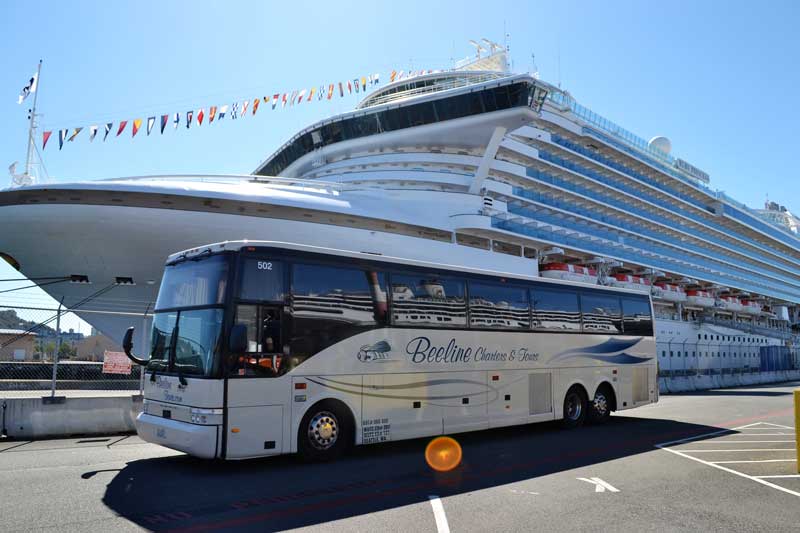

For many cruise passengers, the moment a ship docks marks the beginning of a new question: How do we get from the port to the city? Sometimes the answer is as simple as a short walk into a historic old town. In other cases, it involves shuttle buses, taxis, trains, or even long highway transfers. This difference is not accidental. It reflects decades of port planning, urban growth, safety rules, and transport strategy.
Cruise terminals are not just maritime facilities; they are transport hubs. They connect ships to cities, airports, tourist attractions, and regional transport networks. The efficiency—or failure—of this connection shapes passenger satisfaction, local traffic congestion, environmental impact, and the overall reputation of a port.
This article explains how cruise passengers travel from port to city, covering shuttle buses, taxis, ride-sharing, public transport, and walking access. It also explores why some cruise ports sit right in city centers while others are far away, and how smart ports are reshaping passenger mobility worldwide.
Why This Topic Matters for Maritime Operations
Port–city connectivity is not merely a tourism issue; it is a core operational concern for cruise ports. A ship may handle thousands of passengers in a single call. If ground transport is poorly organized, congestion can build within minutes, delaying excursions, overwhelming city streets, and creating safety risks inside the terminal.
From a port operations perspective, passenger transport affects berth productivity and turnaround time. Delays in disembarkation caused by transport bottlenecks can interfere with ship schedules, pilotage windows, and even the next port call. Efficient land-side transport therefore directly supports maritime punctuality.
Connectivity also matters for regulatory and environmental reasons. Ports are under increasing pressure from cities and regulators to reduce emissions, noise, and traffic impacts. Organizations such as the International Maritime Organization and the United Nations Conference on Trade and Development increasingly recognize that port sustainability extends beyond the quay, into how passengers move on land.
Finally, for passengers, transport connectivity shapes the lived experience of a destination. A smooth transfer encourages exploration and spending. A confusing or congested transfer can discourage repeat visits and damage the port’s reputation.
How Do Cruise Passengers Travel From Port to City?
Walking: The Ideal Scenario
In some ports, passengers can simply walk off the ship and into the city. These ports are typically historic harbors that grew together with their cities. Short walking distances encourage independent exploration, reduce traffic emissions, and integrate cruise tourism naturally into urban life.
Ports such as Barcelona, Venice (before cruise restrictions), or Dubrovnik exemplify this model. However, walkable access is only possible when safety, security, and urban density allow passenger flows to mix with city life.
Shuttle Buses: The Most Common Solution
Shuttle buses are the backbone of cruise passenger transport. Operated by port authorities, terminal operators, or cruise lines, they provide controlled, predictable movement between terminals and key city points.
Shuttles are particularly important when terminals are located in industrial port zones where pedestrian access is unsafe or prohibited. They also help manage large passenger volumes by staggering departures and arrivals.
From an operational standpoint, shuttle systems allow ports to regulate traffic, control security perimeters, and reduce congestion at terminal gates.
Taxis and Ride-Sharing Services
Taxis offer flexibility and speed, especially for passengers traveling independently or with limited time. In many ports, taxi ranks are integrated into terminal layouts to ensure orderly access.
Ride-sharing platforms have added another layer of flexibility, but they also create challenges. Without proper geofencing and pickup zones, ride-sharing vehicles can clog terminal access roads. As a result, many ports now designate specific areas for app-based services.
Public Transport Links: Trains, Trams, and Metro Systems
Direct Rail Connections
Some of the world’s most efficient cruise ports are directly connected to rail networks. Passengers can move seamlessly from ship to train, reducing road congestion and emissions.
Examples include ports with nearby metro or commuter rail stations integrated into terminal design. This model requires long-term coordination between port authorities, city planners, and transport agencies.
Trams and Buses as Urban Connectors
In many European cities, trams and city buses play a major role in cruise passenger mobility. These systems allow gradual dispersal of passengers across urban areas rather than concentrating flows at taxi ranks.
However, public transport integration requires careful capacity planning. A sudden influx of cruise passengers can overwhelm local services if schedules and vehicle sizes are not adjusted.
How Far Are Cruise Ports From City Centers?
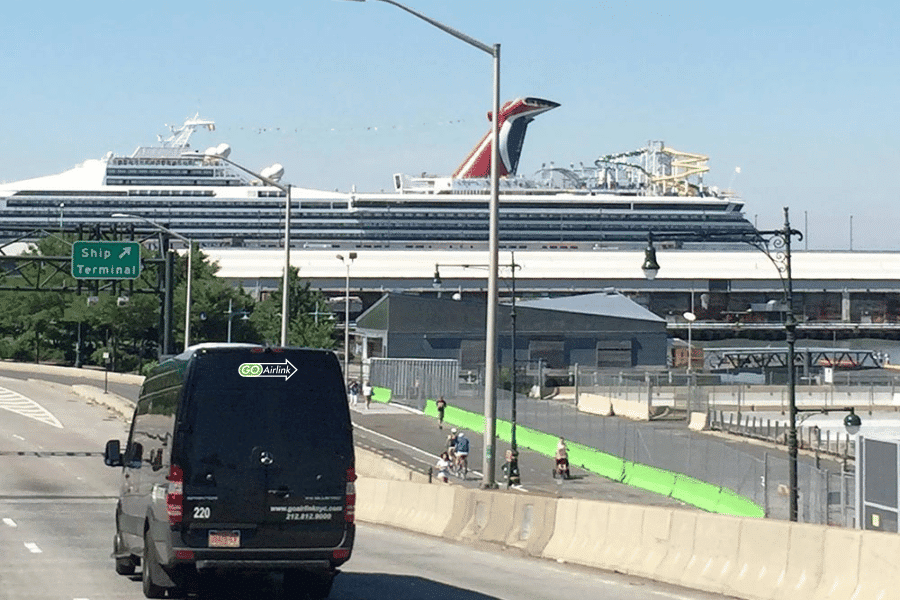
Ports Located in City Centers
City-center cruise ports are often legacy harbors that historically served both trade and passengers. As cargo operations moved outward, passenger terminals remained close to urban cores.
These ports benefit from excellent accessibility but face challenges such as crowd management, environmental pressure, and conflicts with residents.
Remote Cruise Terminals
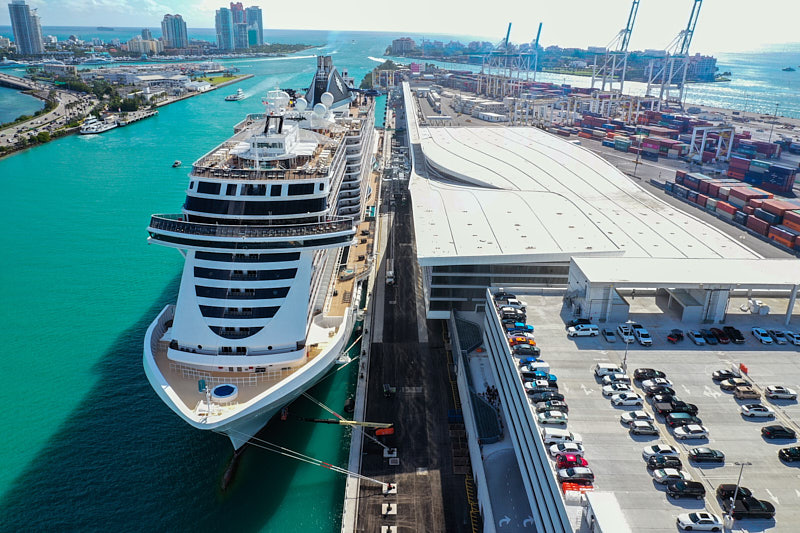
Many modern cruise terminals are located far from city centers, sometimes 5–20 kilometers away. This is common in large industrial ports where safety and space constraints prevent passenger access near cargo operations.
Remote terminals require robust transport systems—usually shuttle buses or dedicated road links—to maintain passenger satisfaction. While less convenient, they offer greater control over security and traffic.
Why Distance Varies So Much
Distance reflects historical development, geography, and policy choices. Shallow harbors, land reclamation, or industrial zoning can push terminals away from cities. In contrast, compact historic ports often have no room to relocate.
Port Accessibility Explained: Why Some Ports Are Near Cities and Others Aren’t
Safety and Security Constraints
Cruise passengers cannot safely mix with heavy cargo operations. International security frameworks such as the ISPS Code, developed under the International Maritime Organization, require controlled access to port facilities.
This often necessitates physical separation between passenger and cargo zones, influencing terminal location.
Urban Planning and Community Pressure
Cities increasingly regulate cruise access to protect residents from overcrowding and pollution. In response, some ports relocate terminals or limit passenger numbers, affecting how far passengers must travel to reach city centers.
Port Expansion and Modernization
As ships grow larger, terminals need more space for berths, turning basins, and passenger processing. This space is rarely available in dense urban areas, pushing new terminals outward.
Shuttle Buses, Taxis, and Ride-Sharing: What Travelers Should Know
From a passenger perspective, each transport option has trade-offs. Shuttle buses offer predictability and affordability but may involve waiting. Taxis are faster but more expensive. Ride-sharing provides flexibility but depends on local regulation and availability.
Ports increasingly provide clear signage, multilingual staff, and digital information screens to help passengers choose efficiently. Well-designed terminals treat ground transport as an extension of the passenger journey, not an afterthought.
Smart Ports and Passenger Mobility: The Future of Port–City Connectivity
Digital Integration and Real-Time Information
Smart ports use digital platforms to manage passenger flows. Real-time data on bus occupancy, traffic conditions, and excursion schedules allows ports to adjust transport dynamically.
Mobile apps increasingly guide passengers from gangway to city, reducing confusion and congestion.
Sustainable Mobility Solutions
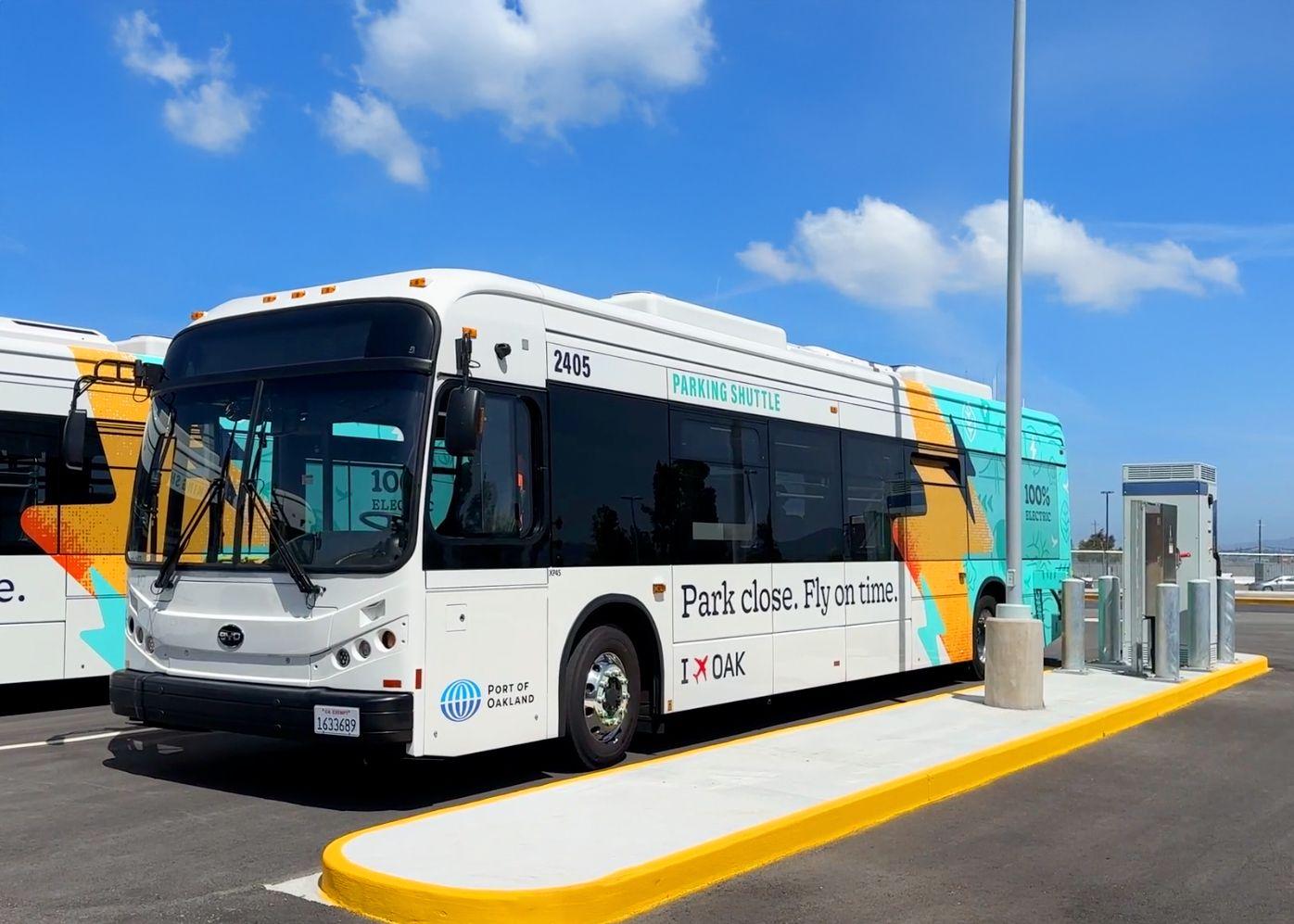
Environmental pressure is accelerating the adoption of electric shuttle buses, low-emission taxis, and improved pedestrian routes. Shore power and green transport strategies are often planned together as part of holistic port sustainability programs.
Classification societies such as DNV and Lloyd’s Register increasingly assess port sustainability not only at berth, but across the entire passenger journey.
Integration With Smart Cities
The most advanced ports integrate cruise passenger mobility into wider smart-city systems. Traffic lights, public transport schedules, and crowd management tools are coordinated to absorb cruise peaks without disrupting daily urban life.
Challenges and Practical Solutions
One of the biggest challenges is peak concentration. Thousands of passengers disembark simultaneously, stressing transport networks. Staggered disembarkation, timed excursion departures, and diversified transport modes help reduce pressure.
Another challenge is communication. Passengers unfamiliar with local transport systems may default to taxis, increasing congestion. Clear pre-arrival information and onboard briefings significantly improve distribution.
Finally, environmental concerns demand cleaner transport solutions. Ports that invest early in electric fleets and public transport integration are better positioned to maintain community support.
Case Studies and Real-World Applications

In Barcelona, shuttle buses connect terminals to central hubs, balancing walkability with crowd control. Miami operates large-scale shuttle systems linking terminals to downtown and airports. Singapore integrates cruise terminals with metro and taxi networks as part of a national transport strategy. Sydney combines ferry, bus, and pedestrian access, reflecting its waterfront geography.
Each case shows how geography and policy shape port–city connectivity.
Future Outlook and Maritime Trends
Cruise passenger mobility will become more data-driven, sustainable, and integrated. Ports will increasingly be judged not only on berth efficiency, but on how smoothly passengers reach cities.
Autonomous shuttles, expanded rail links, and unified digital platforms are likely within the next decade. As cruise tourism grows, ports that invest in connectivity will gain competitive advantage.
Global institutions such as the United Nations Conference on Trade and Development emphasize that passenger ports are critical nodes in sustainable urban transport systems, not isolated maritime assets.
FAQ Section
How do cruise passengers usually get to the city?
Most use shuttle buses, taxis, ride-sharing, or public transport, depending on port location.
Are cruise ports always far from city centers?
No. Some are walkable, while others are remote due to safety or space constraints.
Do cruise lines provide transport?
Often yes, especially shuttle buses and excursion transfers.
Why can’t passengers walk in some ports?
Because terminals may be in industrial zones with safety and security restrictions.
Are ports becoming more environmentally friendly in transport?
Yes. Electric shuttles and public transport integration are increasingly common.
Conclusion
Port operations do not end at the ship’s gangway. How cruise passengers travel from port to city is a decisive factor in operational efficiency, environmental impact, and passenger satisfaction. Shuttle buses, taxis, ride-sharing, and public transport are not competing options, but complementary tools in a carefully designed mobility system.
Understanding port accessibility explains why some cruise ports feel seamlessly connected to cities while others require longer transfers. As smart ports and smart cities converge, passenger mobility will become cleaner, smoother, and more intuitive—transforming ports into true gateways rather than bottlenecks.
References
International Maritime Organization. (2023). Port facility security and passenger operations. https://www.imo.org
United Nations Conference on Trade and Development. (2023). Review of Maritime Transport. https://unctad.org
International Chamber of Shipping. (2023). Ports, passengers, and connectivity. https://www.ics-shipping.org
World Bank. (2022). Port-city integration and transport. https://www.worldbank.org
DNV. (2023). Smart ports and sustainable mobility. https://www.dnv.com
Lloyd’s Register. (2022). Port infrastructure and passenger safety. https://www.lr.org
Marine Policy. (2021). Cruise ports and urban transport impacts. https://www.sciencedirect.com