
Discover the most common HR questions for seafarers, with realistic sample answers, expert insights, and practical tips to succeed in modern maritime interviews.
Every seafarer, whether a cadet stepping onto a vessel for the first time or a seasoned Chief Engineer returning after a contract break, must eventually face the same transition point: the HR interview. Unlike technical evaluations, simulator checks, or oral assessments focused on COLREGs or machinery systems, HR interviews explore the person behind the certificate. They are designed to reveal mindset, professionalism, communication ability, safety culture, and the readiness to work in a multicultural, high-risk environment.
Around the world, crewing managers from Greece, Singapore, India, the Philippines, Northern Europe, the Middle East, and North America consistently highlight the same trend: technical skills alone are not enough. Shipping companies want reliable, emotionally stable, safety-minded professionals who can communicate clearly under pressure, collaborate with mixed nationalities, and demonstrate maturity during long periods at sea.
In this article, you’ll explore the most common HR questions for seafarers, along with sample answers, guidance from modern maritime HR expectations, real-world scenarios, and insights from the global shipping industry. Whether you’re applying as a Deck Cadet, OOW, ETO, 2/E, C/O, or Master, these questions will prepare you to approach your next interview with clarity and confidence.
Why This Topic Matters for Maritime Operations
The maritime sector has changed dramatically over the last decade. Automation, digitalisation, stricter environmental rules, higher expectations for safety performance, and changing crew demographics have all reshaped what shipowners and managers look for during HR screening. As ships become more technologically advanced, human performance remains both the strongest asset and the highest risk factor onboard.
In maritime casualty reports from authorities such as the MAIB, USCG, AMSA, and Transport Safety Boards, human factors consistently emerge as root causes of incidents. These human factors often relate not to technical failures, but to miscommunication, stress, fatigue, or poor safety judgement. HR interviews aim to identify and filter these risks long before a crew member joins the vessel.
Furthermore, global crewing dynamics have shifted. According to ICS and BIMCO’s Seafarer Workforce Report, the world is facing both officer shortages and rising demand for specialised skills. This has forced companies to become more selective in evaluating reliability, professionalism, and long-term potential during HR interviews. A candidate who can articulate their experiences, demonstrate self-awareness, and express a commitment to safe working practices becomes significantly more competitive.
From an operational standpoint, shipping companies invest heavily in safety management systems (SMS), training programs, and crew welfare initiatives. Strong HR screening reinforces these efforts by ensuring the right individuals are placed into critical roles. A well-conducted HR interview protects the company’s vessel, reputation, and compliance obligations — but also protects seafarers themselves by promoting a safer, healthier working environment.
Finally, the human element is central to maritime sustainability and resilience. As the industry transitions towards alternative fuels, digital navigation, and greener engineering solutions, adaptability, teamwork, and communication skills become more valuable. HR interviews help ship operators identify individuals capable of thriving in this evolving environment.
Key Developments / Technologies / Principles
Modern HR Practices in the Maritime Sector
The HR landscape in shipping has moved far beyond simple document verification or checklist interviews. Today, many crewing departments employ behavioral assessment frameworks, digital interview tools, and structured competency evaluations. Several large shipping companies even use AI-assisted pre-screening to assess communication style and cultural fit.
These changes were driven by the need to reduce risk, support mental health, and ensure that seafarers can handle increasingly complex vessel systems. Modern HR teams rely on evidence-based methods such as competency-based interviewing (CBI), where candidates describe real experiences instead of giving theoretical answers. This approach reveals genuine behavioral patterns — a crucial factor in predicting onboard performance.
The Importance of Soft Skills and Behavioral Competencies
Shipping is no longer a purely technical profession. Crewing managers emphasise the importance of traits such as leadership, initiative, problem-solving, conflict management, emotional intelligence, and cross-cultural communication. These skills directly affect watchkeeping discipline, machinery maintenance, emergency response, and interpersonal relations onboard.
The shift towards multinational crews has made communication skills more essential. Officers must provide clear instructions, pass handovers accurately, brief deck or engine teams, and report to shore management. HR interviews identify candidates who can articulate their thoughts concisely and calmly — a proxy for how they will behave on the bridge or in the engine control room during stressful situations.
Globalisation of Crewing Standards
With outsourcing, international fleets, and harmonised competence frameworks, HR procedures are becoming standardised across continents. Requirements under STCW, MLC 2006, and ISM Code influence how shipping companies evaluate crew readiness. Many HR departments now collaborate closely with technical superintendents and marine managers to ensure that crew selection aligns with vessel type, trade region, and operational risk.
Modern HR teams also monitor soft indicators such as social behaviour, punctuality, professionalism, and willingness to follow safety protocols. These are not written in certificates, but they strongly correlate with onboard discipline and performance.
Digital Interview Tools and Remote Screening
Since 2020, the maritime industry has increasingly adopted remote HR interviews via platforms such as Zoom or Teams. This shift has allowed shipping companies to recruit globally with greater efficiency. HR teams now evaluate not only verbal answers but also candidates’ attitude toward online professionalism — such as punctuality, camera presence, background environment, and clarity of communication.
Despite digital tools, the core of maritime HR remains deeply human. Recruiters look for sincerity, calmness, and emotional stability — qualities essential for life at sea.
Challenges and Practical Solutions
Maritime HR interviews often expose gaps in communication skills, confidence levels, self-awareness, or understanding of professional expectations. These challenges vary by rank, nationality, experience level, and vessel type, but several common patterns emerge globally.
One recurring challenge is the difficulty many seafarers face in describing past experiences effectively. HR managers often report that candidates struggle to provide concrete examples of teamwork, decision-making, or conflict resolution. To address this, candidates are encouraged to use the STAR method — Situation, Task, Action, Result — which transforms vague answers into structured narratives.
Another challenge lies in cultural communication differences. Seafarers come from diverse cultural backgrounds, which can affect how they express disagreements, emotions, or personal strengths. HR teams increasingly train interviewers to evaluate answers fairly while giving candidates space to articulate their thoughts in their own communication style.
Mental health and emotional resilience are also becoming central concerns. Life at sea involves physical isolation, long contracts, fatigue, and separation from family. HR teams now routinely explore coping mechanisms, stress management, and interpersonal behaviour to ensure candidates can sustain healthy mental functioning onboard. Companies address these challenges through wellness programs, training in resilience, and greater access to tele-medical and psychological support.
A final challenge is adaptability. As ships adopt digital navigation, alternative fuels, and advanced machinery automation, seafarers must demonstrate willingness to learn and flexibility in new environments. Practical solutions include continuous training, simulator sessions, online courses, mentoring programs, and structured feedback from senior officers.
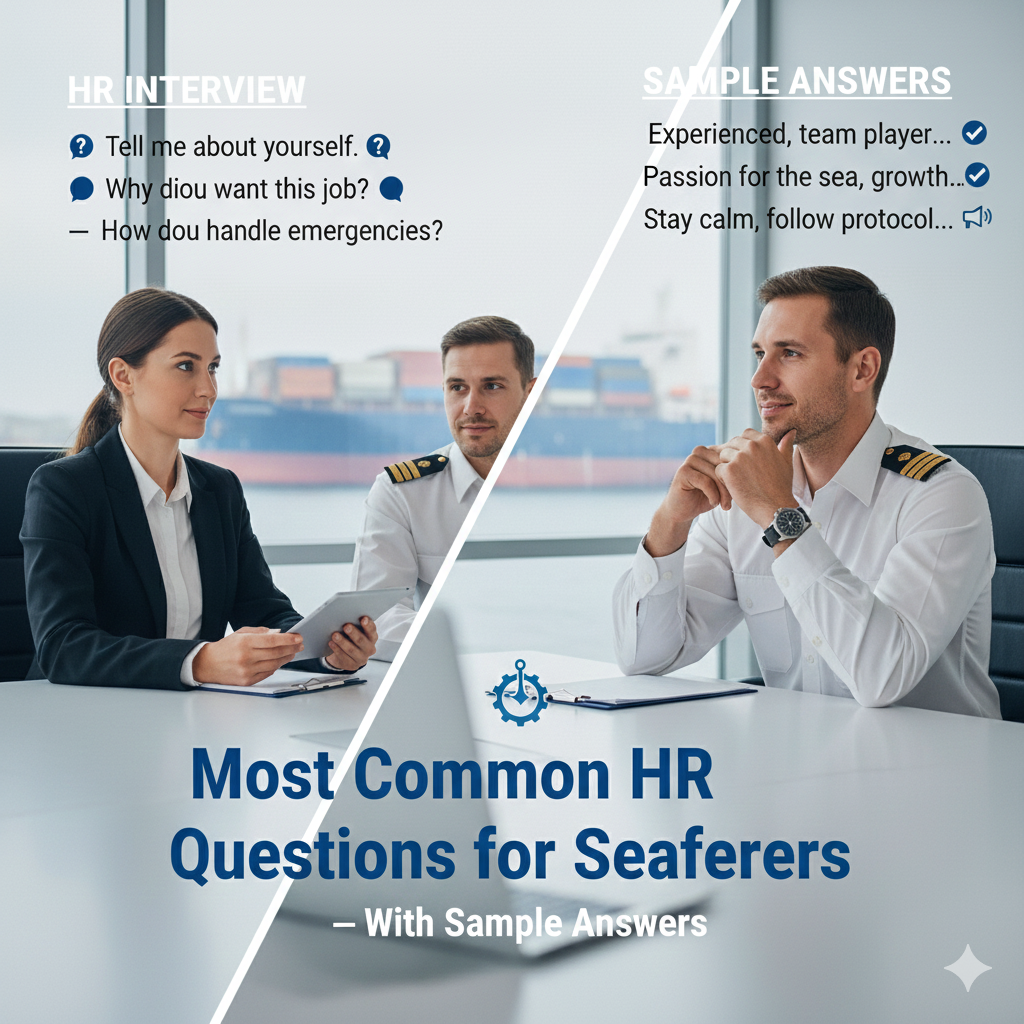
Most Common HR Questions for Seafarers — With Sample Answers
Below you will find realistic HR questions used by global shipping companies, along with sample answers crafted according to modern behavioral interview standards. These examples are written in descriptive, humanised paragraphs to model how a strong candidate might respond.
1. “Tell me about yourself.”
Sample Answer:
“I am a dedicated maritime professional with X years of experience on tankers/bulkers/containers. I enjoy working in structured, high-responsibility environments where safety and teamwork matter. Over the years, I’ve learned to stay calm under pressure, communicate clearly with multinational crews, and maintain a strong work ethic onboard. I am now seeking a role where I can contribute to the vessel’s safe operation and continue improving my skills.”
2. “Why do you want to work with our company?”
Sample Answer:
“I’ve researched your fleet and your reputation for safety performance, training, and crew welfare. I appreciate that your company invests in continuous learning and provides stable career progression. I’m particularly drawn to your focus on compliance and long-term crew retention. I believe my professional values align with your company’s standards, and I’m confident I can contribute positively to your operations.”
3. “What are your greatest strengths as a seafarer?”
Sample Answer:
“One of my strengths is maintaining calm and disciplined behaviour even during demanding operations. I also pride myself on being proactive — whether it’s preparing for a watch, maintaining equipment, or supporting my colleagues. Another strength is my ability to communicate clearly. Onboard, clear communication prevents misunderstandings and keeps everyone safe.”
4. “What is your biggest weakness?”
Sample Answer:
“I used to focus too much on completing tasks quickly, which sometimes made me overlook the importance of delegating or slowing down to involve others. Over the last few contracts, I’ve worked consciously on improving teamwork and sharing workload. Now I balance efficiency with cooperation, which has improved both safety and morale.”
5. “Describe a conflict you had onboard and how you resolved it.”
Sample Answer:
“During one of my contracts, there was a disagreement between two crew members about distributing maintenance tasks. Instead of letting the tension grow, I suggested we sit down and review the workload objectively. Each person shared their concerns, and we realigned responsibilities based on skills and availability. The conflict ended peacefully, and teamwork improved afterwards.”
6. “How do you handle stress or pressure onboard?”
Sample Answer:
“I manage stress by staying organised and planning my tasks early. In high-pressure situations, such as approaching a congested port or troubleshooting equipment, I focus on staying calm, following procedures, and communicating clearly with the team. Off duty, I try to maintain a healthy routine, stay connected with family, and take time to rest.”
7. “Why did you have a gap in your sea service?”
Sample Answer:
“I took the gap to handle personal matters and ensure I could return to work with a clear mind. During that time, I also completed training courses to maintain my competence. I am now fully prepared and motivated to return to sea.”
8. “How do you maintain a positive relationship with your colleagues?”
Sample Answer:
“I respect different cultures and maintain open communication with everyone. I try to be approachable, reliable, and supportive. Whether working on deck or in the engine room, I believe that good teamwork leads to safer and more efficient operations.”
9. “Tell me about a mistake you made onboard and what you learned from it.”
Sample Answer:
“Early in my career, I misunderstood an instruction during a maintenance task because I didn’t clarify it properly. Fortunately, the mistake was caught early, but it taught me the importance of confirming instructions and asking questions. Since then, I always double-check unclear details to avoid risk and ensure safe execution.”
10. “How do you approach safety?”
Sample Answer:
“Safety is the foundation of all onboard work. I follow the SMS, conduct risk assessments, and participate actively in drills. I’m meticulous about PPE and never hesitate to stop a job if I see unsafe conditions. I believe safety starts with mindset, not just procedures.”
11. “What motivates you as a seafarer?”
Sample Answer:
“I’m motivated by professional growth and the responsibility that comes with working at sea. I take pride in operating safely, contributing to the team, and supporting the vessel’s mission. The chance to learn continuously — whether through new equipment, regulations, or operational challenges — keeps me passionate about my career.”
12. “Describe a time when you showed leadership onboard.”
Sample Answer:
“During a busy cargo operation, I noticed junior crew members were unsure about their roles. I took the initiative to guide them, explain tasks step by step, and ensure they felt supported. The operation went smoothly, and my Chief Officer later acknowledged the positive teamwork displayed.”
13. “How do you adapt to working with multinational crews?”
Sample Answer:
“I approach cultural differences with respect and curiosity. I listen carefully, avoid assumptions, and communicate clearly. I’ve found that patience and empathy go a long way in building trust among crew members from different backgrounds.”
14. “What would you do if you saw unsafe behaviour onboard?”
Sample Answer:
“I would intervene immediately if the situation required it, or raise the concern respectfully if there was no immediate danger. My goal would be to correct the unsafe behaviour without embarrassing anyone. After that, I would report the issue according to procedures to prevent recurrence.”
15. “How do you ensure proper handovers?”
Sample Answer:
“I create detailed, structured notes covering all essential operational and technical information. During the handover meeting, I walk through the key points calmly and encourage questions to ensure clarity. A thorough handover protects both the outgoing and incoming officer and ensures continuity of safe operations.”
Case Studies / Real-World Applications
Maritime HR interviews are not theoretical exercises; they reflect real onboard expectations. Consider the example of a junior engineer who worked under a stressful emergency when a generator tripped during port operations. His ability to stay calm and communicate with clarity later became a discussion point during his promotion interview. His HR manager emphasised how this composure demonstrated both technical competence and emotional stability.
In another case, a bosun resolved a growing conflict among deck ratings by organising a short tool-box meeting to clarify tasks and expectations. This proactive behaviour not only prevented misunderstandings but also demonstrated leadership potential — something highlighted during his appraisal.
A third example involves a Second Officer who had to manage fatigue during a demanding coastal navigation schedule. She explained in her HR interview how she applied fatigue management techniques, monitored her level of alertness, and communicated openly with the Master. Her ability to articulate this experience helped her secure her next contract.
These examples show that HR interviews provide opportunities for seafarers to describe real behaviours that have a direct impact on safety, teamwork, and overall vessel efficiency.
Future Outlook and Maritime Trends
Maritime HR is evolving rapidly. Younger generations entering the industry expect better communication, clearer career pathways, and improved support systems. Companies are responding by modernising their HR processes, adopting digital learning platforms, and prioritising crew welfare.
Additionally, alternative fuels such as LNG, methanol, and ammonia are reshaping vessel operations. This demands seafarers with strong learning capacity and adaptability — traits that HR interviews increasingly evaluate. Soft skills like critical thinking, collaboration, and cross-cultural empathy will gain even more importance.
Another trend is the global emphasis on mental health. HR interviews may soon include questions about stress management, coping mechanisms, and resilience strategies. Crew welfare programs, mental health portals, and tele-consultations are becoming standard features in many companies.
As automation expands — with smart engine rooms, integrated bridge systems, and AI-assisted navigation — HR teams will assess not only technical competence but also digital literacy and willingness to learn new tools.
The future of maritime HR interviewing is holistic, combining traditional seamanship expectations with psychological, cultural, technological, and ethical considerations.
FAQ Section
1. Are HR questions the same for Deck and Engine?
Most HR questions are similar across departments because they focus on behaviour, teamwork, and safety. Some questions may vary depending on vessel type or rank.
2. Do companies expect perfect English?
No. They expect clear, understandable communication. Fluency is helpful but clarity and confidence matter more.
3. Are technical questions asked in HR interviews?
Sometimes. But technical questions are usually part of a separate evaluation with marine or engineering superintendents.
4. What is the best way to prepare?
Reflect on real onboard experiences and prepare structured, honest answers using the STAR method.
5. Do HR interviews influence promotions?
Yes. HR assessments, combined with appraisals and performance records, often influence promotion decisions.
6. Are video interviews common?
Yes. Many companies now prefer video interviews to streamline global recruitment.
7. What do crewing managers value most?
Professionalism, honesty, calmness, safety awareness, and respect for others.
Conclusion
HR interviews are more than a formality; they are gateways to maritime professionalism, safety, and long-term career growth. By understanding what companies look for — sincerity, teamwork, communication skills, safety mindset, and resilience — seafarers can enter any interview with confidence. The sample answers in this article demonstrate how to articulate real experience in a structured, meaningful way. Whether you are preparing for your first contract or seeking a senior position, strong HR preparation significantly increases your chances of success.
The maritime world is evolving, and so are its expectations. By investing time in developing soft skills, reflecting on past experiences, and understanding the human factors behind safe ship operations, seafarers can align themselves with the modern demands of global shipping. Your next interview is an opportunity not only to demonstrate competence but to present yourself as a reliable, thoughtful, and safety-driven professional.
References
-
International Maritime Organization (IMO): https://www.imo.org
-
STCW Convention & Code: https://www.imo.org/en/OurWork/HumanElement/Pages/STCW-Convention.aspx
-
ICS & BIMCO Seafarer Workforce Reports
-
MAIB: https://www.gov.uk/maib
-
USCG Marine Safety Center: https://www.dco.uscg.mil/msc/
-
DNV Maritime: https://www.dnv.com/maritime
-
Lloyd’s Register: https://www.lr.org
-
ClassNK, ABS, BV, RINA (official websites)
-
UNCTAD Maritime Statistics